


Are battery lawn mowers any good?
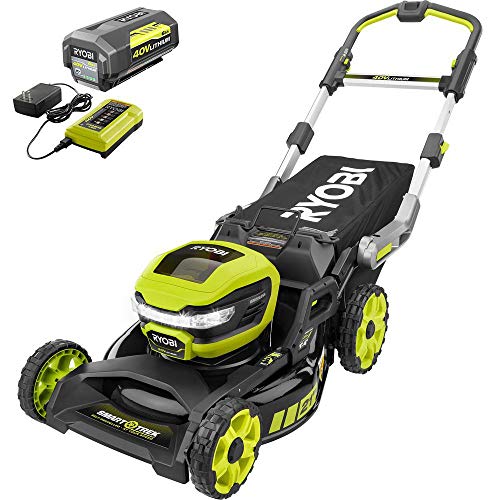
Battery lawn mowers are genuinely good tools for their intended job, which is cutting small-to-medium suburban lawns with a minimum of noise and fuss. Modern cordless mowers on 40V to 60V platforms now match petrol for cutting power on normal grass, and they start at the push of a button with no pull cord or choke.Their biggest strengths are quiet running, zero exhaust fumes, and near-zero maintenance. There is no fuel to mix or store, no oil to change, no spark plug or air filter, and no carburettor to gum up over winter, so the mower starts first time each spring. For anyone who mows early, lives close to neighbours, or simply dislikes engine upkeep, these are the deciding advantages.
The limits are just as real. Runtime is capped by the battery, so a large or hilly lawn can outlast a single charge, and the replacement pack is the mower's biggest long-term cost. Very tall, wet, or rough grass also favours a petrol engine's sustained pulling power. For those jobs, a gas lawn mower or, on a big block, a riding mower remains the better tool.
For a flat, mowed-weekly suburban lawn, though, a battery mower is often the smartest buy, trading a little runtime for a lot of convenience. See our best battery lawn mower picks for the models worth considering. ### Who gets the most out of a battery lawn mower?
Battery lawn mowers suit homeowners with small-to-medium lawns who value a quiet, quick, low-effort mow over unlimited runtime. The clearest winners are people whose circumstances make petrol's noise and upkeep a nuisance rather than a fair trade.
The owners who benefit most tend to share a few traits:
- Small to medium lawn: anything up to about half an acre sits comfortably within a one- or two-battery mower's range.
- Close neighbours or early starts: conversation-level noise lets you mow on a Saturday morning without waking the street.
- Little appetite for maintenance: no fuel, oil, plugs, or filters means the mower is ready whenever you are.
- Storage constraints: most cordless mowers fold upright, so they tuck into a corner of a shed or garage.
If several of those describe you, a battery mower is very likely the right tool. If none of them do, petrol may still make more sense.
When is a battery mower the wrong choice?
A battery mower is the wrong choice for large or rough properties, for grass that is routinely tall or wet, and for anyone who cannot stop mid-mow to swap or charge a pack. In those cases the runtime cap and the fade of power in heavy grass outweigh the convenience.A big acre-plus block will outlast even a two-battery setup, and swapping packs repeatedly turns a quick job into a long one. Tall, damp, or overgrown grass favours a petrol engine's sustained pulling power, and a professional cutting all day needs runtime a battery cannot match. For those jobs a gas lawn mower or, on a large property, a riding mower remains the better tool. Being honest about lawn size and grass conditions before buying saves the frustration of a mower that never quite finishes the job.
How much have battery mowers improved recently?
Battery mowers have improved sharply over the last several years, closing most of the old gap with petrol on cutting power thanks to brushless motors, higher-capacity packs, and load-sensing electronics. A modern cordless mower is a very different tool from the underpowered models of a decade ago.Brushless motors squeeze more work from each watt-hour and run cooler, larger lithium packs push runtimes into the range a suburban lawn actually needs, and load-sensing lets the blade speed up only when it meets heavier grass, saving charge the rest of the time. Self-propel, multi-blade mulching decks, and upright storage have all trickled down from premium models into the mainstream. This is why the technology now earns a default recommendation for suburban lawns where, not long ago, petrol was the automatic answer. See the best battery lawn mower picks for models that show how far the class has come.
On balance, then, the honest answer to whether battery mowers are any good is a firm yes for the lawns and owners they are built for, and a considered no for the largest and roughest jobs. Matching the tool to the lawn, rather than judging the whole class by one extreme, is what turns a cordless mower from a compromise into the obvious buy.
This summarises typical owner experience, not first-hand lab testing.

