


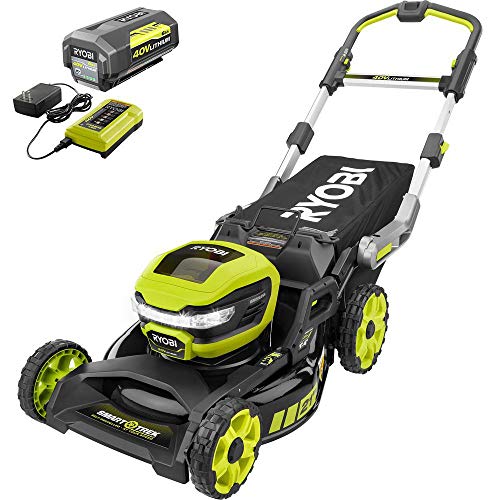

How long do battery lawn mowers last on a charge?
Battery lawn mowers typically run 30 to 70 minutes on a single fully charged pack, which is enough to mow most small and medium lawns in one go. The exact runtime is set by the battery's watt-hours far more than its voltage, so a mower with a bigger pack keeps going longer at the same voltage.Several things shorten runtime in practice. Tall, thick, or wet grass makes the motor draw more power, a wider deck cuts more grass per second, and self-propelled drive adds a small extra load. Mowing on a high setting through dense grass can cut runtime noticeably compared with a light trim of short, dry lawn.
A rough planning guide is one 5 to 6Ah pack per quarter-acre. If your lawn is bigger than a single charge covers, the simplest fix is a second battery you can swap in, so you keep mowing while the first pack charges. Many owners of larger lawns buy their mower as a two-battery kit for exactly this reason.
To get the most from each charge, keep the blade sharp so the motor is not fighting a dull edge, mow when the grass is dry, and raise the deck in very heavy growth. Battery capacity, watt-hours, and runtime are explained in more depth in our battery lawn mower guide, and blade care is covered in the lawn mower maintenance guide. ### What drains a battery mower's runtime fastest?
The biggest drains on runtime are tall, thick, or wet grass, a low cutting height, a dull blade, and a wide deck, all of which make the motor work harder and pull more current from the pack. Self-propelled drive adds a smaller, steadier draw on top of those.
These factors stack, so a worst case combines several at once:
- Grass condition: tall, dense, or damp grass is heavier to cut and clumps under the deck, loading the motor.
- Cutting height: scalping the lawn in one low pass removes far more grass per second than a light trim.
- Blade sharpness: a dull blade tears rather than slices, forcing the motor to drag through the grass.
- Deck width: a wider deck cuts more grass with every turn of the blade, using energy faster.
- Drive and pace: self-propel and a brisk pace both add load, though far less than heavy grass does.
Because these compound, the same mower that trims a short, dry lawn for an hour might manage well under that on a first spring cut of long, damp grass.
How do you estimate runtime for your own lawn?
Estimate runtime by matching your lawn's area to the pack's watt-hours, using the rough guide of one 5 to 6Ah pack per quarter-acre of grass. A mower with a 240 to 280Wh pack typically covers a quarter to a third of an acre on normal grass before it needs charging.To size it for your yard, start from your lawn's area, then adjust for conditions: knock the estimate down if your grass is often long, thick, or on a slope, and up a little for a small, flat, frequently mown lawn. If the sum says a single pack will fall short, the fix is not a higher voltage but more watt-hours, whether from a larger battery or a second pack you swap in. Owners of bigger lawns routinely buy the two-battery kit for exactly this reason, since it is the cheapest way to extend a session without waiting on a charger.
Should you get a bigger battery or a second one?
For a lawn that outlasts one charge, a second battery is usually the better buy than a single larger one, because you can keep mowing while the spare charges and are not left waiting mid-lawn. A bigger pack helps too, but only up to the runtime it holds before it also runs flat.Two packs also spread the load across more cells, so each one works a little less hard and tends to age more slowly, and a two-bay mower can switch between them automatically for an unbroken mow. The exception is a lawn that a single larger pack finishes with margin to spare, where one battery keeps things simple. Either way, think in total watt-hours across every pack you own, since that figure, not any single number on the box, decides how much lawn you can cut before charging. The battery lawn mower guide explains how capacity and deck size combine to set that total.
These figures reflect typical published runtimes and owner reports rather than first-hand lab testing.

