Best Chainsaw Chain
Best Chainsaw Chain, ranked from aggregated owner ratings and reviews, not first-hand testing. Real pros, cons, and who each pick is best for.

Our Top 3 Picks
Quick Comparison
| Product | Best for | Buy | |
|---|---|---|---|
| Oregon 91PX AdvanceCut | Best Overall | See Amazon | View (paid link) |
| Oregon 20BPX | Best Value | See Amazon | View (paid link) |
| Stihl Oilomatic Rapid Micro 3 (RM3) | Best Premium | See Amazon | View (paid link) |
| Oregon 90PX Low Profile | Best Compact | See Amazon | View (paid link) |
| Oregon 72EXL PowerCut | Best Heavy-Duty | See Amazon | View (paid link) |
| Husqvarna X-Cut S93G | Editor's Pick | See Amazon | View (paid link) |
How to choose the best chainsaw chain
The best chainsaw chain is the one that matches your bar's pitch, gauge, and drive-link count, then suits the wood you cut and your experience level. For most owners that means a low-kickback, low-profile or semi-chisel chain from Oregon, Stihl, or Husqvarna, stepping up to full chisel only for heavy professional cutting.The picks above span homeowner, mid-size, battery, and professional saws, because no single chain fits every bar. The sections below explain how to read the specs so the ranking makes sense for your saw, and every chain here is matched to a real, currently sold bar and pitch.
How do you match a chain to your saw's pitch and gauge?
Match the chain by reading the three numbers off your bar and old chain: pitch, gauge, and drive-link count. Pitch and gauge must be identical to the bar, and the drive-link count sets the exact length, so a chain that is close but not exact will not run safely.The comparison table below lines up our picks by pitch, gauge, and cutter type so you can see which fits your saw class.
| Chain | Pitch | Gauge | Cutter | Best for |
|---|---|---|---|---|
| Oregon 91PX AdvanceCut | 3/8 in low profile | .050 in | Low-profile chisel | Most homeowner saws |
| Oregon 20BPX | .325 in | .050 in | Low-kickback chisel | Mid-size gas saws |
| Stihl Rapid Micro RM3 | 3/8 in P or .325 in | .050 in | Semi-chisel | Stihl OEM match |
| Oregon 90PX Low Profile | 3/8 in low profile | .043 in | Narrow-kerf | Battery and mini saws |
| Oregon 72EXL PowerCut | 3/8 in standard | .050 in | Full chisel | Pro hardwood cutting |
| Husqvarna X-Cut S93G | 3/8 in low profile | .050 in | Low-kickback | Husqvarna saws |
Notice how several picks share a pitch of 3/8 low profile but split on gauge and cutter — the 91PX at .050 for typical homeowner bars, the 90PX at .043 for narrow-kerf battery bars. That is the whole matching problem in miniature: the family name is not enough, and the gauge stamped on your bar decides which of two similar loops actually fits. Read that stamp first, then let cutter type and the best-for column narrow the choice. Our full chainsaw bars guide shows where the stamp lives and how to read a worn one.
How do the top picks compare for the wood you cut?
The right pick depends as much on what you cut as on which saw you own, because cutter geometry decides how a chain behaves in clean versus dirty timber. Clean softwood rewards an aggressive chisel cutter, while dirty, seasoned, or frozen hardwood rewards a durable semi-chisel edge that stays sharp.Use these scenarios to place yourself against the ranking:
- Suburban homeowner, small saw, occasional firewood and storm cleanup: the Oregon (paid link) 91PX is the default — smooth, low-kickback, and cheap to replace.
- Battery or cordless chainsaw owner on a narrow bar: the .043-gauge Oregon (paid link) 90PX cuts a thinner kerf, so the motor works less and runtime stretches.
- Property owner running a 45 to 55cc saw through seasoned hardwood: the .325 Oregon 20BPX balances speed and durability for regular firewood.
- Stihl (paid link) or Husqvarna (paid link) loyalist who wants a guaranteed factory match: the Stihl RM3 or Husqvarna X-Cut in the matching size.
- Experienced cutter felling and bucking clean, large timber: the full-chisel Oregon 72EXL for outright speed, accepting faster dulling in grit.
Match the scenario, then confirm the three fitting numbers before you buy — the best-suited cutter type is still useless in the wrong pitch or gauge.
Which cutter type should you buy, chisel or semi-chisel?
Choose semi-chisel for most work and full chisel only for clean, fast professional cutting. Semi-chisel's rounded teeth hold an edge far longer in dirty, frozen, or hardwood cutting, while full chisel's square corners cut faster in clean softwood but dull quickly and bite harder.Homeowners cutting mixed firewood are almost always better served by a semi-chisel or low-profile chain, which stays useful between sharpenings and is more forgiving. Save full chisel for a powerful saw, clean timber, and an experienced hand. There is little to gain from a chain that cuts ten per cent faster for the first three cuts and then needs filing, which is exactly what a full-chisel loop does when it meets bark dirt or the ground.
Should homeowners buy a low-kickback chain?
Homeowners should buy a low-kickback chain, which uses ramped depth gauges or guard links to reduce the violent upward kick behind many serious chainsaw injuries. It meets the ANSI B175.1 low-kickback standard and gives up only a little speed for a meaningful safety margin.Most of the picks above, including the Oregon 91PX and Husqvarna X-Cut S93G, are low-kickback loops for exactly this reason. Pair any chain with cut-retardant chainsaw chaps and PPE, because the safest chain still cuts flesh instantly. Low-kickback geometry does not replace technique or the chain brake; it lowers the odds if the bar nose catches, which is why it is the sensible default for anyone who is not a trained faller.
When is it worth stepping up to full chisel or skip chain?
Step up to full-chisel or skip-tooth chain only when you have the saw, the timber, and the skill to use it, because both trade forgiveness for speed. Full chisel suits powerful saws in clean wood, and skip-tooth suits long bars in large timber where chip clearance matters more than a smooth finish.The honest test is whether your current chain is actually the bottleneck. If a freshly sharpened semi-chisel loop still bogs the saw, more aggressive geometry can help; if the saw is simply underpowered or the chain is dull, a faster cutter will not fix it and may make kickback worse. For occasional homeowner cutting, the answer is almost always to keep a low-kickback chain sharp rather than chase speed with an aggressive one. Serious milling or felling is where these chains belong — see the chainsaw milling guide for how ripping chains differ again.
Does the brand matter, OEM or aftermarket?
Brand matters less than a correct fit and a sharp edge, but quality does vary at the bottom of the market. Oregon fits nearly every saw and is the aftermarket standard, Stihl and Husqvarna chains are tuned to their own saws, and ultra-cheap no-name chains often dull fast and stretch quickly.Running an Oregon or other reputable aftermarket chain on a Stihl or Husqvarna saw is common and safe, as long as the pitch, gauge, and drive-link count match. Buying the OEM chain mainly buys a guaranteed match and dealer support. The place to be cautious is the bargain multi-pack: an unevenly hardened cheap loop can cost you the saving back in extra filing and constant re-tensioning, so a mid-tier chain in the right size is usually the smarter buy.
How do you install and break in a new chain?
Install a new chain with the saw off and cold, the cutters on top of the bar facing forward toward the nose, then tension it and run it gently for the first few minutes to let it seat. A new loop stretches as it beds in, so early tension checks matter more than at any other time.Fit and break in a new chain with these steps:
- Confirm the saw is off, the switch is safe, and — on a gas saw — leave it to cool; wear gloves throughout.
- Loosen the bar nuts, drape the chain over the sprocket and into the bar groove, with the top cutters pointing toward the bar tip.
- Seat the drive links in the groove all the way round, then hold the bar nose up and turn the tensioner until the chain is snug with no sag underneath.
- Tighten the bar nuts while still holding the nose up, then check the chain pulls freely by hand.
- Top up the bar and chain oil, start the saw, and make a few light cuts; stop, let it cool, and re-check tension, repeating for the first hour of use.
Skipping the break-in re-checks is the usual reason a brand-new chain throws or loosens — the stretch is normal, and a couple of quick adjustments settle it.
What warning signs mean the chain is worn out, not just dull?
A dull chain sharpens back to life, but a worn-out chain has reached the end of its safe service and needs replacing. The clearest signs are cutters filed back to the wear-witness line, cracks at the rivets, a missing tooth, or a loop that keeps loosening because it has stretched past adjustment.Check for these before you keep filing a tired chain:
- Cutters short enough that the top plate reaches the stamped wear line, leaving no usable steel.
- Hairline cracks around the rivet holes, or a cutter that has snapped off.
- Rivets visibly loose or the chain sagging even after re-tensioning to the limit.
- Bright blue heat discolouration on the cutters from running dry or over-tight.
Chains are cheap next to a bar or powerhead, so a suspect loop is not worth the risk. Keep the automatic oiler topped up, learn to touch up the edge with the right file from our sharpening files and tools guide, and read the full chainsaw chains guide if you are still matching specs. Match every chain to jobs you are trained to do.
Full Ranking, Reviewed

Best for Homeowner saws on a 3/8-inch low-profile bar
- 3/8-inch low-profile pitch with a .050-inch gauge
- Low-kickback design that meets the ANSI safety standard
- LubriTec oiling to keep the chain lubricated longer
- Chamfer-chisel cutter for smooth, controllable cutting
- Fits a huge range of homeowner and battery saws
- Smooth, low-kickback cutting for everyday use
- Widely stocked and affordable to replace
- Not the fastest chain in large hardwood
- Low-profile cutters are not built for pro felling
Verdict: The default homeowner chain that fits most small saws and cuts smoothly, which is why it is the one dealers reach for first.

Best for Mid-size gas saws running a .325-inch bar
- .325-inch pitch with a .050-inch gauge
- Low-kickback BPX cutter geometry
- Chamfer-chisel teeth for a clean, fast cut
- LubriTec oiling for longer chain life
- Matches most 45 to 55cc mid-size gas saws
- Good balance of speed and durability
- Inexpensive and easy to find
- Only fits .325-inch, .050-gauge bars
- Homeowner geometry is slower than pro chain
Verdict: A well-priced .325 chain that suits the popular mid-size firewood saws, making it an easy value pick for property owners.

Best for Stihl owners who want the matched OEM chain
- Semi-chisel, low-kickback cutter for durability
- Oilomatic oil-delivery pockets in the drive links
- Sold in 3/8-inch P and .325-inch pitches
- Hardened chrome cutters that hold an edge
- Made to match Stihl saws exactly
- Durable semi-chisel edge for dirty wood
- Strong, even oil delivery
- Costs more than aftermarket chain
- Sold mainly through Stihl servicing dealers
Verdict: Stihl's own semi-chisel loop is a durable, guaranteed match for Stihl saws, worth the premium for owners who want factory parts.

Best for Battery saws, mini saws, and narrow-kerf bars
- 3/8-inch low-profile pitch with a narrow .043-inch gauge
- Narrow-kerf design that removes less wood per pass
- Low-kickback cutter for safe one-handed-class saws
- Matched to small-battery and top-handle saws
- Light cutting load suits low-power battery saws
- Extends runtime on cordless saws
- Smooth, low-kickback cutting
- Fits only .043-inch narrow-kerf bars
- Not intended for heavy hardwood
Verdict: A narrow-kerf chain built for battery and mini saws, where its lighter cut load stretches runtime and keeps small motors happy.
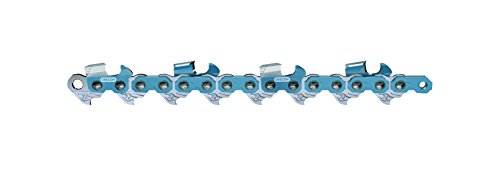
Best for Pro-size saws felling and bucking hardwood
- 3/8-inch standard pitch with a .050-inch gauge
- Full-chisel, square-cornered cutter for speed
- Built for higher-powered saws and longer bars
- Chrome-plated cutters for durability under load
- Fastest cutting in clean, large timber
- Designed for powerful saws and felling
- Aggressive, efficient chip removal
- Dulls quickly in dirty or gritty wood
- Higher kickback risk, for experienced users only
Verdict: A fast full-chisel chain for powerful saws and serious felling, best kept to clean wood and experienced hands.

Best for Husqvarna homeowner saws on 3/8-inch low-profile bars
- 3/8-inch low-profile pitch with a .050-inch gauge
- Pre-stretched to hold tension from the first cut
- Low-kickback cutter geometry
- Designed and manufactured by Husqvarna
- Holds tension well when new
- Tuned to match Husqvarna saws
- Smooth cutting for homeowner work
- Costs more than generic chain
- Fewer size options than Oregon
Verdict: Husqvarna's own low-profile chain holds tension well and matches its saws, a strong OEM alternative for Husqvarna owners.
Frequently Asked Questions
How do I know what chain fits my chainsaw?
Read three numbers to fit a chain: pitch and gauge are stamped on the guide bar, and the drive-link count comes from counting the tabs on your old chain or reading its box. Match all three exactly, because a chain that is close but not identical will not run safely.
Are Oregon chains as good as Stihl or Husqvarna?
Oregon chains are a trusted aftermarket standard and run well on Stihl and Husqvarna saws as long as the pitch, gauge, and drive-link count match. OEM Stihl and Husqvarna chains are tuned to their own saws and guarantee a fit, but for most owners a correctly sized Oregon chain performs comparably.
What is the difference between full chisel and semi-chisel chains?
Full-chisel chains have square-cornered teeth that cut faster in clean softwood but dull quickly and kick back harder. Semi-chisel chains have rounded teeth that cut slightly slower but hold their edge far longer in dirty, frozen, or hardwood cutting, which makes them the safer default for most owners.
How often should I replace my chainsaw chain?
Replace a chainsaw chain once the cutters are filed back to the wear mark, when teeth are cracked or missing, or when the chain will no longer hold tension. With careful sharpening a chain lasts through many sessions, but cutting into soil, nails, or gravel can ruin one in a single cut.
Do I need a low-kickback chain?
Most homeowners should use a low-kickback chain, which meets the ANSI B175.1 standard and uses ramped depth gauges or guard links to reduce the upward kick behind many chainsaw injuries. It gives up a little speed for real safety, and only experienced users on the right saw should run aggressive non-safety chains.