

How do you sharpen a hatchet?
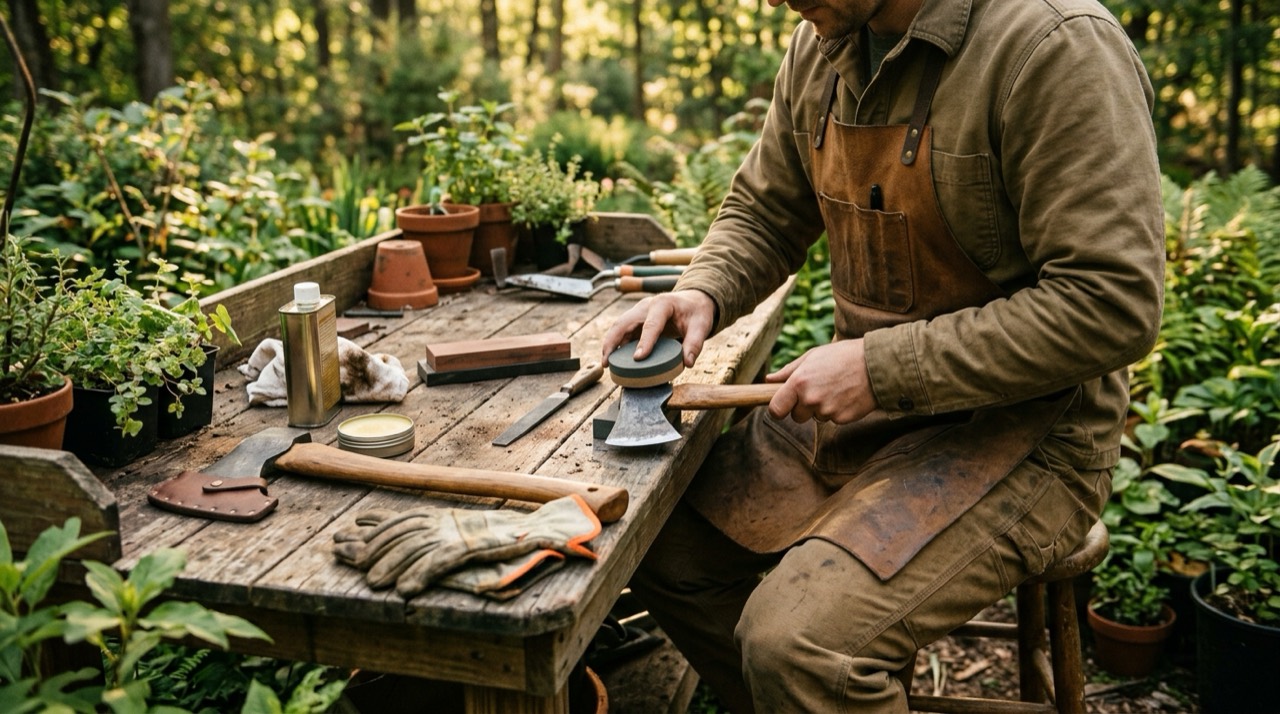
Sharpen a hatchet by filing the edge to remove nicks, honing both bevels on a stone until a burr forms and flips, then stropping it smooth, following the head's existing convex angle rather than a flat one. A camp hatchet needs only a light touch-up between trips.Sharpening a hatchet is quicker than sharpening a knife because the bevel is short. Clamp or brace the head, then push a mill file across the edge from heel to toe on one side, matching the factory angle, until you feel a fine burr on the opposite side; repeat on the other side. Move to a coarse-then-fine stone or a puck, working small circles to refine the bevel, then flip the burr and strop it away on leather. A forged head such as a Gransfors Bruks or Husqvarna takes a keen edge fast. The right files and stones live in the sharpening files and tools guide.
How do you re-hang a loose or broken hatchet handle?
Re-hang a hatchet by removing the old handle, fitting a new hickory haft through the eye until the head seats, then driving a wooden wedge and a metal cross-wedge into the kerf to lock it. Only wood-handled hatchets can be re-hung, which is a key reason to buy one.Re-hanging restores a hatchet that would otherwise be scrap. Saw off the broken handle and drill or punch the remaining wood and wedges out of the eye. Shape the new haft's tongue so the head slides on with firm hand pressure and seats about a quarter-inch below the top of the eye, then saw the kerf, glue and drive a wooden wedge to spread the tongue, and add a steel cross-wedge for security. Let any glue cure, trim flush, and re-profile the edge. Composite and one-piece steel hatchets like the Fiskars and Estwing models cannot be re-hung, so a crack there ends the tool. For a comparison of handle materials and their repairability, see the hatchets and camp axes guide.
How do you stop a hatchet head from rusting?
Stop rust by wiping the carbon-steel head dry after every use and applying a thin film of oil before storage, keeping the hatchet out of damp sheaths and humid gear boxes. Carbon steel rusts quickly in a wet pack, but a light oil coat prevents it.Rust prevention is simple maintenance that pays off for decades. After splitting, wipe the head clean of sap and moisture, then rub on a light machine oil, mineral oil, or a purpose-made blade oil, paying attention to the edge. Store the hatchet dry and, if the sheath is leather, keep the head oiled because tanned leather can hold moisture against steel. A little surface rust cleans off with fine steel wool and oil; deep pitting is harder to reverse. Season a wooden handle occasionally with boiled linseed oil to stop it drying and shrinking loose in the eye.
How do you care for the handle and sheath?
Care for a wooden handle by keeping it lightly oiled and checking the head for tightness before each trip, and treat a leather sheath so it stays supple and does not trap moisture. Well-kept wood and leather can outlast several edges.Handle and sheath care rounds out hatchet maintenance. Wipe a hickory handle with boiled linseed oil once or twice a season to keep it from drying out, and never leave it in direct sun or a hot car, which shrinks the wood and loosens the head. If the head rattles, a temporary fix is to soak the eye end in water to swell the wood, but a proper re-wedge is the real solution. Rub leather sheaths with a leather conditioner so they stay flexible, and dry a wet sheath away from the head, since damp leather held against carbon steel is a common cause of edge rust. A quick pre-trip check pays off every time: confirm the head is tight, the edge is keen, and the handle has no cracks before you pack. Store the hatchet sheathed and dry alongside your other outdoor hand and cutting tools, and a good hatchet will outlast decades of camping trips.
What tools do you need to sharpen and maintain a hatchet?
A basic hatchet maintenance kit is short: a file, a sharpening stone or puck, a strop, oil, and a wedge kit for wooden handles. None of it is expensive, and it lasts for years. The tools worth keeping in your kit are listed below.- Mill bastard file: removes nicks and re-establishes the bevel; the workhorse of axe and hatchet sharpening.
- Sharpening stone or round axe puck: refines the edge after filing, coarse side then fine.
- Leather strop: polishes the edge and removes the final burr; a leather sheath can double as one.
- Light oil: machine, mineral, or blade oil to protect the carbon-steel head from rust.
- Boiled linseed oil: seasons a hickory handle so it does not dry out and loosen.
- Wooden and steel wedges plus a spare hickory haft: for re-hanging a wood-handled hatchet.
- Cut-resistant work gloves and a file guard: to protect your hands while you work.
The exact files, stones, and pucks to buy are covered in the sharpening files and tools guide, which pairs naturally with a wooden-hafted hatchet you plan to keep for decades.
How do you restore a rusty, neglected hatchet head?
Restore a rusty hatchet by cleaning off the surface rust, re-establishing the bevel, and protecting the bare steel with oil, working from coarse abrasives to fine. Light surface rust cleans up easily; deep pitting near the edge is harder to reverse. Work through these steps.- Remove loose rust with fine steel wool or a wire brush and a little oil, scrubbing until the surface is clean.
- For heavier rust, work a rust-cutting abrasive pad or fine sandpaper over the head, keeping the steel oiled as you go.
- Inspect the edge for pitting and chips, then file out damage back to clean, sound steel following the convex bevel.
- Refine the edge on a stone, coarse then fine, and strop it smooth as in the sharpening steps above.
- Wipe the whole head with a protective film of oil, and check the handle and eye for looseness before use.
A neglected but sound head is almost always worth saving, because the edge is renewable and rust is usually only skin-deep. If the eye is cracked or the handle rotten, re-hang a fresh hickory haft rather than trust a compromised tool.
How do you fix a mushroomed poll or a chipped edge?
Fix a mushroomed poll by filing off the spread, flared metal, and fix a chipped edge by filing back to sound steel before re-sharpening. Both come from misuse, striking hardened steel or hitting hidden rock, and both are repairable if the head is otherwise sound. Address each as follows.A mushroomed poll happens when a hatchet not rated as a hammer is pounded, spreading the steel into sharp, flared edges that can throw splinters. File the flared metal back flush, chamfer the corners slightly, and from then on strike only wood or soft pegs with the poll, or use a proper mallet instead. A chipped edge usually means the hatchet met a rock, a nail, or frozen knotty wood; file the whole edge down evenly until the chip disappears, keeping the convex profile, then hone and strop as normal. Losing a little edge length to remove a chip is normal and does not shorten the tool's life. If chips keep appearing, the edge is ground too thin for the wood you split, so aim for a slightly more convex, robust bevel next time.
How often should you service a hatchet?
Service a hatchet on a simple rhythm: a quick check and strop after each trip, a light sharpen once or twice a season, and a deeper inspection and handle treatment once a year. Matching upkeep to use keeps a hatchet trip-ready for decades. The schedule below sets a sensible baseline.| Interval | Task |
|---|---|
| After each use | Wipe the head dry, oil the steel, strop the edge, sheath it |
| Every few trips or seasonally | Light file-and-stone sharpen, check head tightness |
| Annually | Season the handle with linseed oil, inspect eye and edge, deep-clean any rust |
| As needed | Re-hang a loose or broken handle, remove chips or a mushroomed poll |
Adjust the frequency to how hard you use the tool: a hatchet that splits every weekend needs sharpening more often than one that comes out twice a year. The habits that matter most are the cheapest, wiping the head dry and oiling it after use, and a two-minute tightness-and-edge check before every trip. Store the serviced hatchet sheathed and dry alongside the rest of your outdoor hand and cutting tools, and it will outlast years of hard camping.
How do you keep a hatchet edge keen between sharpenings?
Keep an edge keen between full sharpenings by stropping it after each use and by protecting it from the things that dull it: soil, grit, rock, and damp. A stropped, sheathed edge stays usable far longer than a neglected one. Protect the edge with these habits.- Strop the edge on leather after every trip to realign it before it ever needs filing.
- Split only on a clean block, never the ground, so the edge never meets soil or stone.
- Sheath the hatchet whenever it is not in your hand, in transit and in storage.
- Keep the head dry and lightly oiled so rust never roughens the edge.
- Split the right wood, straight-grained and camp-sized, so the edge is not chipped by knots or frozen fibres.
Do these and you will file the hatchet only occasionally, because most edge loss comes from abuse and neglect rather than honest cutting. A little care between sharpenings is what separates a hatchet that lasts a lifetime from one worn out in a few seasons.