



What is an electric chainsaw sharpener machine?
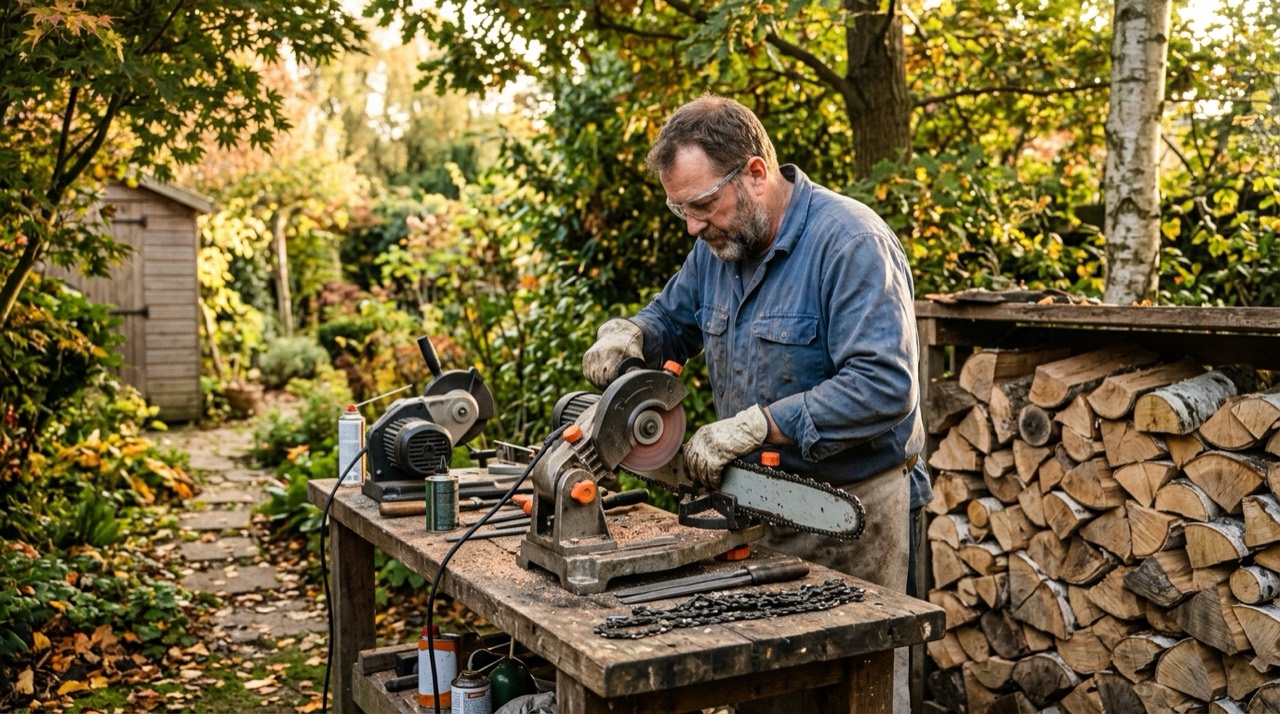
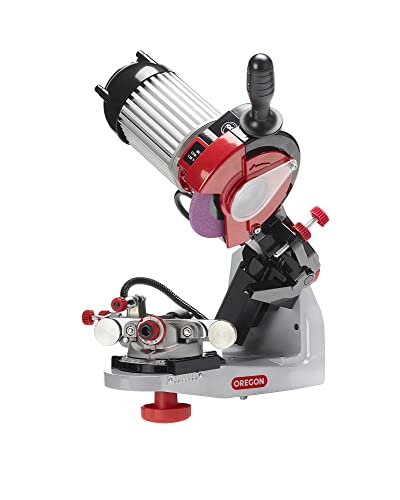
An electric chainsaw sharpener machine is a bench- or wall-mounted grinder that spins an abrasive wheel to grind each cutter to a set angle. You clamp the chain in a vise, dial in the angles, and grind tooth by tooth, flipping the vise partway through so the left and right cutters are ground to matching angles.These machines exist because grinding is faster and more repeatable than free-hand filing once you have more than a chain or two to do. A file relies on your hand holding a steady angle; a grinder holds the angle for you, which is why saw shops and heavy users lean on them. The trade-off is that a wheel removes more metal than a file, so a machine is a tool for speed and repair rather than for the lightest possible touch-up.
What types of electric chainsaw sharpener are there?
Electric chainsaw sharpeners come in three main forms: bench- or wall-mounted grinders, small handheld powered grinders, and rotary-tool attachments. They differ in how precisely they hold the angle and how much chain they can process before you tire of holding the tool.The powered options break down as follows.
- Bench and wall grinders: mounted machines with a vise and adjustable angle stops, the most accurate and the best for volume.
- Handheld bar-mount grinders: a small motor and stone on a jig that clamps to the bar, sharpening it in place.
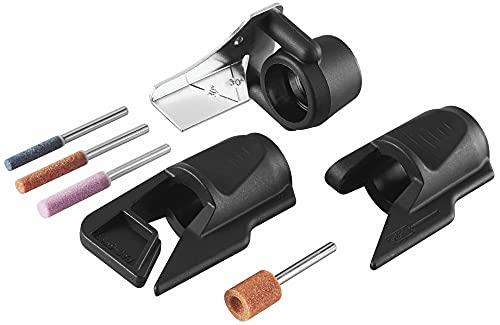
- Rotary-tool attachments: a Dremel-style stone with a guide, cheap and portable but reliant on a steady hand.
Bench grinders suit anyone doing many chains; the handheld and rotary options trade some accuracy for portability and a lower price. All three cut faster than a file, and all three can overheat a tooth if rushed.
How does a bench chainsaw grinder work?
A bench chainsaw grinder works by feeding the chain through a vise while a tilted grinding wheel drops onto each cutter in turn. The basic sequence is the same across most machines, and following it in order keeps the cutters even.- Mount the grinder to a bench or wall so it cannot move while grinding.
- Fit the grinding wheel that matches your chain pitch and dress it if needed.
- Set the top-plate angle, the wheel tilt, and the depth stop for your chain.
- Clamp the chain in the vise and line the wheel up to the first cutter.
- Grind the cutters facing one direction, taking light passes to avoid overheating.
- Release the vise, rotate the chain, and reset the angle to the opposite side.
- Grind the remaining cutters, then lower the depth gauges with the machine or a flat file.
Take light, cool passes rather than one heavy grind, and dip nothing in water; instead let the steel stay cool by not pressing hard.
What settings does a chainsaw grinding machine need?
A chainsaw grinding machine needs three angles set correctly: the top-plate angle, the wheel tilt, and the depth stop, plus a wheel that matches the chain pitch. The top-plate angle is usually about 30 degrees for crosscutting, and the depth stop controls how much of each tooth the wheel removes.Most chains carry witness marks that show the original grinding angle, so match the machine to those rather than guessing. Set the depth stop shallow at first and creep up on the final edge, because it is easy to grind away too much cutter in one pass and impossible to put steel back. Consistency between teeth matters more than chasing a perfect single tooth, so aim for every cutter the same length and angle rather than one showpiece edge. The wheel thickness also needs to suit the pitch, since a wheel that is too thick will not reach into the gullet of a fine chain.
What are the pros and cons of a chainsaw sharpener machine?
The main advantage of a chainsaw sharpener machine is speed and consistency, and the main drawback is that it removes more metal and can overheat the teeth. Weighed together, a machine suits volume and damage repair more than delicate touch-ups.- Advantages: fast across many chains, repeatable angles, and the ability to rebuild edges wrecked by rock or dirt.
- Drawbacks: shortens chain life if overused, risks bluing and softening teeth when rushed, and costs more while taking up bench space.
Overheating is the failure to watch for, because a tooth that turns blue has lost its temper and will dull again quickly. Light passes and a sharp, clean wheel prevent it.
How do you keep a bench grinder from overheating the chain?
Keep the chain cool by taking light, brief passes, letting the wheel touch each tooth for only a moment, and pausing so the steel never changes colour. A cutter that turns blue has lost its hardness and will dull again within a few cuts, undoing the sharpening.Several habits prevent overheating.
- Set the depth stop shallow and creep up on the final edge over two or three passes rather than one heavy grind.
- Keep the wheel dressed and clean so it cuts freely instead of rubbing and generating heat.
- Touch each tooth briefly, lifting the wheel between contacts rather than leaning on it.
- Watch the cutter colour: bright steel is fine, while straw or blue means too much heat.
- Slow down on small or thin cutters, which heat up faster than large ones.
If a tooth does blue, grind it back past the discoloured metal to reach sound steel underneath, accepting the extra chain wear as the price of a hard edge.
How do you change and dress a grinding wheel?
Change a grinding wheel when it is worn small, glazed, or the wrong thickness for a chain pitch, and dress it whenever it loads up or loses its square face. A clean, true wheel cuts cool and leaves a sharper edge than a glazed one.Change and dress a wheel as follows.
- Unplug the grinder before touching the wheel.
- Undo the wheel nut, noting its direction, and lift off the old wheel.
- Fit the new wheel sized for your chain pitch, checking it is rated for the grinder's speed.
- Tighten the nut firmly but not so hard it cracks the wheel, then refit any guard.
- Run the grinder briefly and dress the face with a dressing stick to true and clean it.
- Re-check the angle settings, since a new wheel of different thickness can shift where it meets the tooth.
A wheel that is too thick cannot reach the gullet of a fine chain, so keep a wheel to suit each pitch you sharpen.
Should you choose a bench grinder or a handheld electric sharpener?
Choose a bench grinder for accuracy and volume and a handheld electric sharpener for portability and a lower price. The bench machine's vise and fixed stops repeat an angle no free-hand tool can match, while a handheld grinder or rotary attachment goes where the saw is but leans on your hand to hold the angle.The table below sums up the trade-off.
| Factor | Bench grinder | Handheld electric |
|---|---|---|
| Angle consistency | Excellent | Depends on the user |
| Speed for many chains | Fastest | Slower |
| Portability | Bench-bound | Carries anywhere |
| Damage repair | Best | Limited |
| Cost | Highest | Low to moderate |
If you sharpen at a bench and value repeatability, the grinder wins; if you sharpen in the field or own a Dremel already, the handheld route is enough. Many owners keep a file for the field and a bench grinder for damage, as noted in our best chainsaw sharpener picks.
What upkeep does an electric chainsaw sharpener need?
An electric sharpener needs little upkeep: keep it clean, keep the wheel dressed and correctly sized, and check the vise and angle stops stay tight so settings do not drift. Grinding dust is abrasive, so brushing it off after each session extends the machine's life.Wipe metal dust from the vise and slides so they move freely, and confirm the angle and tilt scales still read true against a known chain. Store the machine covered and dry, since surface rust on the slides makes accurate setting harder. A grinder is a long-lived tool when looked after, and pairing it with routine saw care, covered in our chainsaw maintenance guide, keeps the whole cutting system working. For the files and stones a hand kit uses instead, see our sharpening files and tools guide.
Who should buy an electric chainsaw sharpener machine?
You should buy an electric chainsaw sharpener machine if you run several saws, sharpen many chains a season, or regularly repair chains that have hit dirt or rock. For an owner with one saw and occasional cutting, a hand file or a 2-in-1 file tool from our sharpener picks is cheaper, more portable, and gentler on the chain.Many owners keep both: a file in the truck for field touch-ups and a machine in the shed for damage and end-of-season resharpening. If you are choosing files, wheels, and stones, our sharpening files and tools guide covers the consumables, and the full method is in our chainsaw sharpening guide.