



Is it a chainsaw blade or a chainsaw chain?
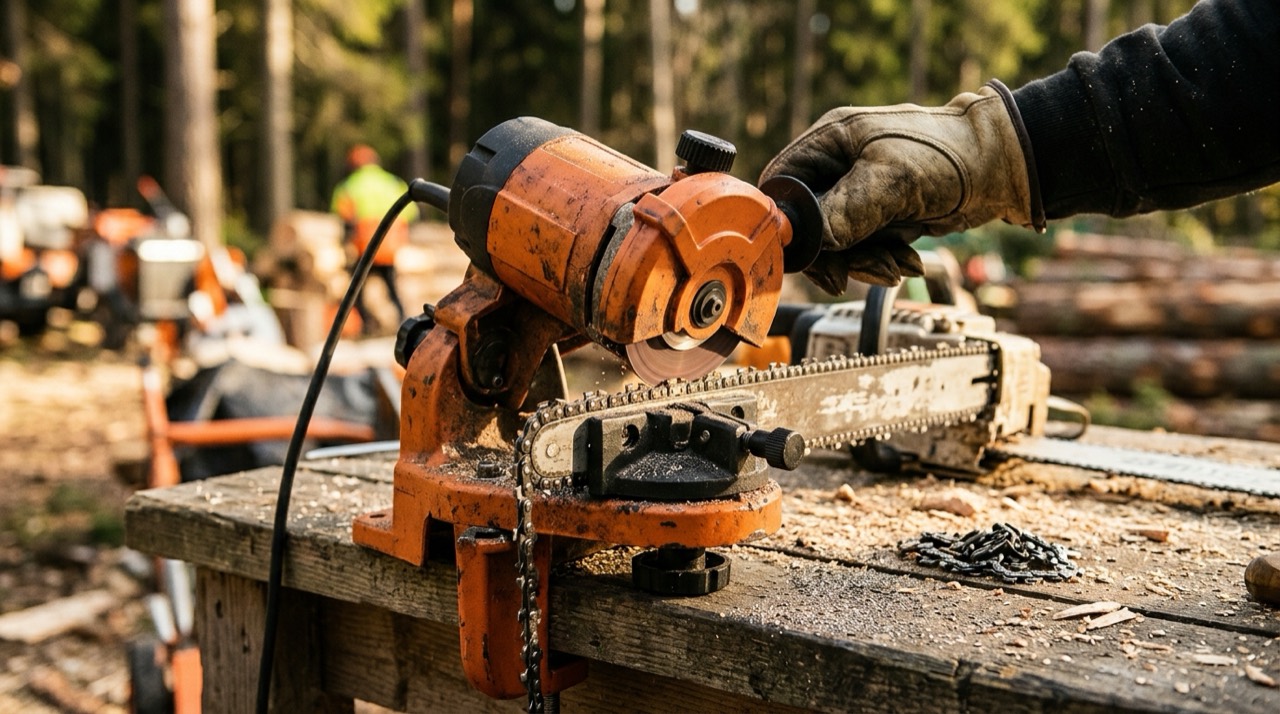
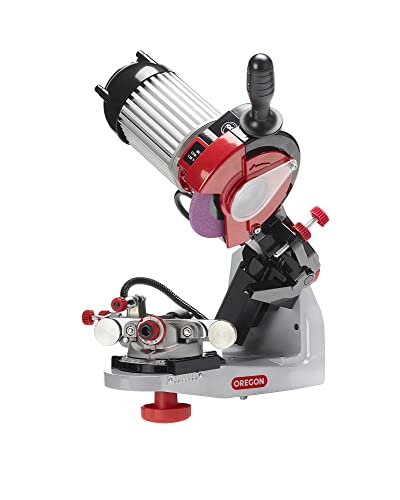
A chainsaw does not have a solid blade; it has a chain of small cutting teeth wrapped around a guide bar, so a chainsaw blade sharpener is really a tool for sharpening that chain. Most people searching for a blade sharpener want a handheld option: a round file, a 2-in-1 file, a roller or bar-mounted guide, or a rotary tool.Getting the terms right matters when you buy, because files, stones, and wheels are all sold by chain pitch, not by blade size. Once you know it is the chain's cutters you are sharpening, choosing the right handheld tool is straightforward. If you want the powered route instead, our electric chainsaw sharpener machines guide covers bench grinders, and our chainsaw chains guide explains pitch and gauge.
What handheld chainsaw blade sharpeners are there?
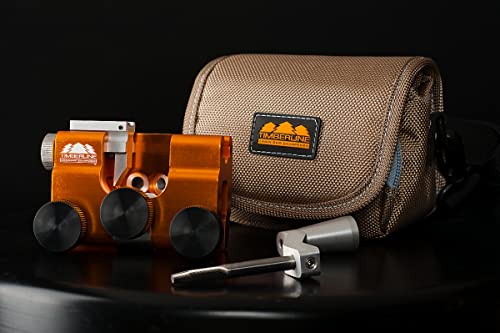
Handheld chainsaw blade sharpeners come in several forms, each holding a file or stone against the tooth at a set angle. They share the advantage of being cheap, portable, and gentle on the chain compared with a grinder. The common handheld options are listed below.- Round file with a flat guide: the simplest tool, filing one tooth at a time with a marked angle plate.
- 2-in-1 file tools: file the top plate and lower the depth gauge together with built-in angle guides.
- Roller and bar-mounted guides: steer a round file at a repeatable angle for more consistency.
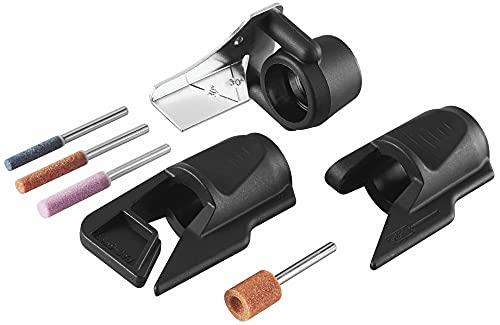
- Rotary tools: a Dremel-style attachment with a grinding stone for faster handheld sharpening.
Each is sold in versions matched to a chain pitch, so confirm your chain's pitch before choosing one from our best chainsaw sharpener picks.
How do you pick the right file size for a handheld sharpener?
Pick the round file diameter that matches your chain's pitch, since a file too large or too small files the wrong hook into the tooth. Pitch is stamped on the drive links or printed on the chain box, and each pitch pairs with one file size, listed below.| Chain pitch | Round file diameter |
|---|---|
| 1/4 inch | 5/32 in (4.0 mm) |
| 3/8 inch low-profile | 5/32 in (4.0 mm) |
| .325 inch | 3/16 in (4.8 mm) |
| 3/8 inch standard | 7/32 in (5.5 mm) |
| .404 inch | 7/32 in (5.5 mm) |
Always confirm against the chain maker's chart, as a few 3/8-inch chains call for a 13/64-inch file. If you are unsure which chain you run, our chainsaw chains guide shows how to read the markings before you buy a file.
How do you sharpen a chainsaw blade in the field?
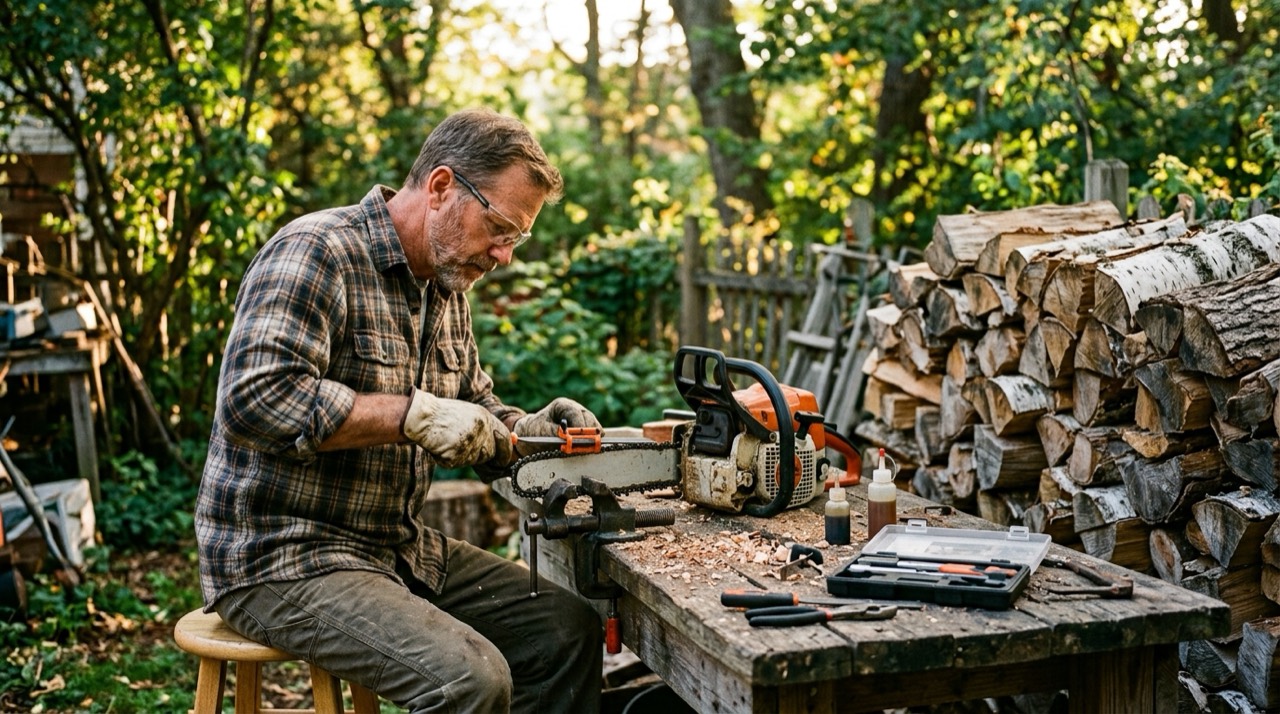
To sharpen a chainsaw blade in the field, secure the saw, match the tool to your chain pitch, and file each cutter at the marked angle using the same number of strokes. A 2-in-1 file makes this quick because it sets the tooth and depth gauge together. The field routine runs as follows.- Stop the engine, remove the battery or pull the spark-plug boot, and engage the chain brake.
- Wedge the bar against a log or clamp it so the chain cannot move, and put on cut-resistant gloves.
- Seat the file or 2-in-1 tool in the first cutter at the guide's marked angle.
- Push the file across the tooth two or three times, always in one direction, then lift on the return.
- Move along the chain, sharpening every cutter facing the same way with equal strokes.
- Turn the saw around and repeat on the cutters facing the other direction.
- Check the depth gauges every few sharpenings and lower them if the chain stops self-feeding.
Mark your starting tooth with a dab of paint or a marker so you know when you have gone all the way around.
What are the advantages of a handheld blade sharpener?
The advantages of a handheld blade sharpener are low cost, portability, and gentleness on the chain, since a file removes far less metal than a grinding wheel. That means more sharpenings from a chain and a tool light enough to carry into the field for touch-ups between cuts.Handheld tools also make it easy to sharpen little and often, which is the habit that keeps a saw cutting well. Because they cut cold, there is no risk of overheating a tooth the way a rushed grinder can. The main cost is time and a steady hand, which guides and 2-in-1 tools largely solve.
How do you use a round file with a flat guide?
Use a round file and flat guide by laying the guide across the top of the cutter, seating the file in the tooth's gullet, and pushing along the angle line marked on the guide. The plate holds the file at the right height and stops you filing the top plate too low.Work through it as follows.
- Secure the saw, engage the chain brake, and pull on cut-resistant gloves.
- Rest the guide flat across the cutter and the tooth behind it.
- Set the file into the gullet at the top-plate angle marked on the guide, usually about 30 degrees.
- Push the file forward two or three times in one direction, lifting on the return.
- Keep about a fifth of the file above the top plate so it shapes the side plate correctly.
- Repeat on every cutter facing the same way, then flip the saw for the rest.
Equal strokes per tooth keep the cutters even, which is what stops the saw pulling to one side.
How do you lower the depth gauges by hand?
Lower the depth gauges by laying a depth-gauge tool across the cutter, filing any protruding raker flush with a flat file, then rounding its front edge so it slides through the wood. The rakers control how deep each tooth bites, so a chain can be sharp yet barely cut if they are never touched.Lower the rakers in this order.
- Sharpen the cutters first, since filing them shortens the tooth and changes the raker height.
- Set the depth-gauge tool over one or two cutters so only the raker pokes through the slot.
- File the exposed raker flat with a flat file until it is level with the tool.
- Round the front corner of the raker slightly so it does not snag.
- Check every few sharpenings rather than every time, as rakers need lowering less often than cutters.
A common target is about 0.025 inch below the top plate, though hardwood and softwood settings differ; these are typical published figures, not tested measurements.
What are the pros and cons of each handheld sharpener?
Each handheld sharpener trades simplicity, speed, and consistency differently, so the right one depends on how much you value a fixed angle against a low price. The table below compares the common options on the factors owners care about.| Handheld tool | Angle help | Speed | Best for |
|---|---|---|---|
| Plain round file | None | Slow | Cheapest and most portable |
| Round file with flat guide | Marked lines | Slow | Learning correct angles |
| 2-in-1 file | Built-in | Fast | One-step tooth and raker |
| Bar-mounted file guide | Adjustable | Moderate | Grinder-like accuracy by hand |
| Rotary tool | Guide fitted | Fast | Owners with a Dremel |
A plain file is enough once your angle is reliable, while a 2-in-1 tool or guide is the surer path for most owners. Compare specific models in our best chainsaw sharpener picks.
When should you replace a chainsaw file?
Replace a chainsaw file when it skates over the steel instead of biting, feels smooth where it was once toothed, or leaves a bright polished cutter rather than a freshly cut edge. A worn file makes sharpening slow and tempts you to press harder, which spoils the angle.Files are consumable and cheap, so keeping a spare or two avoids finishing a chain with a dead file. Store them dry and apart so they do not rub each other smooth, and keep a wire brush handy to clear filings that clog the teeth. A round file only cuts on the push stroke, so dragging it back and forth wears it out faster for no gain. The full range of files, guides, and stones, and how long each tends to last, is covered in our sharpening files and tools guide.
When should you switch from a handheld sharpener to a machine?
Switch from a handheld sharpener to a machine when a chain is badly damaged, when you have many chains to sharpen, or when uneven hand filing has left the cutters different lengths. A grinder resets every tooth to the same angle and length faster than a file can.For a chain that has simply gone dull from normal cutting, a handheld file is usually all you need and is kinder to the chain. Keep both if you cut often: a file for the field and a machine for damage and end-of-season work. The full sharpening method and file-size chart are in our chainsaw sharpening guide, and routine upkeep is covered in our chainsaw maintenance guide.