Best Chainsaw Mill
Best Chainsaw Mill, ranked from aggregated owner ratings and reviews, not first-hand testing. Real pros, cons, and who each pick is best for.

Our Top 3 Picks
Quick Comparison
| Product | Best for | Buy | |
|---|---|---|---|
| Granberg Alaskan MKIV | Best Overall | See Amazon | View (paid link) |
| Granberg Alaskan Small Log Mill | Best for Beginners | See Amazon | View (paid link) |
| Carmyra Portable Chainsaw Mill (36 in) | Best Value | See Amazon | View (paid link) |
| Norwood PortaMill PM14 | Best Premium | See Amazon | View (paid link) |
| Timber Tuff TMW-56 Lumber Cutting Guide | Best Compact | See Amazon | View (paid link) |
| Granberg EZ Rail Mill Guide System | Editor's Pick | See Amazon | View (paid link) |
How to choose the best chainsaw mill
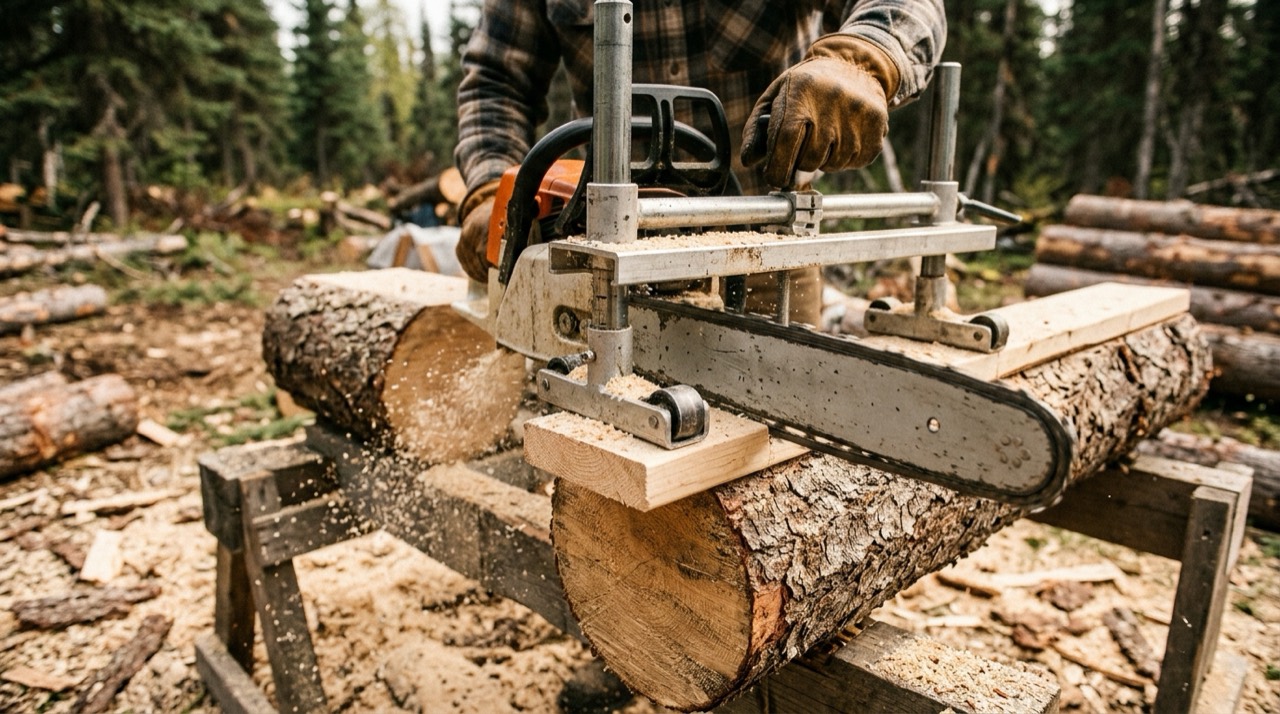
The best chainsaw mill is the one sized to your widest logs and matched to a saw strong enough to rip them, because the frame only guides the cut while the powerhead does the work. For most hobbyists that means a 24-30 inch Alaskan-style mill on a 70cc-plus gas saw fitted with a ripping chain.The picks above run from a light small-log mill to wide slabbing rigs and a rail system for the flat first cut. The comparison below lines them up by capacity and the saw each one suits, and the sections after it explain how to read those specs for your own wood.
| Mill | Approx. max width | Suggested saw | Best for |
|---|---|---|---|
| Granberg Alaskan MKIV (30 in) | ~28 in | 70-90cc | All-round slabbing |
| Granberg Small Log Mill | ~13 in | 50-60cc | Beginners and small logs |
| Carmyra Portable Mill (36 in) | ~34 in | 70cc+ | Budget wide slabs |
| Norwood PortaMill PM14 | ~14 in | 50-70cc | Boards cut on a rail |
| Timber Tuff TMW-56 | ~9-20 in | 45-60cc | Compact, occasional use |
| Granberg EZ Rail | Guide rail | Any milling saw | A flat first cut |
What size chainsaw does a mill need?
A mill needs a big gas saw, because milling is the most demanding cut you can make. Narrow softwood slabs are workable with a 50-60cc saw, boards up to 24 inches want 70-90cc, and wide hardwood slabs call for 90cc and up. Battery and homeowner saws are not milling tools.Buy the mill to fit your logs, but be honest about the saw driving it, since a wide mill on an underpowered saw simply cuts slowly and overheats. Our gas chainsaw guide sets out the power classes, and for milling you generally want the upper end.
What mill width and capacity should you buy?
Mill width should exceed your widest log by a few inches, because usable cutting width is always less than the frame's rated size once the clamps and bar mounts are accounted for. A 30 inch mill typically slabs logs up to around 28 inches, while a small-log mill tops out near 13 inches.Do not over-buy width you will never use, as a wider mill needs a longer bar and a bigger saw to match. Most furniture and live-edge work fits comfortably on a 24-30 inch mill, while a small-log mill is plenty for mantels, shelves, and firewood-sized stock.
Should you choose an Alaskan mill or a rail-guided mill?
An Alaskan mill suits most buyers who want portability, wide capacity, and the lowest price, while a rail-guided mill such as the Norwood PortaMill suits those who prioritise flat, repeatable boards over maximum width. The two solve the flat-cut problem in different ways.An Alaskan mill clamps to the bar and needs a straight guide fixed to the log for the first cut, after which it rides the milled face. A rail mill instead carries the saw on its own track for every pass, which removes the fiddly first-cut guide and produces very flat boards, but caps width lower and costs more. If you mill wide hardwood slabs, favour a big Alaskan frame; if you cut a lot of narrower, consistent boards, the rail system earns its price.
| Mill type | Strength | Trade-off |
|---|---|---|
| Alaskan (clamp-on) | Wide capacity, portable, cheap | Needs a first-cut guide, more operator effort |
| Rail-guided | Very flat boards, less muscle | Narrower width, higher cost |
How do you match the mill to your saw and bar?
Match the mill to your saw by buying a frame a few inches wider than your bar's usable cutting length and confirming your powerhead can drive that width. A mill only guides the cut, so an oversize frame on a small saw cuts slowly and overheats rather than cutting wider.Work backward from your logs. Measure your widest log, add clearance for the clamps, and that is your minimum bar length; then choose a saw sized to rip that width, using our gas chainsaw guide for the power classes. Fit a ripping chain to that bar and confirm the mill's clamps suit your bar's mount. Buying the widest mill available and then starving it with an underpowered saw is the classic mismatch that leaves new millers disappointed.
What features separate good chainsaw mills?
The features that separate a good mill are rigid, non-flexing rails, solid bar clamps that grip without crushing, and accurate, easy-to-set height posts. Flex or twist in the frame shows up directly as wavy, uneven slabs, so stiffness matters more than any extra.Build material and finish matter too, because a well-made aluminium mill stays true and resists the constant vibration of milling. Rail-guided systems like the Norwood PortaMill trade some portability for a very flat cut, while classic Alaskan mills win on simplicity and taking the tool to the log.
Is a premium mill worth it over a budget one?
A premium mill is worth the extra cost if you mill often and value a stiffer frame and finer adjustment, while a budget aluminium mill is fine for occasional slabs if you accept a rougher finish. The difference shows up in how true the frame stays under vibration.Budget frames like the Carmyra (paid link) open up wide capacity cheaply, but their fit and finish trail premium mills, and looser tolerances can let the frame flex into a wavy cut on wide, heavy logs. Premium and well-proven frames such as the Granberg (paid link) Alaskan hold their alignment better and adjust more precisely, which matters more the wider and harder your logs are. For a few slabs a year, budget is sensible; for regular slabbing, the stiffer frame pays back in less wasted wood and cleaner boards.
What else do you need besides the mill?
Besides the mill you need a ripping chain, plenty of bar oil, a straight guide for the first cut, and wedges to stabilise the log and keep cuts open. A ripping chain, filed to a shallow angle, cuts smoother and pulls less than a crosscut chain along the grain.Many millers also fit an auxiliary bar oiler for long cuts and keep spare, sharp chains on hand, since milling dulls an edge fast. Our chainsaw chains guide and bar and chain oil guide cover both, and log stands save your back on long sessions.
What maintenance keeps a chainsaw mill cutting true?
Keeping a mill cutting true means checking that its rails stay straight, its clamps stay tight, and its height posts move freely and lock securely, because any flex or slippage transfers straight into a wavy slab. A mill is a simple tool, but it lives a hard, vibrating life.Before each session, look over the frame for bent rails, worn threads, or loose fasteners, and clean sawdust and pitch out of the height adjusters so they set accurately. After milling, wipe the frame down and store it dry to prevent corrosion, covered in our outdoor tool storage guide. The chain and bar need far more frequent care than the frame; keep the chain razor sharp with our chainsaw sharpening guide, and dress bar rail burrs, but a true, tight frame is what turns a sharp chain's cut into a flat board.
What mistakes do first-time mill buyers make?
The most common first-time mistakes are buying too much width for a small saw, skipping the ripping chain, and underestimating bar oil and drying. Each turns an affordable setup into a frustrating one.- Over-buying width: a 36-inch mill on a 50cc saw cannot use its capacity and simply overheats.
- Running a crosscut chain: it mills rough and slow and dulls fast; a ripping chain is worth it.
- Starving the bar of oil: long cuts need generous bar and chain oil and often an auxiliary oiler.
- Ignoring the drying stage: fresh slabs must be stickered and seasoned for months or they cup and split.
- Milling in a shed or garage: a big saw run continuously makes dangerous carbon monoxide, so work outdoors only.
Avoid these and a modest mill on the right saw will slab logs happily for years.
What safety gear does milling require?
Milling requires full chainsaw PPE plus attention to fumes and heat, because you run a large saw at full throttle for long, continuous cuts. Wear cut-retardant chaps, a helmet with face and hearing protection, gloves, and boots on every cut.Never mill in an enclosed space, since a big saw run continuously produces dangerous carbon monoxide, and take breaks to let both you and the saw cool. Start with proper chainsaw chaps and PPE, and leave felling large or leaning trees to a trained professional. See the full chainsaw milling guide if you are still narrowing your setup.
Full Ranking, Reviewed

Best for Hobbyists slabbing logs at home
- Clamps to the bar at both ends for stable, parallel cuts
- Sold in widths up to 24, 30, and 36 inches
- Extruded aluminium and steel frame that resists flex
- Height posts set slab thickness from thin boards to thick slabs
- Proven, widely used design with a strong owner reputation
- Rigid frame cuts true, even slabs
- Wide range of sizes to match your logs
- Needs a 70cc-plus saw to drive it well
- Slow, physical work like all chainsaw milling
Verdict: The benchmark chainsaw mill most millers start with, rigid and versatile enough for everything from mantels to wide slabs.
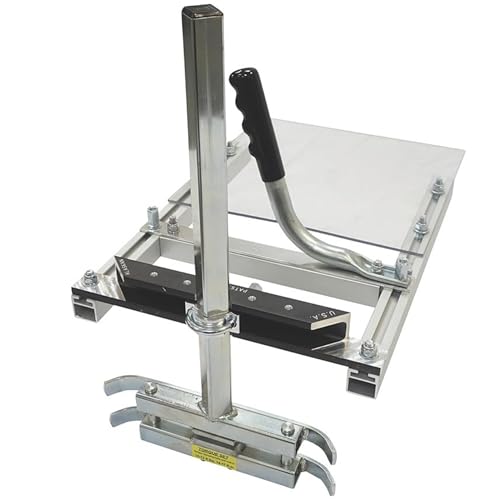
Best for Beginners and narrow logs
- Compact frame for logs up to about 13 inches wide
- Runs on a smaller 50-60cc saw
- Lightweight and easy to carry to the log
- Same clamp-and-post design as larger Alaskan mills
- Affordable, low-risk way to try milling
- Works with mid-size saws many owners already have
- Light and simple to set up
- Limited to narrow slabs and small logs
- Outgrown quickly if you want wide slabs
Verdict: An inexpensive entry point that lets you learn milling on small logs before committing to a big saw and a wide mill.

Best for Budget-minded millers wanting wide capacity
- Aluminium and steel frame rated for bars up to 36 inches
- Cuts slabs from around half an inch to over a foot thick
- Bolts together for transport and storage
- Fits most common bar mounts
- Wide capacity at a low price
- Handles larger logs than entry mills
- Breaks down for easy transport
- Fit and finish trail premium mills
- Still needs a large saw to use the full width
Verdict: A budget aluminium mill that opens up wide slabs for far less than premium frames, if you accept a rougher finish and supply the saw power.
Best for Cleaner, flatter boards on a guide rail
- Chainsaw mill that rides on its own track for the cut
- Handles logs up to about 14 inches wide
- Rail system removes the need for a fixed ladder guide
- Carriage steadies the saw for flat, repeatable cuts
- Very flat, consistent cuts from the rail
- Easier on the operator than freehand pushing
- Well-engineered, portable system
- Higher price than simple Alaskan mills
- Narrower width capacity than big slabbing frames
Verdict: A rail-guided step up for millers who want flatter boards and less muscle than a bare Alaskan mill, at a premium price.
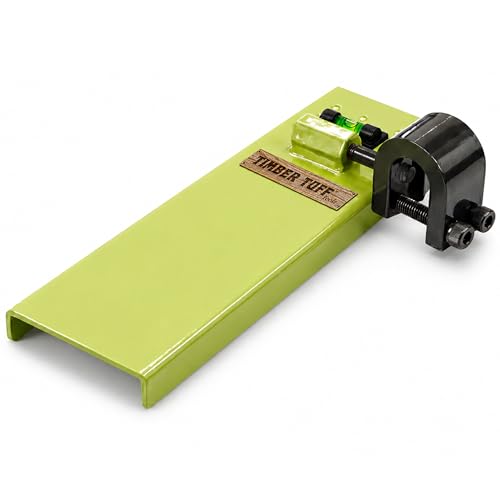
Best for Occasional, compact milling
- Small mill guide for bars from about 9 to 20 inches
- Steel construction with adjustable cut thickness
- Light and quick to set up for small jobs
- Low cost for trying occasional milling
- Inexpensive and simple
- Good for small, infrequent milling
- Compact and easy to store
- Narrow capacity limits slab size
- Basic finish and adjustment
Verdict: A low-cost, compact guide for occasional small-log milling, best kept to modest boards rather than wide hardwood slabs.

Best for Making the flat first cut
- Modular guide rail for the opening slabbing cut
- Replaces a screwed-on ladder or board
- Sections join to span long logs
- Pairs with an Alaskan mill for the first pass
- Gives a dead-flat reference for the first cut
- Reusable and adjustable across many logs
- Removes fiddly ladder setups
- An accessory, not a standalone mill
- Extra cost on top of the mill itself
Verdict: Not a mill on its own but the accessory that makes the crucial first cut easy and true, a smart add-on for serious slabbing.
Frequently Asked Questions
What size chainsaw do I need for a chainsaw mill?
You need a large gas chainsaw, generally 50-60cc for narrow softwood slabs, 70-90cc for boards up to 24 inches, and 90cc or more for wide hardwood slabs. Milling loads an engine harder than any other cut, so battery and small homeowner saws are not suitable.
Do I need a special chain to use a chainsaw mill?
A ripping chain is strongly recommended, because milling cuts along the grain rather than across it. Ripping chains are filed to a shallower angle so they shear long fibres cleanly, leaving a smoother slab and pulling the saw less. A standard crosscut chain will mill but cuts rougher and dulls faster.
Can you mill lumber with a small chainsaw?
A small saw can mill narrow softwood slabs on a small-log mill, but it will overheat and bog down in wide or hardwood logs. For anything beyond about 16 inches, step up to a 70cc-plus saw, since pushing an underpowered engine into continuous rip cuts wears it out quickly.
Is a chainsaw mill worth it?
A chainsaw mill is worth it if you want a low-cost, portable way to turn logs into slabs, especially logs too big or remote to move. It is slower and wastes more wood than a bandsaw mill, but for occasional slabs, beams, and live-edge boards it is the cheapest route into milling.