


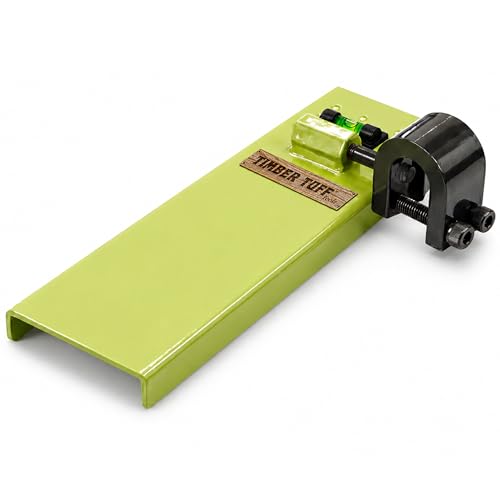

What is an Alaskan chainsaw mill?
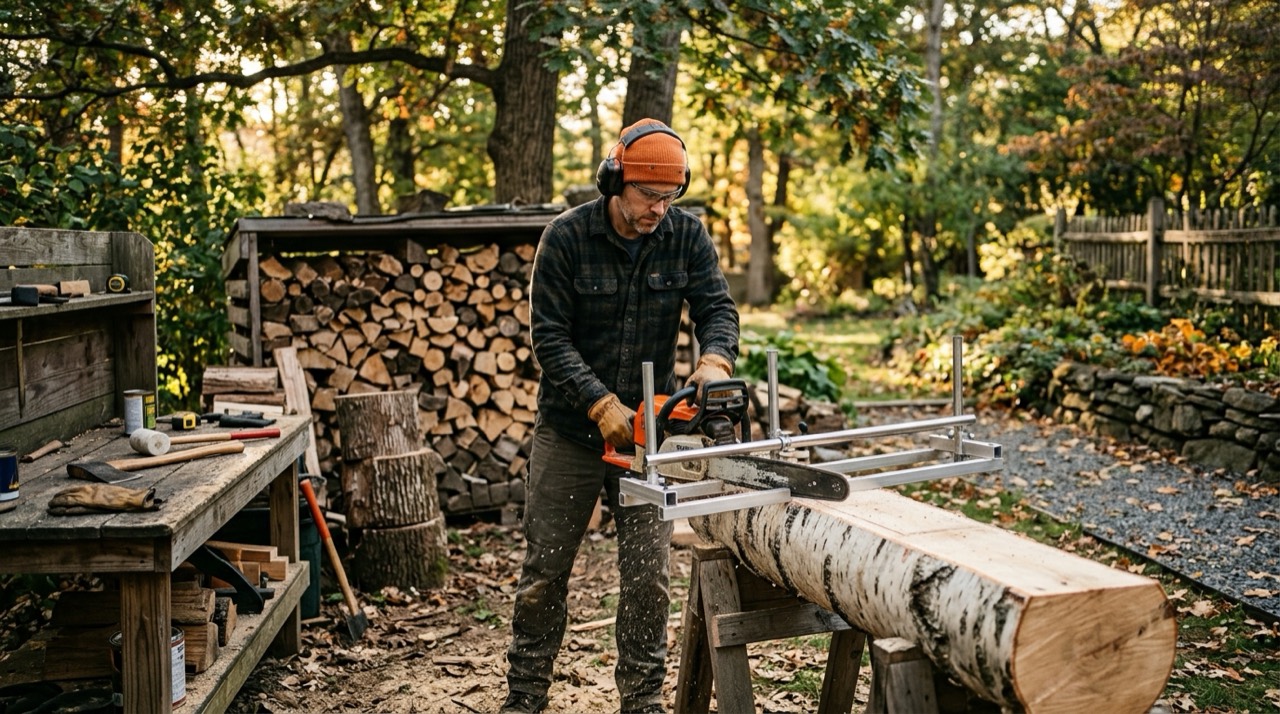
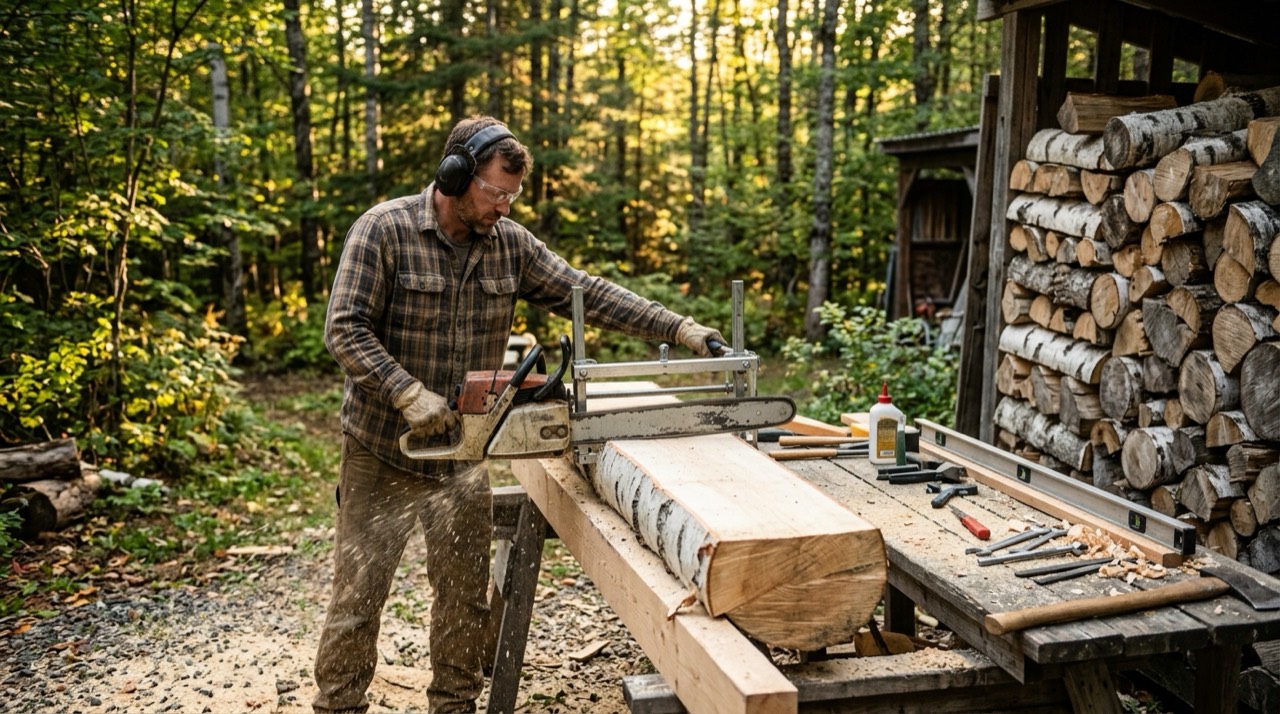
An Alaskan chainsaw mill is a rectangular frame that bolts to both ends of your chainsaw bar and rides across the top of a log, letting a handheld saw cut flat, even slabs. Designed for milling in remote country, it is the most common chainsaw mill type and the reason "Alaskan mill" is often used as a synonym for chainsaw milling.The frame carries two uprights that clamp the bar and a pair of adjustable posts that set slab thickness. As you push the saw along the log, the frame keeps the bar at a constant height, so instead of the freehand wander you would get holding a saw by hand, each pass comes out flat and parallel to the last. It is a simple, rugged tool with no engine of its own; all the power comes from the gas chainsaw you bolt into it.
What parts make up an Alaskan mill?
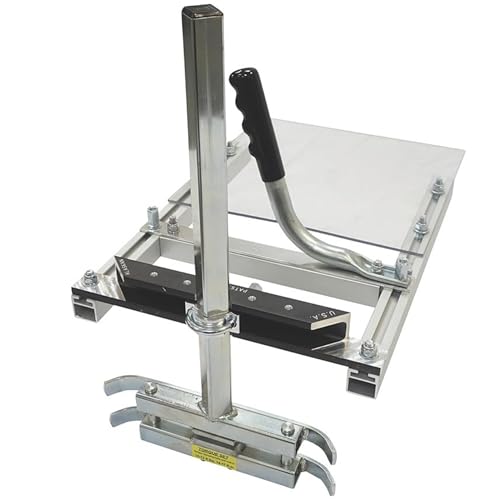
An Alaskan mill is built from a rigid rectangular frame, two bar clamps, and adjustable height posts, plus handles for pushing the saw through the cut. Each part has one job, and the stiffness of the whole assembly decides how flat your slabs come out.- The rails or channels form the flat plane the mill rides on, and must not flex or twist under load.
- The end clamps grip the bar at the nose and near the powerhead, holding it square without crushing it.
- The height posts raise and lower the frame relative to the bar to set each slab's thickness.
- The handles let you feed the saw steadily while keeping both hands clear of the chain.
Because the frame adds no power, its whole value is holding the bar rigid and square; any play in the clamps or bend in the rails shows up directly as an uneven slab. This is why quality frames use stiff extruded aluminium and precise threaded adjusters rather than light, flexible stock.
How do you set up an Alaskan mill on a log?
Setting up an Alaskan mill starts with a stable, roughly level log that cannot roll, chocked with wedges or stakes so it stays put through every cut. Clamp the mill to your bar at the width you want, set the posts to your first slab thickness, and check that both ends sit square to the bar.Stability is everything, because a log that shifts mid-cut ruins the slab and is dangerous. Many millers work on the ground with the log wedged, while others raise it onto low log stands to save their backs. Fit the mill so the powerhead sits on your dominant-hand side, keep the bar nuts firm, and confirm the auxiliary oiler, if you use one, is topped up before you start. Knock off any embedded dirt, grit, or bark where the chain will pass, because grit dulls a chain almost instantly and milling already blunts an edge fast.
How do you make the flat first cut?
The flat first cut is made against a straight guide fixed to the top of the log, because the mill needs one true reference surface before it can cut parallel slabs. Screw a rigid ladder, a straight board, or a purpose-built slabbing rail to the log, run the mill along it for the opening pass, then remove the guide.This first pass matters most, so take your time squaring and fastening the guide. Once the top slab comes off, you have a flat plane, and every cut after it simply rides on the freshly milled face below. Reset the posts down by your next slab thickness and repeat, keeping the saw at full throttle and letting a sharp ripping chain pull itself through rather than forcing it. Milling dulls a chain fast, so our chainsaw sharpening guide is worth a read before you start.
How do you mill parallel slabs after the first cut?
After the flat first cut, milling parallel slabs is a repeating loop: lower the posts by one slab thickness, run the mill along the flat face below, remove the slab, and repeat down the log. Each pass uses the surface left by the last as its guide, so no rail is needed after the opening cut.The sequence for each slab is:
- Lower both height posts by the same amount to your chosen thickness, checking they match so the frame stays level.
- Rest the mill on the freshly milled flat and start the saw clear of the wood.
- Bring the saw to full throttle and feed it steadily into the cut, letting the ripping chain pull itself through.
- Support or wedge the slab near the end of the cut so it does not pinch the bar or drop and tear.
- Lift off the finished slab, clear the chips, and reset for the next pass.
Consistency is what makes a clean stack of boards: keep the throttle wide open, feed at the steady pace the chip tells you the saw can handle, and never force a dull chain through the cut.
How thick can you cut slabs with an Alaskan mill?
An Alaskan mill can cut slabs from around three-quarters of an inch up to several inches thick, set by the mill's adjustable posts, with common furniture slabs falling in the two-to-three-inch range. Cutting slightly thick leaves material for drying movement and later surfacing.Thickness is your choice on every pass, so you can mix dimensions from one log, taking thick slabs for tabletops and thinner boards for shelving. Remember that slabs shrink and can cup as they dry, which is why millers cut a touch oversize and then sticker and dry the wood for months before final flattening.
How do you mill a log wider than your bar?
A log wider than your bar can still be milled by cutting from both sides or by removing a top cant first, though both add effort and the risk of a mismatched cut where the passes meet. This is advanced work and rewards a very stable log and careful measurement.The common approach is to mill as far as the bar reaches from one side, then rotate the log or reposition the mill to complete the cut from the other side, aiming to have the two kerfs meet in a single plane. Any misalignment leaves a step in the slab. Most hobbyists avoid this by sizing the bar and mill to their logs from the start, and treating oversize logs as candidates for beams or shorter sections rather than full-width slabs.
What are the limits of an Alaskan mill?
The main limits of an Alaskan mill are speed, effort, and kerf waste, because a chainsaw's wide cut removes more wood than a bandsaw and every pass is powered by your own pushing. Slab width is capped by your bar length, and very wide logs need a long bar and a big saw to match.None of this makes the tool a poor choice; it makes it a deliberate one. For occasional slabs, beams, and live-edge boards from logs you could never haul to a sawmill, an Alaskan mill earns its keep. Plan for what happens after the cut, too: fresh slabs are heavy and wet, and they need stickering and months of air drying before they are stable enough to build with. If you expect to mill often or want faster, cleaner cuts, weigh it against a dedicated bandsaw mill, and see our best chainsaw mill picks for the frames and rails that suit different logs.
Why are my Alaskan mill slabs uneven, and how do you fix it?
Uneven or wavy slabs usually come from a flexing setup, a dull or unevenly filed chain, or an inconsistent feed rate, not from the mill design itself. Diagnosing which one is at fault saves wood and frustration.Work through the likely causes:
- Frame or bar flex: check the clamps are tight and the rails straight, because a loose or bent frame wanders.
- A dull or unevenly sharpened chain: one side cutting harder than the other pulls the cut off line, so keep the ripping chain sharp and evenly filed.
- Rakers set wrong: depth gauges too high make the chain skate, too low make it grab and dig.
- Inconsistent feed or throttle: lugging the engine or pausing mid-cut leaves ridges, so hold full throttle and a steady pace.
- An unstable log: a log that shifts mid-cut spoils the slab, so chock it firmly before starting.
Ridging at the very start or end of a cut, called snipe, often comes from leaning on the handles as the mill enters or exits, so keep even pressure through the whole pass. Fixing the setup rather than sanding away a bad slab is always the cheaper answer.