



Why does the chainsaw matter as much as the mill?
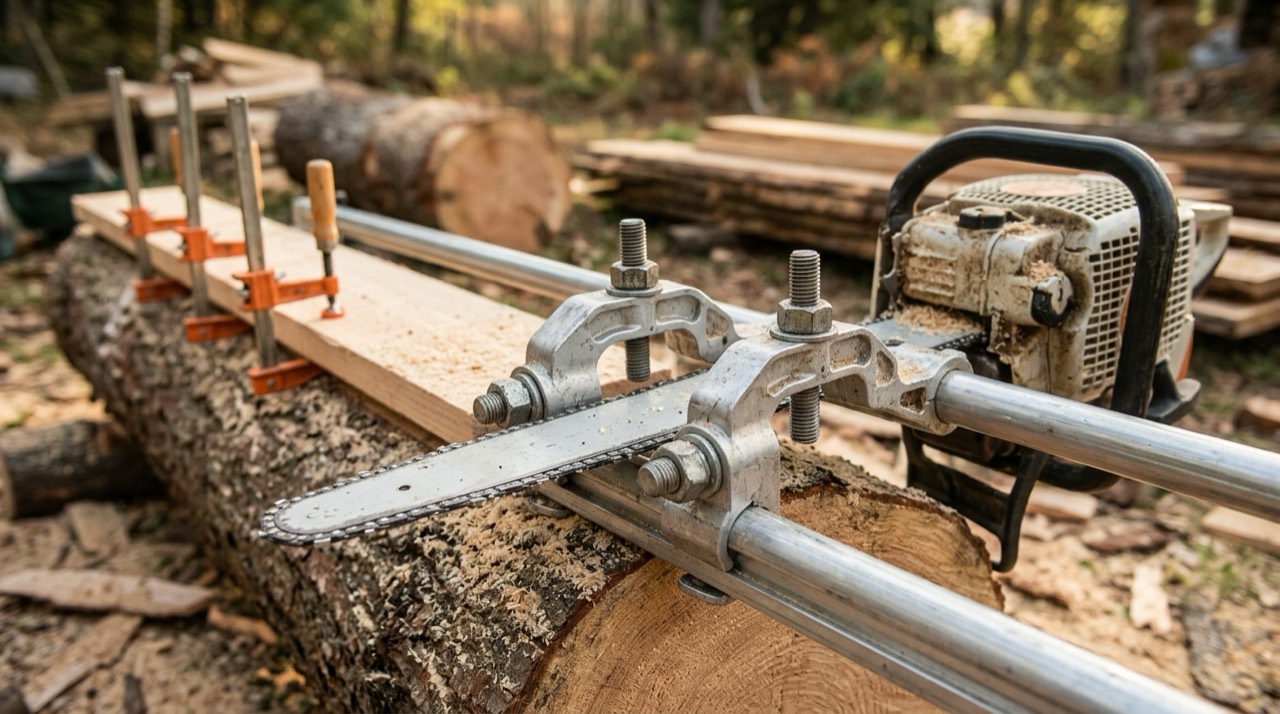
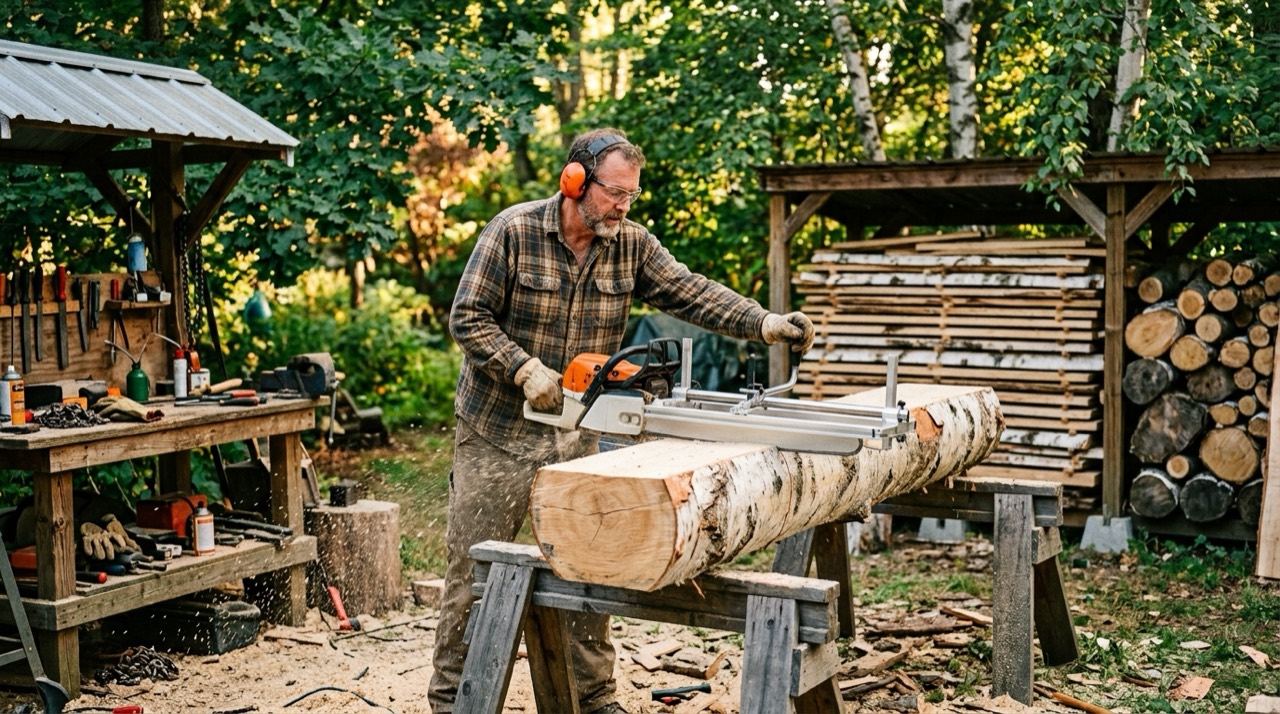
The chainsaw matters as much as the mill because the frame only guides the cut; the powerhead, bar, and chain do all the work of ripping wood. A well-set mill on an underpowered saw still cuts slowly and overheats, so choosing the right saw is the bigger decision.Milling is the most demanding thing you can ask of a chainsaw, harder than felling or bucking, because you rip along the grain for the full length of the log with the engine near full throttle for minutes at a time. That workload rewards displacement, cooling, and a fresh ripping chain far more than it rewards an expensive frame. Get the saw right first, then bolt on a mill that fits your logs.
What powerhead should you run for milling?
The powerhead for milling should be a large-displacement gas saw, ideally 70cc or more for boards over 16 inches and 90cc and up for wide hardwood slabs. Professional and dedicated milling saws such as the Stihl MS 661 and Husqvarna 592 XP are built for this sustained load, though many hobbyists mill happily with a 70-90cc saw.Displacement buys two things milling needs: torque to keep the chain moving through a long cut, and the thermal headroom to run hot without bogging. Smaller saws can mill narrow softwood slabs, but pushing a 50cc homeowner saw into wide hardwood is how engines get cooked. Our gas chainsaw guide breaks the power classes down, and for milling you generally want the top of that range. Many millers dedicate an older or second big saw to the mill rather than risk their main cutting saw, since the sustained heat and dust of milling are hard on any engine.
Why does milling need a ripping chain?
Milling needs a ripping chain because you are cutting along the wood grain, not across it, and a ripping chain's cutters are ground to a shallower top-plate angle, around 10 degrees instead of the usual 25 to 35. That lower angle shears long fibres cleanly, leaving a smoother slab and pulling the saw less.A standard crosscut chain will still mill, but it cuts rougher, slower, and dulls faster in the abrasive, continuous work of ripping. Granberg, Oregon, and Stihl all sell ready-made ripping chains, or you can regrind a crosscut chain to a ripping profile. Because milling blunts a chain quickly, plan to touch it up often; our chainsaw chains guide covers chain choice and our sharpening guide keeps the edge keen.
How do you set up a ripping chain for milling?
Setting up a ripping chain means filing the cutters to a shallow top-plate angle of around 10 degrees and keeping the depth gauges consistent, so the chain shears long grain fibres cleanly rather than tearing them. You can buy a ready-ground ripping chain or convert a crosscut chain by refiling.To file a chain to a ripping profile:
- Clamp the bar or secure the saw so the chain cannot move while you file.
- File each cutter's top plate to a low angle near 10 degrees, keeping every cutter the same length so the chain cuts straight.
- Match the file's down angle and hook to the chain's specification, taking the same number of strokes per cutter.
- Check and lower the depth gauges to a consistent height with a flat file and a raker gauge, since these set how deep each cutter bites.
- Deburr the cutters and lightly oil the chain before fitting it.
Our chainsaw sharpening guide covers filing technique in detail, and the files and gauges you need are collected in our sharpening files and tools guide. Even filing matters more in milling than anywhere else, because a chain that cuts harder on one side steers the whole slab off flat.
How do you keep the bar oiled and cool while milling?
Keeping the bar oiled and cool is critical in milling because long rip cuts starve a standard oiler and run the bar tip hot enough to wear fast. Many millers fit an auxiliary oiler, a small reservoir that feeds extra oil to the bar's outer end, and run generous amounts of bar and chain oil.A hot, dry bar loses its temper, the chain drags, and cutting slows to a crawl. Beyond extra oil, keep the chain sharp so it slices rather than rubs, let the saw cool between long cuts, and check the bar rails for burrs. Some millers use a thinner oil in cold weather so it still flows to the tip. Treating the bar and chain as consumables, explained in our chainsaw bars guide, keeps a milling setup cutting cleanly.
What bar length and type suit chainsaw milling?
A milling bar should be a few inches longer than your widest log and ideally a solid, sturdy type rated for the load, because long rip cuts run a bar hot and stress its nose. Usable cutting width is always less than bar length once the mill's clamps are accounted for.Choose the bar to your logs, not the biggest available, since a longer bar needs more power to drive its extra chain and adds weight. Many millers favour a robust bar with a heavy-duty or replaceable sprocket nose, and some run a solid-nose bar for the hardest slabbing. Keep the bar rails clean and dressed, flip the bar periodically to even the wear, and treat it as a consumable under milling heat. Our chainsaw bars guide explains bar types, mounts, and sizing in full.
How do you read the chips to judge a milling cut?
The chips a milling saw throws tell you whether the chain is sharp and the cut is healthy: long, ribbon-like shavings mean a sharp chain slicing well, while fine powder or dust means the chain has dulled and is rubbing and heating instead of cutting. Reading the chip is the quickest feedback you have.When the shavings shorten and the saw starts to smoke or slow despite full throttle, stop and sharpen rather than push harder, because a dull chain generates heat that damages the bar and burns the wood. A chain that suddenly cuts on a curve or pulls to one side signals uneven cutter length. Watching the chip and the cut surface pass by pass lets you catch a fading edge before it wastes a slab or overheats the saw.
How much fuel and oil does milling use?
Milling uses fuel and bar oil far faster than ordinary cutting, because the saw runs at full throttle with the whole bar buried for minutes per pass. Expect to refuel frequently and to go through bar oil in volume, and keep both on hand so a session is not cut short.A large milling saw can empty a fuel tank in a handful of long passes, and a wide slab can use a surprising amount of bar and chain oil to keep the bar lubricated end to end. Mix only as much two-stroke fuel as you will use in a few weeks, since old mix goes stale and runs poorly. Running out of bar oil mid-cut is not just inconvenient; a dry bar overheats and ruins both bar and chain quickly.
How do you manage fuel, heat, and engine wear?
Managing fuel, heat, and engine wear means running fresh, correctly mixed two-stroke fuel, working in stages, and never milling in an enclosed space. A milling saw drinks fuel fast at full throttle, so keep fresh mix on hand and let the engine cool between tanks rather than running it flat out until it stalls.Heat is the enemy of a milling engine, so clean the air filter often, since sawdust builds up quickly, and do not lean the carburettor to chase speed. Watch the chip, too: a chain that suddenly throws fine powder instead of long shavings has gone dull and is generating heat rather than cutting, which is your signal to stop and sharpen. Above all, the continuous exhaust from a big saw run hard makes carbon monoxide a real danger, so mill outdoors with good airflow and take regular breaks. For choosing and maintaining the saw itself, see our gas chainsaw guide and chainsaw maintenance guide.