Best Chainsaw Bar
Best Chainsaw Bar, ranked from aggregated owner ratings and reviews, not first-hand testing. Real pros, cons, and who each pick is best for.

Our Top 3 Picks
Quick Comparison
| Product | Best for | Buy | |
|---|---|---|---|
| Oregon PowerCut Guide Bar | Best Overall | See Amazon | View (paid link) |
| Oregon AdvanceCut Guide Bar | Best Value | See Amazon | View (paid link) |
| Stihl Rollomatic ES | Best Premium | See Amazon | View (paid link) |
| Husqvarna X-Tough Guide Bar | Best Heavy-Duty | See Amazon | View (paid link) |
| Tsumura Lightweight Guide Bar | Best Compact | See Amazon | View (paid link) |
| Sugihara Light-Type Pro Bar | Editor's Pick | See Amazon | View (paid link) |
How to Choose a Replacement Chainsaw Bar
The best chainsaw bar is the one that matches your saw four fit numbers, survives the wood you cut, and keeps oil on the chain — brand comes second. This guide summarises how we shortlisted bars from manufacturer specs, published mount charts, and aggregated owner feedback, so you can match a bar to your saw with confidence rather than guesswork.Match the Four Fit Numbers Before Anything Else
Confirm called length, mount pattern, gauge, and pitch before you compare brands, because a fine bar that does not fit is scrap metal. Read the code and stampings off your current bar, or look your saw up in a fit chart, and carry those four numbers into every product below — the chainsaw bars guide explains what each one means. Every bar here comes in several lengths and gauges, so fit is about picking the right variant, not a different product.Pick a Length Your Powerhead Can Actually Pull
Choose the shortest bar that clears your logs, and never exceed the saw maximum rated length. A 14–16 in bar suits small homeowner and battery saws; 18–20 in fits mid-size gas saws; 24 in and up belongs on high-power saws used for felling or milling. Over-barring a light saw bogs the cut and wears the drivetrain, so more length is not free power.Choose the Nose Type for Your Cutting
Run a sprocket-nose bar for clean firewood, felling, and pruning, where the roller tip cuts friction and speeds the chain. Switch to a hard-nose bar only for abrasive, dirty, or milling work that would destroy a nose sprocket. Most owners are best served by a quality sprocket-nose bar in the right length.Weigh Laminated, Solid, and Lightweight Builds
Laminated bars keep weight and cost down for everyday use; solid bars resist flex and heat for heavy chainsaw milling and big-bore saws; lightweight alloy-core bars cut fatigue on top-handle and pole saw work. Decide by how hard and how long you cut, not by looks. A weekend firewood cutter and a full-day faller want different bars off the same rack.OEM or Quality Aftermarket?
OEM bars from Stihl or Husqvarna are a safe match for those saws, while Oregon, Tsumura, and Sugihara make quality aftermarket bars that fit many brands via mount codes. Reputable aftermarket bars perform on par with OEM for most owners at lower cost; ultra-cheap no-name bars often wear rails and lose oil holes fast, so the saving rarely lasts.The comparison below lines up our picks by the attributes that matter most when you are replacing a worn bar.
| Bar | Nose | Construction | Typical length range | Best for |
|---|---|---|---|---|
| Oregon PowerCut | Sprocket | Solid, replaceable nose | 16–36 in | All-round pro and firewood cutting |
| Oregon AdvanceCut | Sprocket | Laminated | 14–20 in | Homeowner and mid-size saws |
| Stihl Rollomatic ES | Sprocket | Laminated, light | 16–32 in | Stihl saws, OEM fit |
| Husqvarna X-Tough | Sprocket | Solid | 20–36 in | Big-bore Husqvarna, felling, milling |
| Tsumura Lightweight | Sprocket | Laminated alloy-core | 12–24 in | Top-handle and light saws |
| Sugihara Light-Type | Sprocket | Solid, lightweight | 16–36 in | Reduced-weight pro cutting |
Match the Bar to How Often You Cut
Match the bar to your real workload, not the biggest job you might face once a year, because the right bar for a Saturday pruner is the wrong bar for a full-day faller. Four typical owners want four different bars.- Occasional homeowner: a light 14–16 in laminated sprocket-nose bar handles limbs, small trunks, and storm cleanup without tiring your arms.
- Regular firewood cutter: an 18–20 in solid or replaceable-nose bar takes daily bucking of seasoned hardwood in its stride.
- Professional faller: a 20–28 in solid pro bar holds a straight cut under sustained load and survives long shifts.
- Arborist or top-handle user: a short lightweight alloy-core bar keeps nose weight down for controlled one-handed work aloft.
Buying for the job you actually do keeps weight, cost, and drivetrain wear where they belong. If your work spans two of these, a second bar beats one heavy compromise.
What Rail and Nose Quality Should You Look For?
Judge a bar by the hardness of its rails and the quality of its nose sprocket, because those two parts decide how long it holds a straight cut. Better bars use induction-hardened rails and a sealed, well-supported tip that resists heat and grit.- Hardened rails: they keep their square edge far longer than soft steel, which mushrooms and spreads under load.
- A quality nose sprocket: smooth, sealed bearings that spin freely and shrug off dust, where cheap tips seize and overheat.
- Clean, full-size oil holes: a generous, well-drilled port keeps oil flowing where a stamped budget hole clogs.
- A straight, flat body: lay a straightedge along the bar — a good bar is dead flat, while a warped one cuts in a curve.
You cannot always read rail hardness off a spec sheet, but reputable makers like Oregon (paid link), Stihl, Husqvarna, Tsumura, and Sugihara earn their name on exactly these details.
Where Does the Money Go, Budget vs Premium?
The gap between a cheap and a premium bar is rail hardness, nose quality, and straightness — not the length printed on the box. A no-name bar can look identical to a pro bar and cost a third as much, yet spread its rails and lose its oil hole within a season of hardwood.| Bar tier | Typical build | What you gain | What you give up |
|---|---|---|---|
| Budget no-name | Soft laminated, stamped nose | Lowest upfront price | Short rail life, oiler clogs, may warp |
| Quality aftermarket | Hardened laminated or solid | OEM-level life at lower cost | Narrower fit list than OEM |
| OEM / premium pro | Hardened solid, sealed nose | Longest life, straightest cut | Highest price |
For an occasional user the budget saving can make sense, but anyone cutting weekly is better served spending once on a quality aftermarket or OEM bar than replacing a cheap one twice.
Which Bars Suit Battery, Mini, and Top-Handle Saws?
Light saws need bars chosen for balance, not reach, so a battery chainsaw, a mini chainsaw, or a top-handle saw is best on a short, narrow-gauge, lightweight bar matched to that exact tool. A heavy pro bar just unbalances a small saw and drains a battery faster.- Battery saws usually run a 10–16 in bar in a narrow 0.043 or 0.050 gauge to hold current draw down and runtime up.
- Mini saws often use a short 4–8 in bar unique to the model, so a generic bar rarely fits at all.
- Top-handle arborist saws favour light alloy-core bars that cut nose weight for safe one-handed work in a tree.
For these tools, confirm the exact mount before buying and lean toward the OEM part or a proven light bar like the Tsumura rather than a heavy general-purpose bar.
How Long Should a Replacement Bar Last?
A quality replacement bar, oiled every tank and flipped and dressed on schedule, lasts years and outlives several chains. Treated well, a bar is the cheapest part of the saw to own per hour of cutting; treated badly, it becomes the most expensive.The running cost of a bar is set less by its purchase price than by how you maintain it. A premium bar run dry and never cleaned can die in a season, while a mid-price bar given regular chainsaw maintenance can last a decade of weekend use. Flip it to spread rail wear, dress the burrs with a flat file, keep the groove and oil hole clear, and pair it with a sharp chain so the saw pulls itself through the wood. Every one of those habits costs minutes and returns years, which is why the maintenance routine matters more than the badge on the bar.
What Mistakes Do Buyers Make Choosing a Bar?
The most common buying mistake is ordering by length alone and ignoring the mount, gauge, and pitch, so the bar arrives and will not fit. A close second is over-barring — fitting the longest bar the mount allows to an engine that cannot pull it.- Buying on called length only, then finding the mount code or gauge is wrong.
- Chasing maximum length instead of matching the bar to the saw's power.
- Reusing a stretched old chain on a new bar, which wears the fresh rails fast.
- Choosing an ultra-cheap no-name bar whose rails and oil hole fail within a season.
Write down all four fit numbers first, pick the length your powerhead can actually drive, and buy a matched chain with the bar to sidestep every one of these.
Change a Bar Safely
Changing a bar means handling a chain full of sharp teeth, so wear cut-resistant gloves, keep the saw off with the spark-plug boot or battery removed, and set correct chain tension before the first cut. A new bar with a properly tensioned, sharp chain cuts safer than a worn one. And if you are felling large or leaning trees, or cutting overhead, that is trained-professional work regardless of which bar you fit — this guide is general information, not a substitute for training.Full Ranking, Reviewed

Best for Owners who want one durable bar for firewood and felling
- Solid one-piece body resists bending in dense hardwood
- Replaceable sprocket nose extends overall bar life
- Wide length range from about 16 to 36 inches
- Sold in common gauges and mount codes to fit many saws
- Pro-grade durability at a fair price
- Replaceable tip saves buying a whole new bar
- Fits a broad list of saws through Oregon mount codes
- Heavier than a laminated homeowner bar
- More bar than needed for occasional light pruning
Verdict: A tough, widely compatible bar that suits most owners cutting firewood or felling on a regular basis.
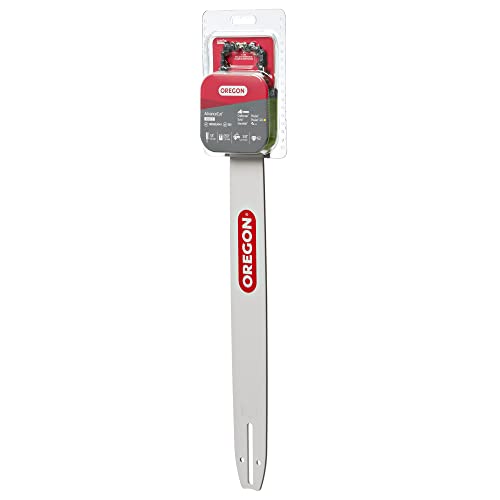
Best for Homeowners running 14–20 in gas or corded saws
- Laminated three-plate build keeps weight and cost low
- Sprocket nose for fast, low-friction cutting
- Small-radius nose helps reduce kickback
- Offered in popular 0.050 and 0.058 gauges and mounts
- Light and easy to handle all day
- Affordable everyday replacement bar
- Fits many mainstream homeowner saws
- Laminated body flexes more under heavy load
- Not intended for milling or big-bore saws
Verdict: An easy, affordable bar for routine yard and firewood cutting on mid-size saws.

Best for Stihl owners wanting OEM fit with low weight
- Laminated lightweight body reduces arm fatigue
- Hard-faced sprocket nose built for durability
- Designed as OEM fit for matching Stihl saws
- Available across pro bar lengths and gauges
- Exact OEM match for Stihl powerheads
- Light in the hand for its length
- Long service life reported by owners
- Priced above aftermarket equivalents
- Mount is specific to Stihl saws
Verdict: The default choice for Stihl owners who want a light, long-lasting bar that fits perfectly.

Best for Big-bore felling and milling on Husqvarna saws
- Solid body built for large-displacement saws
- Reinforced replaceable nose on long bars
- Rated for demanding felling and milling loads
- Offered in long lengths from about 20 inches up
- Stands up to heavy professional use
- Replaceable nose keeps long bars serviceable
- Matched to Husqvarna big-bore powerheads
- Heavy and long for everyday firewood
- Higher price than homeowner bars
Verdict: A rugged long bar for owners running powerful Husqvarna saws in felling or milling work.

Best for Top-handle, pole, and small saws where weight matters
- Alloy-core laminated build lightens the nose
- Popular with arborists and ported small saws
- Sprocket nose for quick chain speed
- Short and mid lengths from about 12 inches
- Noticeably light at the tip
- Good balance for top-handle class saws
- Well regarded by arborist owners
- Fit list is narrower than Oregon
- Light build not aimed at heavy milling
Verdict: A light, well-balanced bar favoured for top-handle and small-saw work where fatigue counts.

Best for Owners wanting a light solid bar for long days
- Solid body with a lightened profile
- Made in Japan with a name for straightness
- Sprocket nose across a wide length range
- Fits many pro saws through standard mounts
- Light for a solid one-piece bar
- Holds a straight cut under load
- Long service life reported by owners
- Premium price
- Availability varies by region
Verdict: A premium lightweight solid bar that pro-minded owners rate for straight cutting over long days.
Frequently Asked Questions
How do I know which chainsaw bar fits my saw?
Read the four fit numbers off your current bar — called length, mount code, gauge, and pitch — or look your saw model up in a bar-fit chart. Match all four and the bar bolts on; miss one and it will not run.
Are aftermarket chainsaw bars as good as OEM?
Quality aftermarket bars from Oregon, Tsumura, and Sugihara perform on par with OEM for most owners at a lower price. The bars to avoid are ultra-cheap no-name ones that wear rails and lose oil holes quickly.
How long does a chainsaw bar last?
A quality bar that is oiled every tank, flipped regularly, and dressed with a file lasts years and outlives several chains. Running it dry or in grit, or leaving a stretched chain on it, shortens that life a lot.
Do I have to replace the bar and chain together?
Not always, but treat them as a matched set for gauge and pitch. A new bar with a badly stretched old chain wears fast, and a new chain on a grooved worn bar cuts crooked, so pair fresh with fresh when either is far gone.