



How Do You Identify the Bar You Already Have?
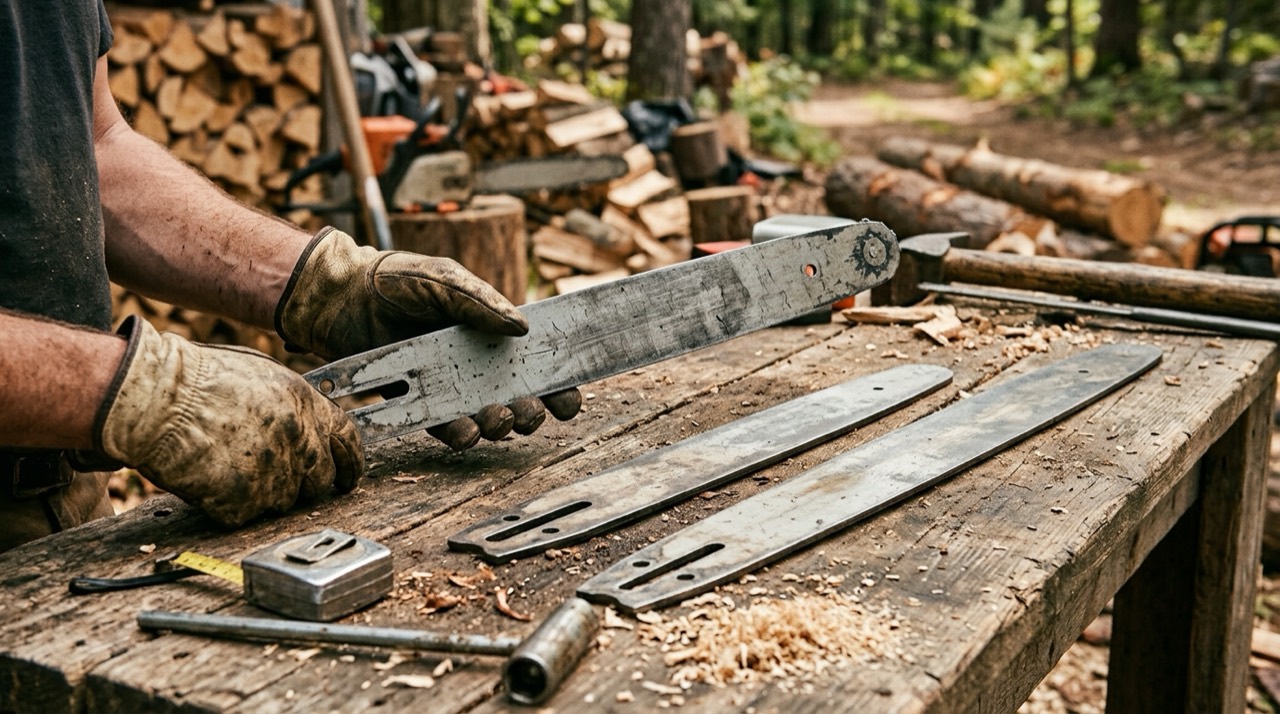
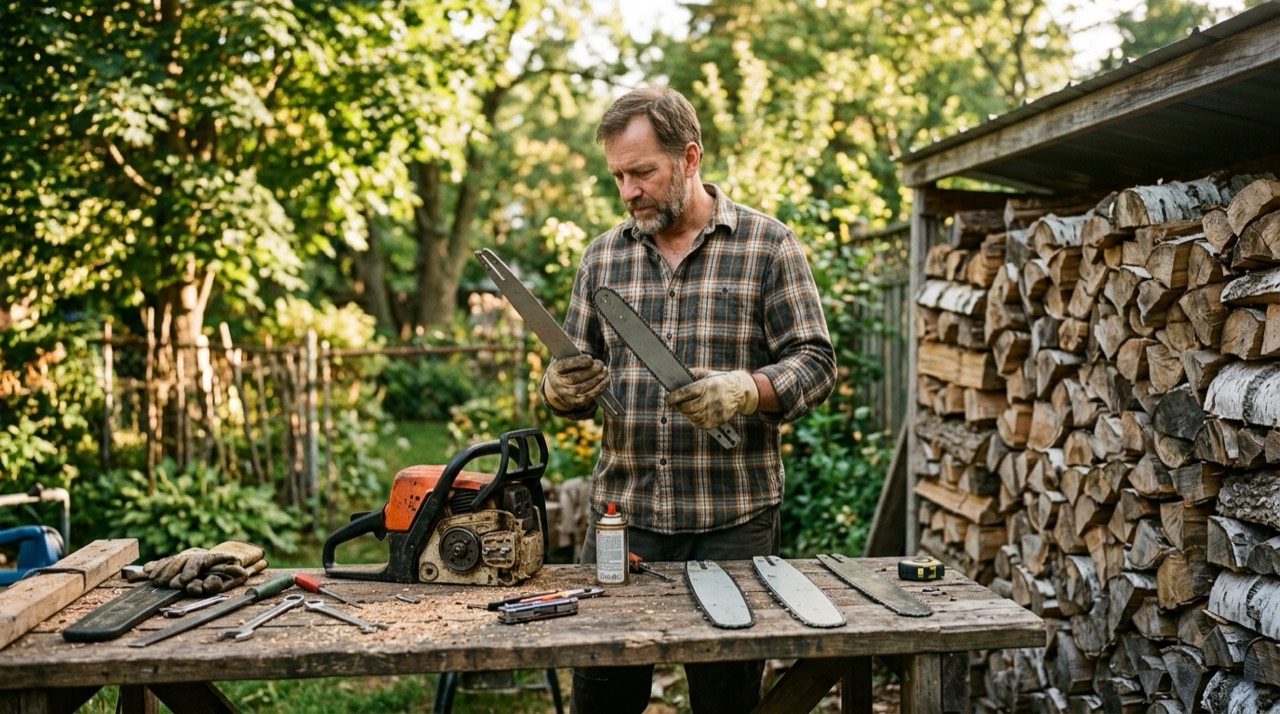
Start with the bar you own, because nearly every bar is laser-stamped near the tail with its length, its gauge, and often a mount code and part number. Read those stampings first: they tell you exactly what to reorder without measuring rails or guessing at fit. Wipe the tail clean and the numbers are usually easy to read.If the stampings have worn away, you can still recover the details by measuring the called length, reading the gauge off the chain drive links, and matching the tail slot to a fit chart. But the stamped code is always the fastest and most reliable route to the right replacement.
What Do Oregon Bar Codes Mean?
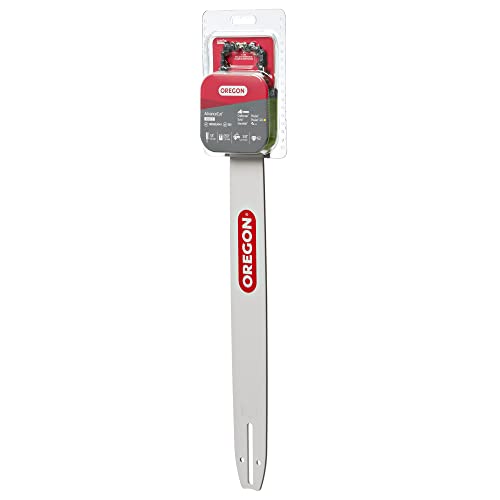
Oregon part numbers pack the key details into one string. A number such as 200PXBK095 reads as a 20 in bar (200), a chain and bar family (PXBK), and a mount code (095, the K095 pattern). Once you know your mount code, you can buy a different length in the same code and keep the fit.Other makers use their own numbering, but the idea is the same: a short code that ties length, gauge, and mount together. Note the whole string down rather than just the length, or you risk ordering a bar that will not mount.
How Do You Cross-Reference a Bar to Your Saw?
When the old bar is unmarked or missing, look your saw make and model up in a bar-and-chain fit chart from Oregon or the saw maker. The chart returns the mount pattern, the length options the saw supports, the correct gauge, and the chain drive-link count for each length. Match every one of those values, not just the length.Fit charts also flag the saw maximum rated length, which stops you ordering a bar the powerhead cannot pull. Treat that figure as a hard ceiling, not a suggestion.
Should You Match the Bar and Chain Together?
Yes — treat bar and chain as a matched set. They must share the same gauge and the same pitch, and the chain needs a drive-link count that suits the new bar length. A chainsaw chain sized for a 16 in bar will not fit an 18 in bar, even on the same saw. Buying a bar-and-chain combo removes the mismatch risk, since the pair is already sized to run together.If you are only replacing the bar and keeping a well-used chain, check the chain is not stretched or worn, or the new bar will wear unevenly from day one.
Can You Fit a Longer or Shorter Bar?
You can change length within your powerhead rating — shorter for control and lighter weight, longer for reach — but never past the maximum the maker lists. Going shorter is almost always safe and often makes a saw more pleasant to use. Going longer only works if the saw has the power to keep the chain speed up under load.Remember that a length change means a new chain with the right drive-link count, and often a different feel in the cut. Match the whole set, not just the bar.
Do Battery and Brand Saws Need Special Bars?
Battery saws and each brand use their own mounts too. An EGO or other battery chainsaw bar is matched to that specific tool, and Stihl and Husqvarna frequently use OEM bars sized to their saws. Never assume a bar fits just because the length looks right — confirm the mount, gauge, and pitch first.Smaller mini chainsaws often use short, narrow-gauge bars unique to the model, so a generic bar rarely fits them at all. When in doubt, order the OEM part for a battery or mini saw rather than a cross-referenced aftermarket bar.
Where Do Top-Handle and Specialty Saws Fit In?
Top-handle arborist saws, pole saws, and chainsaw mills use short or lightweight bars chosen for balance and control rather than reach. Match those to the tool exactly, since the weight at the nose changes how the saw handles in the air or on a mill. A milling setup in particular needs a bar rated for the extra span and heat, not just any bar of the right length. When you are ready to replace, the best chainsaw bars picks call out which options suit light and specialty saws.How Do You Measure the Gauge Off Your Chain?
Read the gauge straight off a chain drive link, since the gauge is simply the thickness of those links and it must match the bar groove exactly. The four common gauges are 0.043, 0.050, 0.058, and 0.063 in, and getting it wrong means the chain either jams tight or rattles loose in the groove.- Remove the chain, or lift a drive link clear of the groove, with the saw off.
- Clean a drive link and measure its thickness with a caliper, or test-fit gauge feelers if you have them.
- Match the reading to the nearest standard gauge — most homeowner saws run 0.050.
- Confirm the bar you buy lists that same gauge, because a bar and chain must always share it.
If you have no caliper, the gauge is often stamped on the bar tail or printed on the chain box, so check those before measuring. The matching chainsaw chain guide covers reading chain markings in more detail.
How Do You Count Drive Links for a New Bar?
Count the drive links — the tangs that ride down in the groove — to size a replacement chain, because bars are sold by called length but chains are sold by exact drive-link count. Two 18 in bars from different makers can take different link counts, so the count, not the length, is what orders the chain.- Lay the chain out flat in a loop with the saw off.
- Count every drive link right around the loop.
- Note that number — for example 72 — as the chain's true size.
- When you change bar length, look the new length up in a fit chart to get its drive-link count.
Never assume the old chain fits a new-length bar; a longer or shorter bar needs its own link count. Buying a bar-and-chain combo removes the counting step, since the pair is already matched.
What If the Bar Has No Markings at All?
When a bar has no readable markings, rebuild every fit number by measuring, because the full spec can be recovered from the bar and chain themselves. Measure the called length, read the gauge off a drive link, work out the pitch from the rivet spacing, and match the tail slot to a fit chart.- Called length: measure from where the bar exits the saw to the tip and round up to the nearest even inch.
- Gauge: measure a drive-link thickness or test-fit gauge feelers.
- Pitch: measure across three consecutive rivets and divide by two.
- Mount: compare the tail slot, stud holes, and oil-hole position to a maker's fit chart.
With those four values in hand you can order a bar that fits even when the original is blank. When even that is unclear, take the old bar to a dealer and cross-reference it against a known chart rather than guessing.
How Do You Read Stihl and Husqvarna Bar Numbers?
Stihl and Husqvarna encode length, gauge, and mount in their own part numbers rather than Oregon codes, so the safest route for those saws is to match the OEM number or look the saw up in the maker's chart. Each brand's number ties the details together in a single string.| Maker | Detail on the bar | What it tells you |
|---|---|---|
| Stihl | Rollomatic ES, stamped length and gauge | Bar family plus called length and gauge |
| Husqvarna | X-Tough, stamped length and gauge | Bar family plus called length and gauge |
| Oregon (aftermarket) | Code such as 200PXBK095 | Length, chain family, and mount (K095) |
For a Stihl or Husqvarna saw, quoting the OEM bar family and length to a dealer is usually faster than cross-referencing, and it guarantees the mount. The chainsaw brands guide covers how each maker labels its bars and chains.
What Mistakes Stop a New Bar From Fitting?
The mistakes that stop a new bar fitting nearly all come from checking length but not the other three fit numbers. A wrong mount will not clamp on, a wrong gauge will not run the chain, and a wrong pitch means the nose sprocket and chain fight each other.- Ordering by length alone and getting the wrong mount code.
- Mixing gauges — dropping a 0.050 chain onto a 0.058 bar, or the reverse.
- Overlooking pitch, so the nose sprocket and chain pitch disagree.
- Reusing a chain with the wrong drive-link count after a length change.
- Assuming a battery or mini chainsaw takes a generic bar when it needs the model-specific part.
Confirm all four numbers before you buy and every one of these disappears. When you are ready to replace, the best chainsaw bars picks are grouped by mount and length to make matching easy.