


Measure the Called Length You Buy By
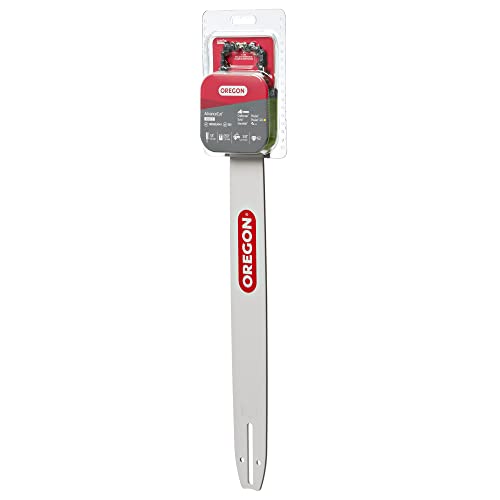
The called length is the usable cutting length and the number you order by, rounded to the nearest even inch. It is the part of the bar that sticks out past the saw body and does the cutting. Measure it with the saw switched off and, on a battery saw, the battery removed.- Lay the saw on a flat surface and let the chain stop fully.
- Place a tape at the front edge of the saw housing where the bar exits.
- Run the tape straight to the far tip of the bar nose.
- Round the reading up to the nearest even inch — a 15.5 in reading is a 16 in bar.
Measure the True Length for Reference
The true length is the entire bar from tip to tail, including the mounting section hidden under the side cover. To read it, remove the side cover and the bar, then measure the whole steel bar end to end. You rarely order by this number, but it helps when you are cross-referencing an unmarked bar against a fit chart.Why the Two Measurements Differ
The two numbers differ because part of every bar is buried in the saw to mount it. The called length ignores that buried section and describes only what you can cut with, which is why two bars with the same called length can have slightly different true lengths across brands. Always shop by called length, and confirm the mount, gauge, and pitch as well so the bar actually fits your saw.What Tools Do You Need to Measure a Bar?
Measuring a bar needs almost nothing: a tape measure for length and, ideally, a caliper for gauge and pitch. You can get the called length — the number you order by — with a tape alone.- A tape measure or rule for the called and true length.
- A caliper for drive-link gauge and rivet spacing, if you want to confirm the chain fit.
- A clean rag to wipe oil and sawdust off the tail so any stampings show.
- Cut-resistant gloves, because you will be handling a chain full of sharp teeth.
Wipe the tail first — many bars are stamped with their length and gauge, which can save you measuring at all. Keep the work gloves on whenever the chain is in your hands.
How Do You Measure the Gauge and Pitch?
Measure gauge and pitch off the chain, since both describe the chain that must fit the bar. Gauge is the drive-link thickness; pitch is the distance across three rivets divided by two.- Clean a drive link and measure its thickness — it will read close to 0.043, 0.050, 0.058, or 0.063 in.
- Measure from the centre of one rivet to the centre of the third rivet along the chain.
- Divide that figure by two to get the pitch — commonly .325, 3/8, or .404 in.
- Match both to the bar you plan to buy, because bar and chain must share gauge and pitch.
These two numbers matter as much as length: a bar of the right length but the wrong gauge or pitch will not run your chain. The chainsaw chains guide covers the same markings from the chain side.
What Mistakes Do People Make Measuring a Bar?
The usual mistake is measuring the true length instead of the called length, then ordering a bar an inch or two too short. Measuring while the saw is running, or forgetting to round up to an even inch, cause the same wrong-size order.- Measuring the whole bar including the buried tail, instead of the exposed cutting length.
- Forgetting to round the reading up to the nearest even inch.
- Measuring only length and skipping gauge, pitch, and mount.
- Leaving the saw running or the battery in while measuring, which is unsafe.
Slow down, switch the saw off, and record all four fit numbers, not just the one on the tape.
Worked Example: Measuring a 16-Inch Bar
Say the tape reads 15.5 in from the saw body to the nose tip: that rounds up to a called length of 16 in, which is the size you order. A drive link measures 0.050 in for the gauge, and three rivets span 0.75 in, giving a 3/8 in pitch.With those figures — 16 in called length, 0.050 gauge, 3/8 pitch, plus the mount code read off the tail — you can order a bar that fits the first time. Notice the raw 15.5 in reading never appears on a box; you always buy by the rounded even-inch called length.


