



How Does a Chainsaw Oil Its Own Bar?
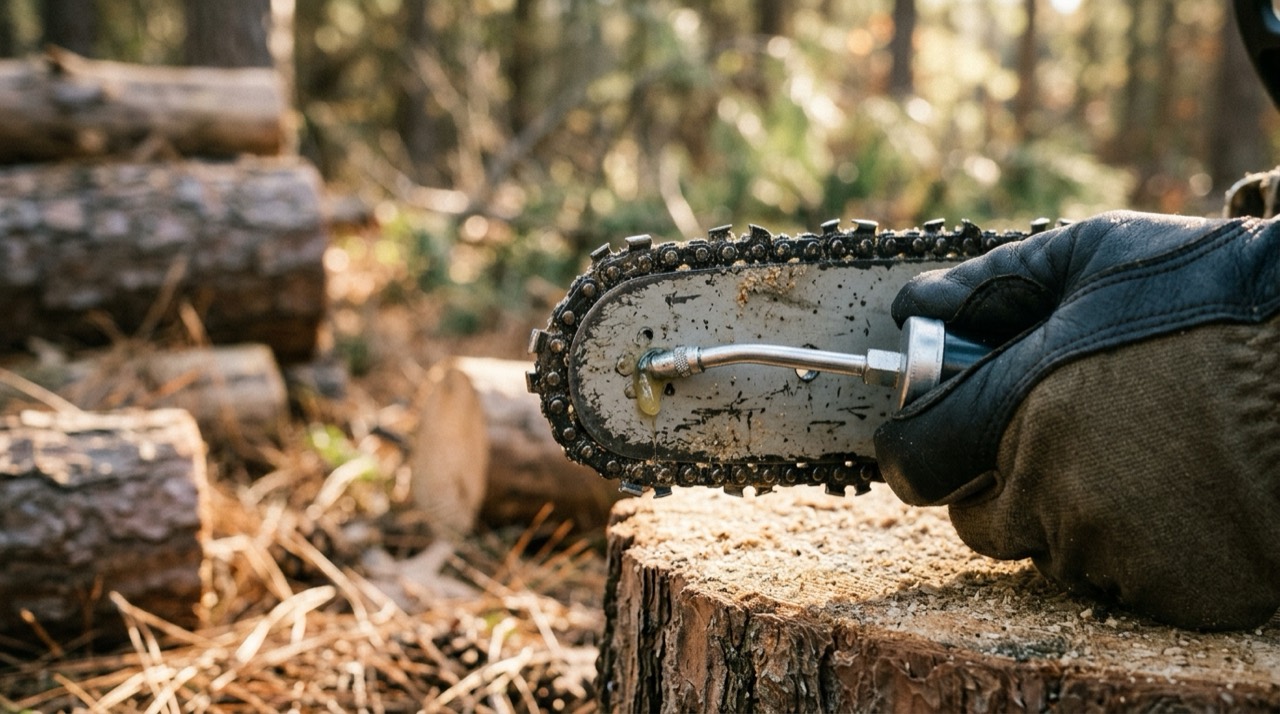
A chainsaw lubricates its bar with an automatic oil pump driven off the engine or motor: as the clutch turns, the pump pushes bar oil from the tank through a port into the bar oil hole, and the moving chain drags that oil around the full length of the rails. Every cut relies on that thin film to stop steel grinding on steel.The pump is usually a small worm gear turned by the same shaft that spins the chain, so oil only flows while the chain is moving. That is why you see a fine spray flick off the bar tip when you rev a saw clear of wood — the chain is slinging the oil it carried around the nose. A little waste at the tip is normal and means the system is feeding.
How Much Bar Oil Should a Saw Use?
A healthy saw uses roughly one tank of bar oil for every tank of fuel or battery charge, so both run low at about the same time. If you finish a tank of fuel with the oil reservoir still full, the oiler is under-feeding and the bar is running too dry. If oil vanishes long before the fuel, the oiler may be set too high or leaking.Getting into the habit of filling bar oil at every refuel keeps the bar in the safe zone without you having to think about it. Long bars and hardwood drink more oil than short bars in softwood, so adjust your expectations to the job.
How Do You Check the Oiler Is Working?
Do the paper test before a big cutting session. The steps below take about ten seconds and tell you the oiler is actually reaching the chain.- Start the saw and let it idle until warm.
- Hold the bar tip a hand-span above a clean board or sheet of paper.
- Rev the saw to speed for a second or two, clear of the wood.
- Look for a thin line of oil flicked onto the surface.
A visible oil line means the pump is feeding the bar. No line means no oil is reaching the chain, so stop and fix it before you cut.
Can You Adjust the Oil Flow?
Many saws have an adjustable oiler — a screw on the underside marked with a bar-and-drip symbol — that raises or lowers output. Turn it up for long bars, dense hardwood, or hot weather, and down for short bars and light work. Fixed-flow saws set output at the factory and cannot be changed.Set the flow to the job rather than leaving it at one extreme. Too little starves the bar; too much simply wastes oil on the ground.
What Oil Belongs on a Chainsaw Bar?
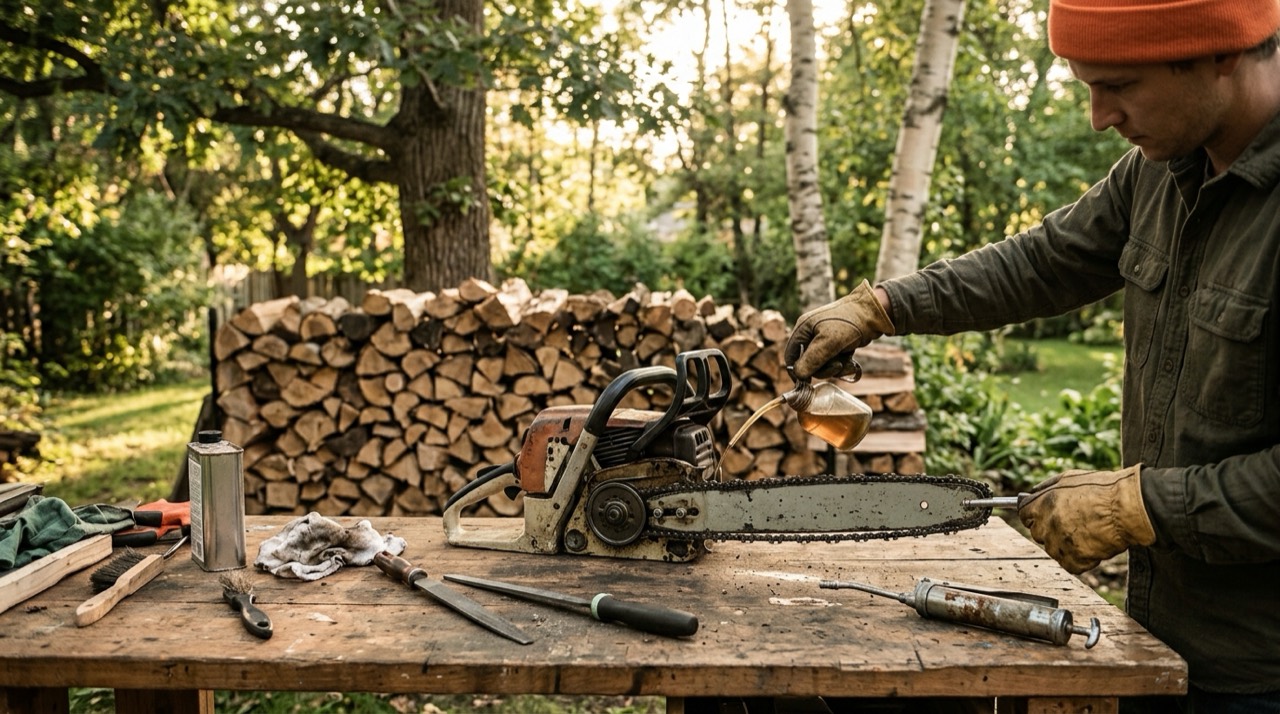
Purpose-made bar and chain oil is the right choice because it is tacky enough to cling to the chain at speed instead of flinging straight off. Use a thinner winter-grade when it is freezing so the pump can move it, and reach for the full rundown of grades and eco options in the bar and chain oil guide. Plain motor oil is a poor stand-in — it lacks the tack and slings off the chain within seconds.Why Is the Bar Running Dry?
A dry bar almost always comes from a blockage rather than a dead pump. The usual culprits are a clogged oil hole or packed groove, a blocked tank vent that stops oil drawing down, a gummy pump from old oil, or oil too thick to flow in the cold. Clean the groove and oil hole at every refuel and the most common cause never gets a chance to start. A smoking bar, a burning smell, or a chain that keeps stretching are all early warnings the film has failed.What Happens When You Cut Without Oil?
Cutting a dry bar overheats the rails in seconds: they discolour blue, the groove spreads, the chain stretches and can pinch or weld to the nose, and the tip sprocket can seize solid. A single minute of dry running can cost you a bar. That is why an oil check comes before every session — see the pre-cut routine in the chainsaw maintenance guide, and keep the chainsaw chain sharp so the saw pulls itself through wood instead of forcing heat into a struggling bar.How Do You Clear a Clogged Oiler?
Clear a clogged oiler by cleaning the parts oil actually passes through, working from the bar back to the tank. A blocked oil hole or a packed groove is behind most weak-oiling saws, and both clean out in a couple of minutes with the saw switched off.- Switch the saw off and remove the battery or spark-plug boot before touching the bar.
- Take off the bar and scrape the groove out end to end with a groove tool, a stiff card, or flattened wire.
- Poke the oil hole in the bar tail clear, then clear the matching oil port on the powerhead.
- Check the small tank vent is not blocked, since a sealed tank cannot draw oil down.
- Refit the bar, top up with fresh oil, and confirm flow with the paper test before cutting.
If oil still will not feed after a full clean, the pump or its drive may have failed, which is a service-tech job rather than a field fix.
Does Bar Oil Change With the Season?
Yes — bar oil should match the temperature, because oil that flows well in summer can turn too thick for the pump to move on a frosty morning. Run a heavier tacky grade in warm weather and switch to a thinner winter grade when it is near or below freezing.| Condition | Oil to run | Why |
|---|---|---|
| Hot summer cutting | Heavier tacky grade | Clings to the chain at speed instead of flinging off |
| Mild weather | Standard bar and chain oil | Balanced flow and tack for most cutting |
| Freezing / winter | Thinner winter grade | Stays pumpable so the oiler keeps feeding |
Trying to run summer-weight oil in a hard frost is a common cause of a bar that starves even with a full tank. The full rundown of grades, tack, and eco options sits in the bar and chain oil guide.
How Much Oil Will a Job Use?
Bar oil use scales with bar length, wood hardness, and how hard you push the saw, so a long bar in dry hardwood drinks far more than a short bar in soft pine. As a planning rule, expect to empty the oil tank at roughly the same rate as the fuel tank.- Longer bars carry oil further and expose more chain, so they use more per cut.
- Dense, dry hardwood generates more friction and heat, calling for more oil.
- A raised oiler setting or hot weather both push consumption up.
- Short bars in softwood use the least, sometimes leaving a little oil at fuel-empty.
Plan your oil supply around your longest, hardest jobs so you never run a tank dry mid-cut. Keeping the chainsaw chain sharp lowers friction and, with it, how hard the bar has to work.
Do Battery Chainsaws Oil the Bar the Same Way?
Battery chainsaws oil the bar the same way in principle — an automatic pump feeds oil while the chain turns — but many use a smaller reservoir and only pump under load to save power. That means the oil tank can outlast a battery charge, so the every-refuel habit becomes an every-battery-swap habit.Because a battery chainsaw runs so quietly, it is easy to forget the bar still needs the same oil film a gas saw does. Check the oil level every time you change or recharge a battery, and run the paper test if the bar ever looks dry. Some battery saws have a fixed oiler and some an adjustable one, so read the manual for your model. The bar overheats and wears without oil exactly as a gas saw's does — the motor type changes nothing about the film the chain needs.
Is Bio or Vegetable Bar Oil Worth Running?
Vegetable-based and biodegradable bar oils are worth running where oil lands on soil, gardens, or water, because effectively all bar oil ends up flung off the chain into the surroundings. Modern bio oils are tacky enough for most homeowner and light pro cutting, though they can gum if left in a saw for months.Bio oil breaks down far faster than mineral oil, which matters for orchard, park, and waterside work. The trade-offs are a higher price and a shorter shelf life, and some bio oils thicken in the cold more than a mineral winter grade. If you switch, run the tank down rather than storing the saw full over the off-season, and clean the groove at the next service so nothing gums. The bar and chain oil guide compares mineral and bio grades in detail.