Best Top Handle Chainsaw
Best Top Handle Chainsaw, ranked from aggregated owner ratings and reviews, not first-hand testing. Real pros, cons, and who each pick is best for.

Our Top 3 Picks
Quick Comparison
| Product | Best for | Buy | |
|---|---|---|---|
| Stihl MS 201 T C-M | Best Overall | See Amazon | View (paid link) |
| Husqvarna T540 XP II | Best Value | See Amazon | View (paid link) |
| Echo CS-2511T | Best Compact | See Amazon | View (paid link) |
| Stihl MSA 220 T | Best Premium | See Amazon | View (paid link) |
| Husqvarna 540i XP | Best Heavy-Duty | See Amazon | View (paid link) |
| Milwaukee M18 FUEL Top Handle | Editor's Pick | See Amazon | View (paid link) |
How to choose the best top-handle chainsaw
The best top-handle chainsaw is the lightest saw that still powers through the limbs you cut, fitted with a short bar and a low-kickback chain, from a brand your local dealer can service. For working arborists that usually means a 25-40cc gas saw or a professional battery model with a 12-14 inch bar.These saws are built for trained climbers operating one-handed aloft, so this ranking assumes you have the certification, rope-and-harness system, and aerial-rescue training the work requires. The picks below span gas and battery, and the sections that follow explain how to read the specs so the order makes sense for your climbing kit.
Should you buy a gas or battery top-handle saw?
Buy gas for the longest continuous runtime and proven power, and battery for quiet, low-vibration pruning with instant throttle and no exhaust in your face. Both are represented in the picks above, because working crews increasingly carry one of each.The comparison table lines up our picks by power source, typical engine or platform, bar length, and the climber each one suits, so you can see where your work lands before reading the individual reviews.
| Saw | Power | Typical bar | Best for |
|---|---|---|---|
| Stihl MS 201 T C-M | Gas ~35cc | 14 in | All-round professional climbing |
| Husqvarna T540 XP II | Gas ~38cc | 14 in | Production pruning and removals |
| Echo CS-2511T | Gas ~25cc | 12 in | The lightest possible gas saw aloft |
| Stihl MSA 220 T | Battery (AP) | 12-14 in | Quiet, fume-free canopy work |
| Husqvarna 540i XP | Battery (36V) | 12-14 in | Demanding battery limb work |
| Milwaukee M18 FUEL Top Handle | Battery (M18) | 14 in | Crews already on M18 tools |
How much engine or battery power does a top-handle saw need?
A top-handle saw needs only enough power to cut the limbs you actually handle aloft, which for most pruning and removal work means a 25 to 40cc gas engine or a professional battery platform. More power almost always means more weight, and weight is the enemy on a saw held at arm's length.Power maps roughly to the work you do:
- Around 25cc, like the Echo CS-2511T, suits fine pruning and small limbs where lightness matters most.
- Around 35 to 38cc, like the Stihl MS 201 T C-M or Husqvarna T540 XP II (paid link), covers all-round climbing and steady production work.
- Professional battery saws on Stihl AP, Husqvarna (paid link) 36V, or Milwaukee (paid link) M18 sit alongside the mid gas class for cutting ability, with runtime rather than torque as the limit.
If you find yourself wanting significantly more than this, the limb probably belongs on the ground, cut with a two-handed saw from our gas chainsaw guide. Oversizing a climbing saw only adds fatigue without making the work any safer.
What bar length should a top-handle chainsaw have?
A top-handle saw should carry a short bar of 10 to 16 inches, with 12 to 14 inches suiting most pruning and limb removal. A short bar keeps the saw light and controllable one-handed and stops the nose catching on adjacent branches in a tight canopy.Longer bars add weight out at the nose and tempt you into cuts a small climbing saw should not make. If you regularly need more bar than that, the limb probably belongs on the ground first, cut with a two-handed saw from our gas chainsaw guide.
What chain and bar setup gets the best from a top-handle saw?
The best setup for a top-handle saw is a short bar of 12 to 14 inches carrying a sharp, low-kickback chain matched to the saw's pitch and gauge. This keeps the saw light and controllable and gives the smoothest, safest cut in the confined space of a canopy.A few setup points make a real difference aloft:
- Keep the chain sharp, because a dull chain forces you to push, and pushing is where one-handed control is lost.
- Run the manufacturer's recommended low-kickback chain rather than an aggressive full-chisel loop.
- Tension the chain often, since a warm chain slackens and a loose chain can jump the bar.
- Keep the bar oiled and the groove clear so the chain runs cool and true.
Our chainsaw chains guide explains pitch and gauge, the chainsaw bars guide covers matching a bar to your saw, and the sharpening guide keeps a fine arborist chain cutting cleanly, which does more for safety than extra power ever will.
What features matter most on an arborist saw?
The features that matter most are an effective chain brake, low-vibration handling, a secure lanyard attachment point, and reliable one-handed starting or a battery trigger. These protect the climber and reduce the fatigue that causes mistakes aloft.A quality low-kickback chain and easy field maintenance matter just as much, because you sharpen and tension constantly during a day in the tree. Our chainsaw chains guide and sharpening guide cover keeping a fine arborist chain cutting cleanly, which does more for safety than extra power.
How do the leading top-handle brands compare?
The leading top-handle brands each have a recognisable character: Stihl and Husqvarna trade the professional gas crown, Echo owns the ultralight end, and Milwaukee has brought its M18 battery platform into the tree. None is simply best; the right one depends on your dealer, your existing batteries, and the weight you prefer.A short read on where each brand fits:
- Stihl offers the MS 201 T C-M in gas and the MSA 220 T on its AP battery system, backed by a wide servicing network.
- Husqvarna answers with the T540 XP II in gas and the 540i XP on 36V, known for strong power-to-weight.
- Echo's CS-2511T is the go-to when every ounce overhead counts, supported by a long consumer warranty.
- Milwaukee's M18 FUEL top-handle makes sense for crews already carrying M18 packs on the truck.
Our chainsaw brands guide covers dealer support and parts availability in more detail, which for a saw you depend on aloft matters as much as the badge on the cover.
How should you match a top-handle saw to your climbing work?
Match the saw to the dominant task you do aloft, not to the hardest cut you might make once a year. A climber who mostly prunes wants the lightest capable saw, while a crew doing repeated removals values sustained power and quick refuelling or battery swaps.Three common profiles help place a saw:
- Fine, all-day pruning near homes and gardens favours a light saw and, often, a quiet battery model like the Stihl MSA 220 T.
- Mixed production climbing, limbing and sectioning, suits a mid gas saw such as the Stihl MS 201 T C-M or Husqvarna T540 XP II.
- Demanding removal days where downtime costs money reward gas runtime or a battery kit with several spare packs, like the Husqvarna 540i XP.
Whatever the profile, the training, PPE, and a sharp low-kickback chain matter more than the last few cc of power. For the ground work that surrounds any climb, keep a two-handed saw from our battery chainsaw guide within reach.
What spares and accessories should you budget for?
Budget beyond the saw itself for the spares and accessories that keep a working climber cutting: extra chains, bar and chain oil, and either fuel and two-stroke oil or several battery packs. A climbing saw is a tool you feed daily, and running out aloft stops the whole job.A sensible starting kit alongside the saw includes:
- Two or three spare chains, so you can swap rather than stop to file mid-climb.
- Plenty of bar and chain oil, topped up at every refuel.
- For battery saws, enough packs and a truck charger to cover the working day.
- A file kit and sharpening tools for touch-ups between cuts.
- Full PPE, including chainsaw chaps and leg protection and a climbing helmet.
These are not optional extras on a professional saw; they are part of the real cost of ownership, and they are what let a good top-handle saw earn its keep safely over many seasons.
What safety gear and training must come first?
Full protective equipment and formal training come before any top-handle purchase: a climbing helmet with eye and hearing protection, cut-resistant gloves, chainsaw leg protection, and a rope-and-harness system you are trained to use. One-handed cutting in a tree carries a high injury risk.Work to recognised standards such as ANSI Z133, never cut alone, and keep aerial-rescue skills current. Start with the right climbing helmet and chainsaw chaps and PPE. These picks are based on manufacturer specs and aggregated owner and trade feedback, not first-hand lab testing, and this is general information, not a substitute for accredited training. For how these saws compare with two-handed ground saws, see our top-handle versus rear-handle guide.
Full Ranking, Reviewed

Best for Certified arborists wanting an all-round climbing saw
- Around 35cc engine paired with a 12-14 inch bar
- M-Tronic engine management for easier starting and consistent tuning
- Light, balanced body designed for one-handed use aloft
- Anti-vibration handles and a secure lanyard ring
- A long-standing professional standard for tree work
- Strong, steady power for a top-handle saw
- Widely supported by Stihl servicing dealers
- Premium price for a small saw
- Dealer-only servicing in many areas
Verdict: The saw many working arborists measure others against, balancing power, weight, and control for daily climbing use.

Best for Production pruning and repeated removals
- Around 38cc engine with a 14 inch bar
- High power-to-weight ratio for its class
- AutoTune-style engine management for altitude and fuel changes
- Side-access chain tensioning for quick field adjustment
- Strong cutting for a light top-handle saw
- Good value against comparable pro saws
- Comfortable for a full day of pruning
- Still a professional-priced tool
- Needs two-stroke fuel mixing and upkeep
Verdict: A capable, well-priced professional top-handle that gives up little to the class leaders for most climbing work.

Best for Climbers who want the lightest possible gas saw
- Around 25cc engine, one of the lightest gas top-handles sold
- Compact body of roughly 5 to 6 pounds bare
- Short 12 inch bar for tight canopy work
- Long Echo consumer warranty for a pro-style saw
- Exceptionally light and easy to hold aloft
- Nimble for fine pruning in tight spaces
- Backed by a strong warranty
- Limited power for larger limbs
- Short bar restricts cutting reach
Verdict: A featherweight gas saw for fine pruning where every ounce held overhead counts against you.
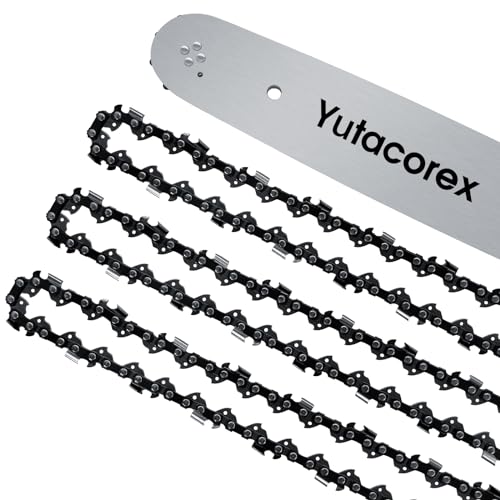
Best for Quiet, fume-free canopy work on the Stihl AP system
- Battery top-handle on Stihl's AP professional platform
- Brushless motor with instant throttle response
- Very low vibration and no exhaust near the face
- Runs on batteries shared with other AP tools
- Near-silent and fume-free for enclosed canopies
- Instant power with no warm-up or mixing
- Low vibration reduces climber fatigue
- Battery runtime limits long removals
- Premium price once batteries are added
Verdict: A refined battery top-handle for arborists who value quiet, clean running, ideal for pruning close to buildings and people.

Best for The most demanding battery limb work
- Professional 36V battery top-handle saw
- Strong, sustained torque for a cordless saw
- Low weight with the compatible battery fitted
- Shares batteries across Husqvarna's pro battery range
- Strong cutting for a battery top-handle
- Quiet and low-maintenance
- Fits a wider pro battery ecosystem
- Best value only with spare batteries
- Runtime still trails gas for all-day removals
Verdict: The battery top-handle to reach for when limb work gets demanding but you still want quiet, fume-free running.

Best for Tree crews already invested in M18 tools
- 14 inch bar driven by a brushless motor
- Runs on the wide M18 tool battery platform
- Rugged build aimed at daily jobsite use
- Tool-free chain tensioning for field work
- Shares batteries with a large M18 tool range
- Pro-grade cordless cutting
- Durable for continuous crew use
- Heavier than the lightest top-handles
- Best value only for existing M18 owners
Verdict: A strong battery top-handle that makes obvious sense for crews already carrying M18 packs on the truck.
Frequently Asked Questions
What size chainsaw do arborists use for climbing?
Arborists climbing a tree use compact top-handle saws, typically 25-40cc in gas or a professional battery model, fitted with a short 12-14 inch bar. The small size keeps the saw light enough to hold and control one-handed aloft, where a bigger felling saw would be unsafe and exhausting.
Are battery top-handle chainsaws good enough for professional tree work?
Professional battery top-handle saws are now good enough for most pruning and limb removal, offering quiet running, instant throttle, and no fumes near the climber. Gas still leads for the longest continuous runtime and heaviest removals, so many crews carry both and match the saw to the job.
Why are top-handle chainsaws more expensive than homeowner saws?
Top-handle chainsaws cost more because they are professional tools built to a high standard, with strong power-to-weight ratios, refined anti-vibration systems, chain brakes, and durable components meant for daily commercial use. They are produced in smaller numbers for a specialist market than mass-market homeowner rear-handle saws.
Can beginners buy the best top-handle chainsaw?
Beginners can often buy a top-handle chainsaw, but they should not use one, because these saws are designed for trained, certified arborists operating one-handed aloft. For ground cutting and learning, a two-handed rear-handle saw is far safer, and climbing work should be left to qualified professionals.