Best Battery Chainsaw
Best Battery Chainsaw, ranked from aggregated owner ratings and reviews, not first-hand testing. Real pros, cons, and who each pick is best for.

Our Top 3 Picks
Quick Comparison
| Product | Best for | Buy | |
|---|---|---|---|
| EGO Power+ CS1804 (18-inch) | Best Overall | See Amazon | View (paid link) |
| Greenworks 40V 16-inch Brushless | Best Value | See Amazon | View (paid link) |
| Milwaukee M18 FUEL 16-inch (2727-21HD) | Best Premium | See Amazon | View (paid link) |
| Ryobi 40V HP Brushless (18-inch) | Best for Beginners | See Amazon | View (paid link) |
| Makita XCU03 (18V X2 LXT, 14-inch) | Best Compact | See Amazon | View (paid link) |
| Stihl MSA 220 C-B (AP Pro) | Best Heavy-Duty | See Amazon | View (paid link) |
How to Choose a Battery Chainsaw
The best battery chainsaw for you is the one that matches your typical cut, runs on a battery platform you already own or want to grow into, and uses a brushless motor for real cutting speed. Everything below helps you weigh those three decisions before you buy.Which battery platform should you commit to?
The platform matters more than the saw, because your chainsaw will share packs with your other cordless tools. EGO 56V, Greenworks 40V, Ryobi 40V, Makita 18V LXT, Milwaukee M18, and Stihl AK/AP each lock the saw to their own batteries. If you already run one of these systems, start there. A spare pack you own today beats a marginally faster saw on a platform you would have to buy into from scratch. This is covered in depth in our battery platform guide.How much bar length do you actually need?
Bar length should track the wood you cut most, not the biggest log you can imagine. A 14-inch bar is plenty for pruning and small limbs, 16 inches covers most firewood, and 18 inches handles small tree work. Going longer than you need draws more current and cuts runtime, so match the chainsaw bar to the job rather than over-buying.Does a brushless motor matter?
Brushless is the single feature most worth paying for on a cordless saw. Brushless motors run cooler, last longer, and convert more battery energy into chain speed than the brushed motors on bargain saws. Every pick below is brushless, which is why they cut closer to gas than the entry-level cordless saws you find at the checkout aisle.What runtime should you expect?
Runtime is set by watt-hours, which is voltage times amp-hours, so a 56V 5.0Ah pack simply holds more energy than a 40V 2.0Ah pack. Rather than chase one huge battery, most owners keep a second charged pack ready and swap, since a rapid charger refills a pack in roughly 30 to 60 minutes. Budget for at least one spare battery from the start, and expect a firewood session to lean on that rotation rather than a single marathon charge.How much do weight and balance matter?
Weight and balance decide how tired you get, especially on overhead limbing where the saw hangs out in front of you. Cordless saws carry their battery near the rear handle, which aids balance, but a large high-capacity pack still adds real heft. If you do a lot of reach work, a lighter 14 to 16 inch saw with a mid-size battery will feel far better over an afternoon than the biggest 18-inch model loaded with a heavy pack. Pick the smallest saw that still clears your typical cut.How much should you expect to spend?
Budget by the whole kit, not the bare tool, because on many pro saws the battery and charger cost as much again as the saw. A homeowner bundle with one mid-size pack and a charger is the honest price of entry, and a second battery on top is money well spent. The rough tiers below help you set expectations before you shop.- Entry brushed 18V and 20V saws are cheapest but slow, and are best kept for pruning.
- Mainstream 40V brushless bundles are the homeowner sweet spot for firewood and cleanup.
- Premium 56V, 80V, and pro-platform saws cost more but deliver near-gas speed and better electronics.
The trap to avoid is judging value on the saw's sticker alone. A cheaper bare tool that needs a fresh battery and charger often lands dearer than a slightly pricier bundle, and a no-name platform can leave you unable to buy a replacement pack in two years. Spend where the battery ecosystem is deep and proven.
Which saw suits your yard and workload?
Match the saw to how much you cut, not to the strongest model on the shelf. A quarter-acre suburban block with a few trees needs far less saw than a wooded acreage, and buying more than you need only adds weight and cost. Use these rough profiles as a starting point.- Small suburban yard, light pruning: a compact 14-inch saw such as the Makita XCU03.
- Average yard with firewood and cleanup: a 16 to 18 inch 40V or 56V saw like the Ryobi 40V HP or EGO CS1804.
- Acreage or frequent storm work: a strong 56V or pro saw such as the EGO CS1804 or Milwaukee M18 FUEL, plus spare packs.
- Occasional user who values dealer support: the Stihl MSA 220 C-B and its servicing network.
How do you get the most runtime and battery life?
Runtime and battery lifespan both reward good habits more than they reward spending. A sharp chain, correct tension, and a topped-up oiler mean the motor works less for every cut, while cool storage protects the cells for years. Follow this routine to stretch both.- Keep the chain sharp and correctly tensioned so the saw slices rather than forces its way through.
- Rotate a second charged pack instead of running one battery flat under load.
- Let a hot battery cool before recharging, and never leave packs in a hot shed or car.
- Store batteries indoors at around half charge, topping them up every few months.
- Keep the oiler full so friction never robs the motor of power.
What can go wrong, and how do you fix it?
Most cordless saw problems trace back to the chain, the oiler, or the battery rather than a fault in the tool. A saw that cuts crooked usually has a dull or unevenly sharpened chain, and one that bogs down often has a chain that is too tight or starved of oil. The quick checks below resolve the majority of complaints.- Weak or slow cutting: sharpen the chain and confirm correct tension before blaming the motor.
- Chain overheating or smoking: refill the bar oil and clean the bar groove and oil port.
- Short runtime: check for a dull chain and a cold or ageing battery, and step up to a higher amp-hour pack for heavy days.
- Chain slipping off the bar: reset tension and inspect the bar rails and drive sprocket for wear.
Is a battery chainsaw beginner-friendly?
Battery chainsaws are among the easiest saws to learn on, because push-button starting, low vibration, and instant stopping remove much of the intimidation of a pull-start petrol engine. They still cut flesh instantly, though, so treat one with full respect from the first cut. A cordless saw also spares beginners the stale-fuel and flooding headaches that catch out occasional gas-saw owners, and its lighter, quieter running makes it simpler to keep control while you build technique. None of that replaces training: read the manual, start with small ground-level cuts, and keep the chain brake engaged between them.What accessories are worth buying with the saw?
The accessories that earn their place turn a bare saw into a working kit, and buying them upfront saves frustration on day one. Prioritise the items below.- A second battery so you can swap instead of waiting on the charger.
- A spare chain and the right sharpening files and tools to keep an edge.
- Quality bar and chain oil to keep the reservoir topped up.
- Full chainsaw chaps and PPE, gloves, and eye and ear protection.
- A stable sawhorse or log stand for controlled bucking.
Which quality features should you check?
The reliability features that separate good cordless saws from frustrating ones are listed below, and every one is worth confirming before you buy.- Automatic bar oiler with a clear, easy-fill reservoir
- Tool-less chain tensioning for quick trailside adjustment
- Inertia-activated chain brake and low-kickback chain
- Metal spiked bumper for controlled, pivoting cuts
Here is how our top picks compare on the attributes that decide most purchases.
| Chainsaw | Platform | Bar | Motor | Best for |
|---|---|---|---|---|
| EGO Power+ CS1804 | 56V | 18 in | Brushless | All-round homeowner cutting |
| Greenworks 40V 16-inch | 40V | 16 in | Brushless | Value on an existing 40V kit |
| Milwaukee M18 FUEL | M18 | 16 in | Brushless | Pros on the M18 platform |
| Ryobi 40V HP | 40V | 18 in | Brushless | First-time buyers |
| Makita XCU03 | 18V X2 LXT | 14 in | Brushless | Light pruning for LXT owners |
| Stihl MSA 220 C-B | AP Pro | 12 to 16 in | Brushless | Stihl feel without petrol |
Once you have settled platform, bar length, and runtime, the individual picks below become an easy shortlist. Buyers still weighing an engine should read our gas vs cordless chainsaw comparison first, and anyone processing serious volumes of wood should pair the saw with proper firewood tools and a stable sawhorse or log stand to cut safely.
Full Ranking, Reviewed

Best for Homeowners who want gas-like cutting speed without the fuel
- 18-inch bar and chain for firewood and small tree work
- 56V ARC Lithium brushless motor
- Chain brake with tool-free chain tensioning
- Weather-resistant build with an LED battery gauge
- Cuts close to a 40cc gas saw in hardwood
- Runs on the wide EGO 56V platform shared with mowers and blowers
- Push-button start with low vibration
- Long runtime needs a larger 4.0 to 5.0Ah pack
- Heavier than compact 14-inch cordless saws
Verdict: The CS1804 is the cordless saw most homeowners should buy first: strong 18-inch cutting, an enormous battery ecosystem, and none of the gas hassle.

Best for Budget-focused owners with an existing Greenworks 40V yard kit
- 16-inch bar for limbing and firewood
- 40V brushless motor
- Tool-less chain tensioning with an automatic oiler
- Electronic chain brake
- Low entry price for a brushless saw
- Shares the large Greenworks 40V tool range
- Light enough for short overhead limbing
- Slower than 56V and 80V saws in thick hardwood
- Bundled batteries are often smaller amp-hour packs
Verdict: A sensible value pick if you already own Greenworks 40V tools and cut mostly branches and small firewood.

Best for Tradespeople and pros already on the M18 battery platform
- 16-inch bar with a premium Oregon chain
- POWERSTATE brushless motor
- REDLINK PLUS electronics with an M18 REDLITHIUM HD12.0 pack
- Metal spiked bumper and adjustable oiler
- Job-site build quality and fast chain speed
- Runs on the huge M18 tool platform
- Holds power until the pack is nearly empty
- Premium price, especially with the HD12.0 battery
- 16-inch bar limits big-log work
Verdict: The M18 FUEL is the cordless saw to buy if you live on Milwaukee's platform and want pro durability for limbing and storm work.
Best for First-time chainsaw owners on a homeowner budget
- 18-inch bar and chain
- 40V HP brushless motor
- Tool-less chain adjustment with an automatic bar oiler
- On-board chain-tension access
- Easy to handle and simple to set up
- Affordable within the wide Ryobi 40V range
- Enough power for firewood and cleanup
- Not built for continuous all-day cutting
- Oil cap can seep if the reservoir is overfilled
Verdict: A friendly, forgiving first cordless saw with enough bar length for real firewood work at a homeowner price.
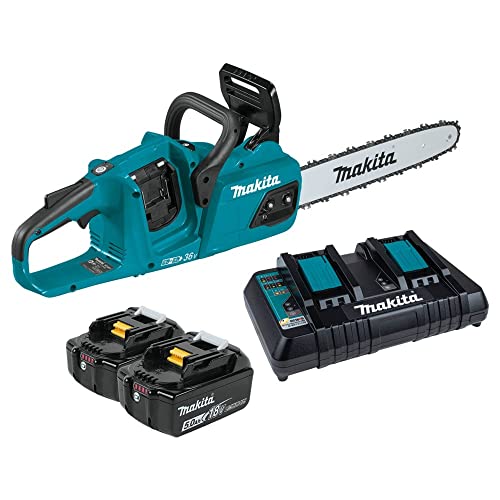
Best for LXT owners who want a light, balanced saw for pruning
- 14-inch bar for pruning and small limbs
- Two 18V LXT batteries combine for 36V power
- Brushless motor with a variable-speed trigger
- Built-in electric brake and tool-less chain adjustment
- Light and well balanced for reach cuts
- Runs on the massive 18V LXT battery range
- Quiet, quick-starting brushless drive
- Needs two charged LXT packs to run
- 14-inch bar is short for large firewood
Verdict: The compact XCU03 is ideal for LXT owners doing pruning and light firewood who value low weight over maximum bar length.

Best for Owners wanting Stihl cutting performance without petrol
- Around a 12 to 16 inch bar depending on configuration
- AP-system brushless EC motor
- Quick Chain Tensioning with Ematic bar lubrication
- Full chain brake and low-kickback chain
- Cuts like a small gas Stihl on the AP Pro platform
- Excellent balance and build quality
- Strong dealer support and parts availability
- Battery and charger are sold separately and add cost
- Shorter bar than some 18-inch rivals
Verdict: The MSA 220 C-B is the pick for buyers who want genuine Stihl cutting feel and dealer backup in a cordless saw.
Frequently Asked Questions
Which battery chainsaw is best for firewood?
For firewood, a brushless 56V to 80V saw with a 16 to 18 inch bar, such as the EGO Power+ CS1804, offers the best balance of cutting speed and runtime. Keep a spare pack on hand, because bucking seasoned hardwood drains batteries quickly.
Do battery chainsaws come with a battery and charger?
It depends on the kit. Homeowner saws are often sold as a bundle with one battery and charger, while pro platforms like Milwaukee M18 and Stihl AP frequently sell the saw as a bare tool so you can pair it with packs you already own. Always check whether a battery is included before you buy.
How long do the batteries themselves last?
A quality lithium-ion pack typically holds strong capacity for several hundred charge cycles, often three to five years of homeowner use, before runtime noticeably drops. Storing the battery indoors at around half charge in cool conditions extends its life considerably.
Is a more expensive battery chainsaw worth it?
Often yes, if the premium buys a brushless motor, a proven battery platform, and better build quality. A cheap brushed saw on a no-name platform tends to cut slower and strand you without spare packs, so the value usually favours an established brand you can grow with.