



Why does the battery platform matter more than the saw?
The battery platform matters more than the saw because your chainsaw will share packs, chargers, and costs with every other cordless tool you own on that system. Buying a slightly faster saw on a new platform can mean paying twice for batteries, so the smart move is to choose a system first and a saw second.Every major brand locks its chainsaw to a proprietary battery: EGO 56V, Greenworks 40V, Ryobi 40V and ONE+ 18V, DeWalt 20V and 60V FLEXVOLT, Milwaukee M18, Makita 18V LXT and 40V XGT, Stihl AK and AP, plus Worx and Kobalt systems. A pack you already own is worth real money, because it saves you buying a fresh battery and charger with the saw. That is why owners of a cordless mower or blower should look hard at the matching chainsaw before shopping on specs alone. It also protects you later: chargers, spare packs, and future tools all stay compatible, so committing to one strong platform compounds in value the more tools you add to it.
What do voltage and amp-hours actually tell you?
Voltage indicates a platform's potential power, while amp-hours indicate how much energy a pack stores, and multiplying them gives watt-hours, the honest measure of runtime. A 56V 5.0Ah pack holds 280 watt-hours and simply runs longer than a 40V 4.0Ah pack at 160 watt-hours.Do not read voltage alone as a quality score. A well-engineered 40V brushless saw can out-cut a cheap 80V brushed one, because motor design and chain quality matter as much as the number on the box. When comparing saws, look for a brushless motor, then compare watt-hours for runtime rather than voltage for bragging rights. Pairing the right pack with a sharp chainsaw chain does more for real-world cutting speed than chasing the highest voltage. It also helps to know that many brands quote a peak or maximum voltage that is a little higher than the nominal figure the pack actually holds under load, so compare like with like when two saws use different labels.
Should you buy into an 18V, 40V, or 56V-plus system?
Choose the voltage tier by the work and the tool family you want, not by the saw in isolation. An 18V or 20V system suits light users with drills and pruning tools; a 40V system is the homeowner mainstream for mowers, trimmers, and firewood saws; and 56V or 80V systems suit heavier cutting and larger yards.The table below maps the common platforms to the buyer they fit best.
| Platform | Voltage | Fits best |
|---|---|---|
| Ryobi ONE+ / Makita LXT | 18V | Light users with many small tools |
| Ryobi 40V / Greenworks 40V | 40V | Mainstream homeowners |
| EGO Power+ | 56V | Whole-yard homeowners wanting power |
| Greenworks Pro / Kobalt | 80V | Heavy homeowner and semi-pro cutting |
Once you pick a tier, a matching battery lawn mower and leaf blower can share the same packs, which is where cordless platforms pay off. Some brands, such as DeWalt FLEXVOLT and Makita, bridge tiers by letting one pack serve tools at more than one voltage, which softens the choice if you expect to own a wide mix of light and heavy tools.
How many batteries and chargers do you actually need?
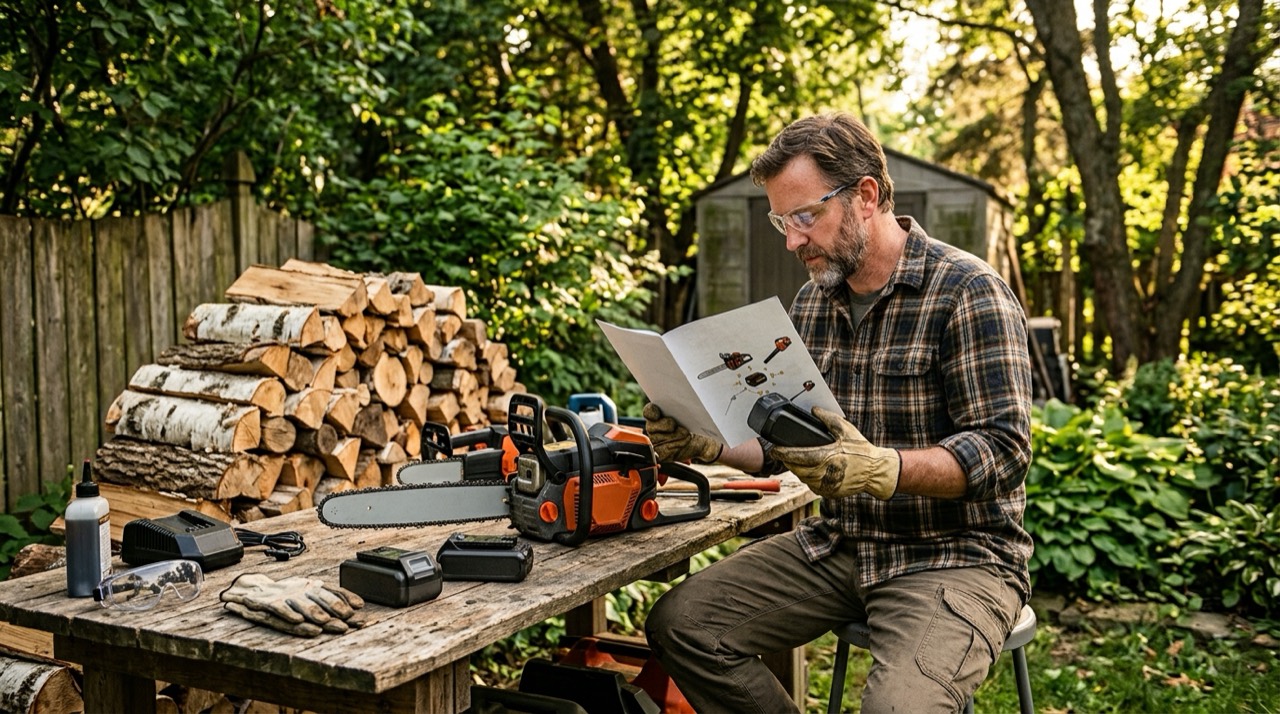
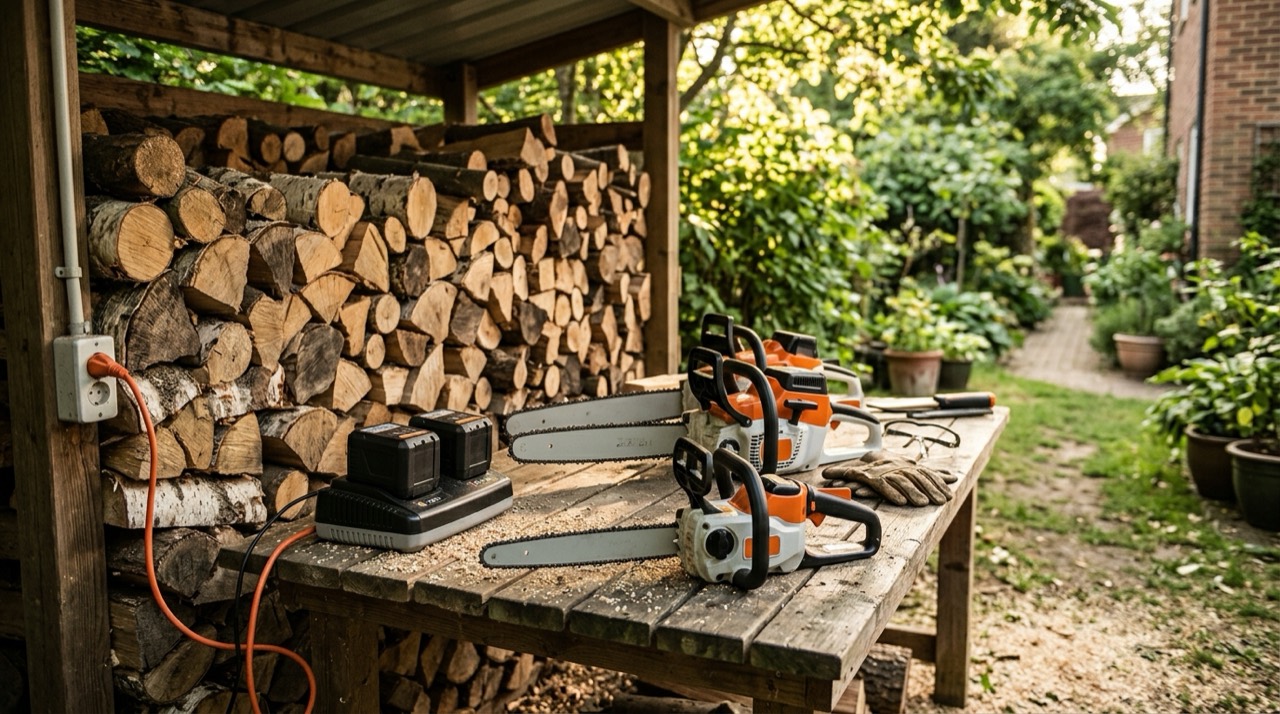
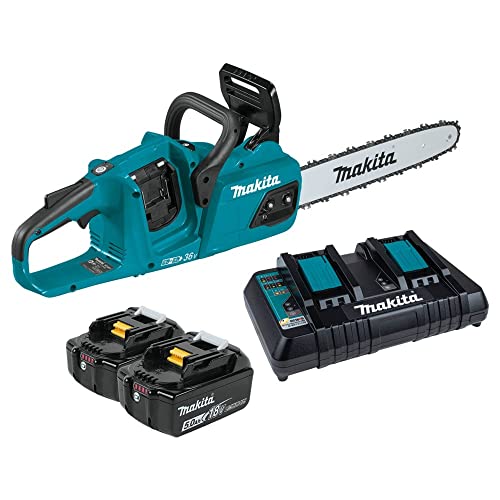
Most homeowners are well served by two batteries and one rapid charger, so one pack works while the other charges. That rotation keeps a saw cutting almost continuously and covers a mower or blower on the same system without leaving you stranded mid-job. The right count scales with how you cut.- One battery and a charger suits truly occasional pruning where a pause to recharge is fine.
- Two batteries and a rapid charger is the practical sweet spot for firewood and cleanup days.
- Three or more packs, ideally higher amp-hour, suit acreage owners and anyone running several tools in a session.
Mixing pack sizes is sensible rather than wasteful. A light 2.0Ah battery keeps a pruning saw nimble, while a 5.0Ah or larger pack earns its weight on firewood, and both charge from the same charger. Buy capacity where the work is heavy and save weight where it is not.
Are third-party and aftermarket batteries safe?
Genuine brand batteries are the safest and most reliable choice, because they are matched to the tool's electronics and covered by the same warranty. Cheap third-party packs can be a false economy: they may lack the temperature and over-current protection built into name-brand cells, can cut runtime, and often void the tool's warranty if they cause damage. Lithium-ion packs store a lot of energy, so a poorly made cell is a genuine fire and failure risk, not just a performance one. If you must save money, spend it on a smaller genuine pack rather than a large unbranded one, and never charge any battery unattended on a flammable surface. Protecting a saw you rely on is worth the premium for packs from a platform you trust.What happens when a battery platform is discontinued?
When a platform is discontinued, spare and replacement packs become harder and dearer to buy, which can effectively retire a working saw long before the tool itself wears out. This is the quiet risk of cordless: the saw outlives its battery supply. Buying into a large, established system is the best defence, because popular platforms stay supported for years and used packs remain easy to find. Favour brands with a deep, current tool range over a bargain saw on an obscure or ageing platform, and keep at least one healthy spare pack so a single failure does not sideline the saw. The convenience of cordless is real, but it rests on the ecosystem staying alive, so choose one you expect to still be on the shelves a decade from now.How do you make batteries last for years?
Batteries last longest when you store them cool, dry, and at around half charge, and avoid leaving them fully drained or fully charged for months. Heat is the biggest enemy, so never store packs in a hot shed or a car in summer.A few simple habits protect your investment. Charge indoors, let a hot pack cool before recharging, and top a stored battery back to roughly half charge every few months. Treated this way, a quality lithium-ion pack typically stays strong for several hundred cycles, often three to five years of homeowner use, before runtime noticeably fades. Because the saw still runs a bar and chain, follow a basic chainsaw maintenance routine alongside good battery care.