

Should you buy a push or tow-behind lawn sweeper?
The push-versus-tow decision comes down to lawn size and whether you own a riding mower. A push sweeper is the practical choice for small-to-medium yards and for anyone without a tractor, while a tow-behind sweeper earns its keep on large properties where a rider does the pulling.The two styles compare like this.
| Factor | Push sweeper | Tow-behind sweeper |
|---|---|---|
| Best yard size | Up to about ¼ acre | Large lawns and acreage |
| Sweeping width | 20–26 inches | 38–50 inches |
| Effort | You provide the push | Mower pulls it |
| Storage | Folds for wall storage | Needs floor space |
Push sweepers keep things simple: no hitch to fit, nothing to tow, and they hang out of the way when folded. The downside is legwork, which grows with lawn size. Tow sweepers remove that effort and cover far more ground in each loop, but they only make sense if you already own a riding mower or lawn tractor with a compatible hitch. If you have a big lawn but no rider, a wide push model or a powered leaf vacuum is the realistic path rather than buying a tractor just to sweep. Compare specific models sized to each approach in our best lawn sweeper picks.
Why does yard size decide between a push and tow lawn sweeper?
Yard size decides the choice because sweeping effort scales with area. On a small lawn a push sweeper's legwork is trivial, but across acreage that same effort becomes exhausting, which is exactly where a tow-behind sweeper pulled by a mower pays off.There is a rough crossover around a quarter to a half acre. Below it, a push sweeper keeps up with weekly clippings and seasonal leaves without wearing you out, and it stores more easily. Above it, the number of passes and the walking distance climb quickly, and a tow sweeper — wider and pulled by an engine you already own — clears the ground in a fraction of the loops. The second deciding factor sits alongside size: whether you own a rider at all, since a tow sweeper is only useful behind one.
What does a push lawn sweeper do best?
A push lawn sweeper is best for small-to-medium yards and for anyone without a riding mower, clearing leaves, clippings, and needles faster than a rake while folding away for easy storage. Its simplicity is the point — no hitch to fit, nothing to tow, and no engine to service.For a typical suburban lot, a 26-inch push model like the Agri-Fab 45-0492 keeps up with weekly mowing debris and autumn leaf fall comfortably. It costs less than a tow sweeper, weighs little, and hangs on a garage wall when folded, so it suits homeowners short on storage space. The trade-off is purely physical effort, and on a small lawn that effort is minor. Where a push sweeper struggles is scale: the bigger the lawn, the more the walking adds up, which is the signal to consider a tow model instead.
When is a tow-behind lawn sweeper worth it?
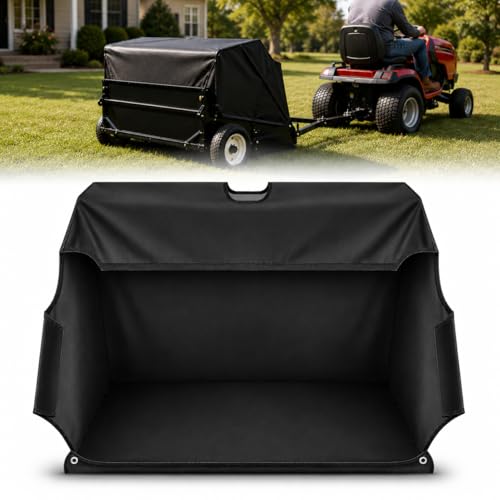
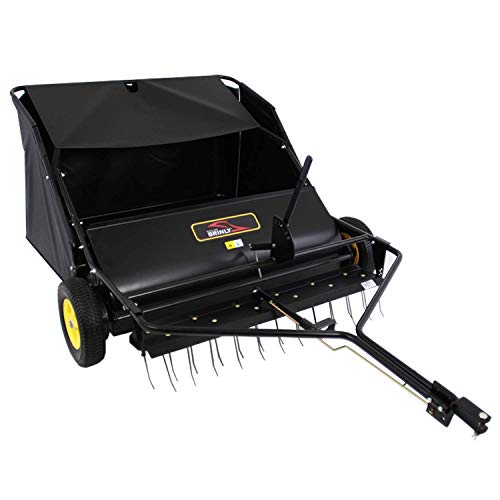
A tow-behind lawn sweeper is worth it once your lawn is large enough that pushing becomes a chore and you already own a riding mower or lawn tractor to pull it. It clears far more ground per pass with no extra effort from you, turning big cleanups into a couple of driving loops.Tow sweepers span 38 to 50 inches and carry hoppers several times larger than a push model, so they cover wide lawns in fewer passes and empty less often. On acreage with heavy leaf fall, that width and capacity are the difference between a quick job and an all-day one. The catch is that they need a compatible hitch on a mower you already own, and they take up floor space rather than folding to a wall. For owners already mowing large ground, though, adding a sweeper behind the mower is a small step for a big time saving.
What if you have a big lawn but no riding mower?
If you have a big lawn but no riding mower, a wide push sweeper or a powered leaf vacuum is the realistic choice — buying a tractor just to tow a sweeper rarely makes sense. A tow sweeper is only useful behind a rider, so without one it isn't an option.A larger push sweeper still clears an open lawn far faster than raking, even if it asks for more walking than a tow model would. For heavy or wet leaf loads, a powered leaf vacuum handles the material a brush skips. Some owners near that threshold let the mower decision drive the sweeper choice — a tow sweeper becomes the natural companion once a rider arrives.
Do push and tow lawn sweepers differ in maintenance and storage?
Push and tow lawn sweepers share the same low-maintenance brush mechanism, but tow models add tires and a hitch to check, and they need floor space rather than folding to a wall. Neither has an engine, so upkeep stays minimal for both.For a push sweeper, care is limited to keeping the brushes and hopper clean and folding it away under cover. A tow sweeper adds a couple of items: keep the tires inflated, confirm the hitch pin is secure before each use, and glance at the drive gears for grass wrap-up. Storage is the bigger practical difference — a push sweeper hangs on a wall, while a tow sweeper needs a dedicated spot on the floor. Keeping either out of the weather, as covered in our outdoor tool storage guide, is what most extends its life.


