



What debris can a lawn and leaf sweeper actually clear?
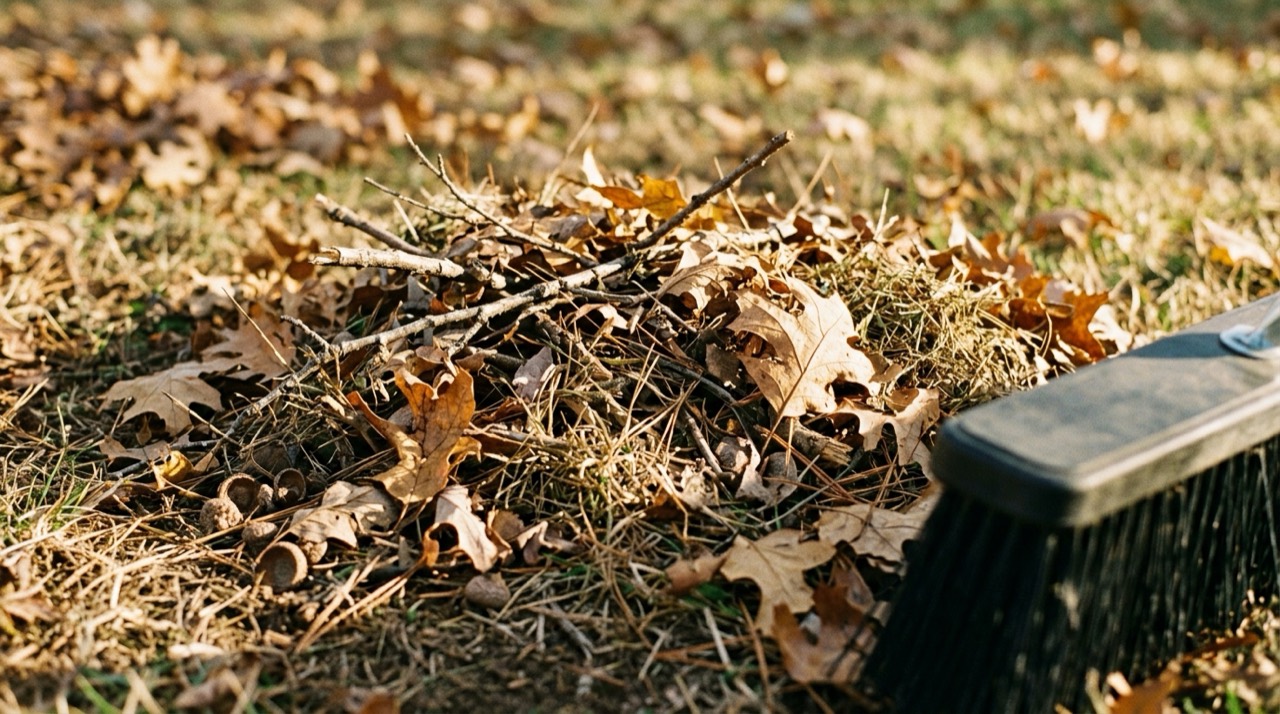
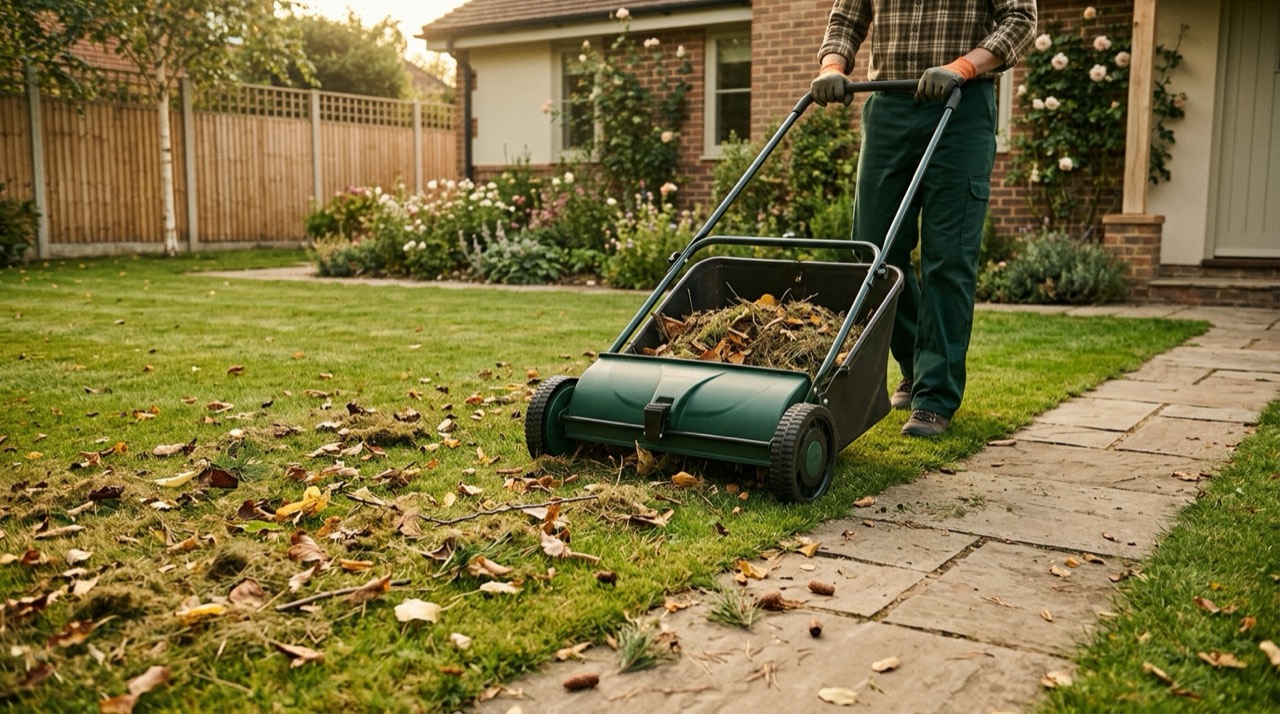
A lawn and leaf sweeper clears dry leaves, grass clippings, pine needles, small twigs, acorns, and loosened thatch, flicking each into the hopper as the brushes spin. It works best on light, loose material sitting on top of the turf, and struggles the moment debris is wet, heavy, or pressed into the grass.The brush does the sorting for you. Because it lifts by sweeping rather than sucking, a sweeper favours material light enough to be thrown backward into the hopper, as the table below shows.
| Debris type | How well a sweeper clears it | Tip |
|---|---|---|
| Dry leaves | Very well | Sweep before rain mats them down |
| Grass clippings | Very well | Let clippings dry after mowing |
| Pine needles | Well | Lower the brush slightly for grip |
| Acorns and nuts | Well | Go slow so the brush can flick them up |
| Small twigs | Moderate | Larger sticks jam the brush — remove by hand |
| Wet or matted leaves | Poorly | Use a powered vacuum instead |
If your yard is dominated by needles and cones, a sweeper is one of the few tools that gathers them efficiently, where a leaf blower tends to scatter them.
How does a sweeper handle wet leaves and grass clippings?
A sweeper handles dry clippings and leaves well but loses grip on wet, matted material, because damp debris sticks to the turf instead of lifting into the brushes. The single biggest improvement you can make to pickup is simply waiting for the lawn to dry before you sweep.Moisture changes everything about how the brush behaves. Dry leaves are light and skitter up into the hopper on contact; soaked leaves clump, cling, and get pushed flat rather than collected. The same is true of fresh, damp grass clippings, which smear and can wrap the brush. If you must clear wet leaves, a powered leaf vacuum lifts them far better, which is why many owners keep both tools. For dry conditions, though, a sweeper outpaces raking across an open lawn every time — and pairs well with the routine in our lawn mower maintenance guide when you're already tidying up after mowing.
Why do pine needles and acorns need a different brush setting?
Pine needles and acorns need the brush set slightly lower than for leaves, because both are small and dense enough to slip under bristles riding too high. Dropping the brush height a notch and sweeping at a slower pace gives the bristles time to catch and flick them into the hopper.Needles are the classic problem material: they lie flat, tangle together, and defeat many other tools, but a sweeper with the brush touching the turf tips rakes them up cleanly. Acorns and small nuts behave like ball bearings — too much speed and the brush skips over them, so an unhurried pass works better than a fast one. Both add real weight to the hopper quickly, so empty more often than you would for fluffy leaves. Keeping the lawn dry and the pace steady matters far more than brute force here.
How does a lawn sweeper handle thatch after dethatching?
A lawn sweeper lifts loose thatch that already sits on the surface, but it does not pull embedded thatch from the soil the way a dethatcher or scarifier does. Its real strength is the cleanup afterward — gathering the piles of loosened thatch a dethatcher brings to the top.Treat the two tools as a sequence rather than rivals. A dethatcher or scarifier rakes the dead, matted layer up out of the turf, and the sweeper then collects that material far faster than raking it by hand. Using a sweeper alone to remove thatch knitted into the lawn only wears the brushes without clearing much, because the bristles skim the surface rather than digging in. Once the thatch is loose and lying on top, though, a sweeper handles it cleanly, provided the material is dry. This pairing is a common spring task, and it slots into the same tidy-up as the routine in our lawn mower maintenance guide.
Can a lawn sweeper pick up twigs, acorns, and nuts?
A lawn sweeper picks up acorns, nuts, and small twigs well when you sweep slowly on dry turf with the brush set low, but larger sticks are a different story — anything longer than a finger or thicker than a pencil can jam or wrap the brush. Clear those by hand first.Small, round debris behaves like ball bearings under the brush: too fast and the bristles skip over acorns and nuts, while a slow, deliberate pass catches them. Dropping the brush a notch and easing your pace gives it time to flick each one up. These items also add weight to the hopper quickly, far faster than fluffy leaves, so plan to empty more often. Twigs are the judgement call — thin, dry twigs sweep up fine, but a branch that would snap loudly underfoot belongs in a pile for a wood chipper rather than the hopper. Feeding a sweeper debris it can't throw is the quickest way to bend a brush or stress the frame.
How does grass length affect what a lawn sweeper collects?
Grass length changes how a lawn sweeper collects, because the brush is set relative to the grass tips. Long grass hides debris below the bristles and cushions it from the brush, while short, recently mown grass lets the sweeper reach clippings, needles, and leaves sitting close to the soil.The practical takeaway is to sweep after mowing, not before. On freshly cut grass the brush can sit lower to the actual turf surface, so it reaches the acorns and pine needles that a taller lawn would swallow. On long grass you are forced to raise the brush to avoid dragging, which leaves heavier debris behind. This is one more reason sweeping and mowing pair so naturally — cut first, let the clippings dry, then sweep the shorter lawn in the same lines. If you only sweep occasionally, doing it right after a mow noticeably improves how much the brush picks up.
How do you clear spring clippings versus autumn leaves?
Clear spring clippings and thatch by sweeping shortly after mowing once the material has dried, and clear autumn leaves by sweeping on dry days before rain mats them down. The tool is the same, but the timing and brush height shift with the season and the debris.The seasonal jobs a sweeper handles best are set out below.
- Spring: lift dried grass clippings and loosened thatch after the first few mows.
- Summer: gather pine needles and the odd fallen twig from dry turf.
- Autumn: collect leaves and acorns, sweeping between rain so the debris stays loose.
- Year-round: tidy needles under conifers that clog other tools.
Autumn is where a sweeper earns its keep, since raking a leaf-covered lawn is slow and hard on the back. The key is to sweep while the leaves are dry and loose — once they soak and mat together, a brush rides over them and a powered vacuum becomes the better tool. Herding leaves into rows first with a leaf blower makes any collector faster, sweeper included.
When should you switch from a sweeper to another tool?
Switch away from a sweeper when debris is wet, heavy, or larger than a small twig — a brush simply can't lift matted leaves, thick sticks, or anything embedded in the soil. Trying to force it risks wrapping the brush or bending the hopper frame.The clearest signals to reach for a different tool are listed below.
- Wet, matted leaves call for a powered leaf vacuum that sucks rather than sweeps.
- Thick branches and prunings belong in a wood chipper, not a sweeper.
- Deeply embedded thatch needs a dedicated dethatcher or scarifier first.
- Loose rocks and gravel should be removed by hand to protect the brushes.
Used within its limits, a lawn and leaf sweeper is one of the most efficient cleanup tools in the shed. Push it past those limits and you shorten its life for a job it was never built to do. Match the tool to the debris and it will serve for years — see our best lawn sweeper picks for models suited to different yard sizes.