



Which leaf-clearing method is fastest for your yard?
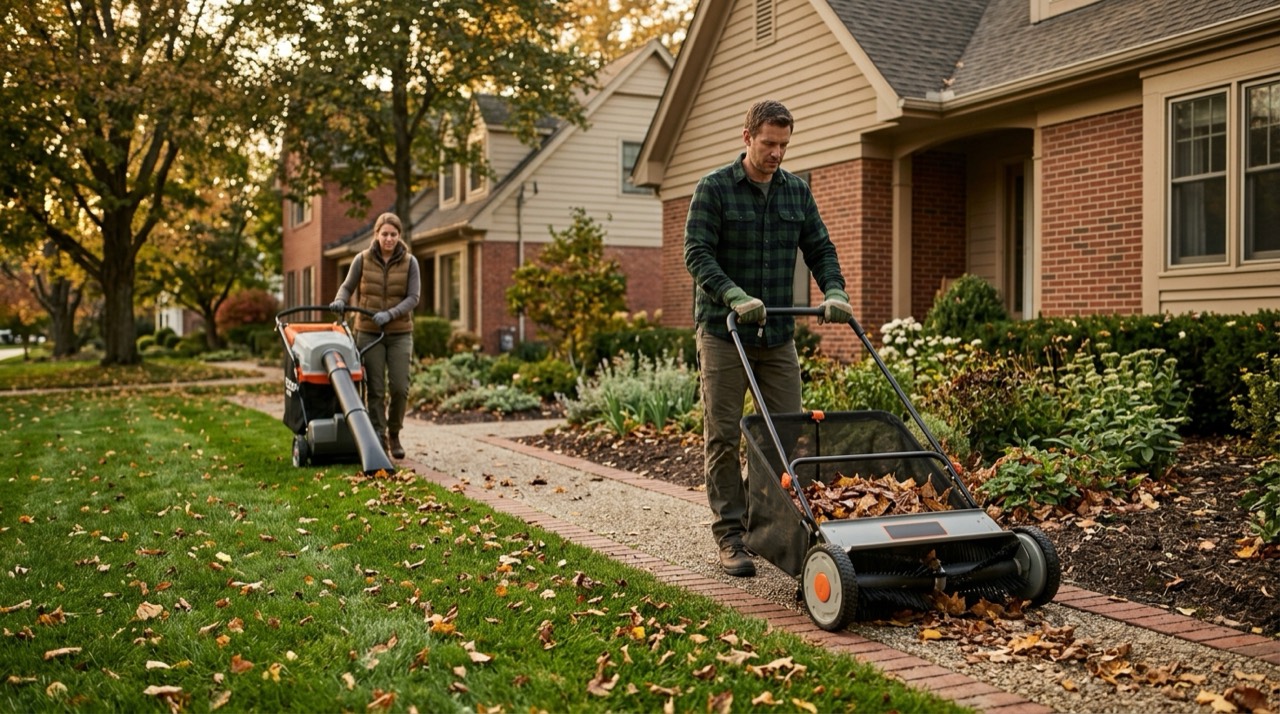
The fastest leaf-clearing method depends on your yard: a wide tow sweeper wins on big open lawns, a bagging mower is quickest when you're already mowing, and a leaf vacuum is best for beds and damp piles. There is no single winner — the right choice tracks your lawn size and how the leaves fall.Each method suits a different situation, as compared below.
| Method | Best for | Relative speed | Main downside |
|---|---|---|---|
| Lawn sweeper | Open lawns, clippings, needles | Fast on dry turf | Skips wet, matted leaves |
| Leaf vacuum | Beds, corners, wet piles | Slower, thorough | Small bag, more emptying |
| Bagging/mulching mower | Mowing and leaves together | Fast if already mowing | Struggles with deep leaf cover |
For most suburban yards the practical answer is a combination: sweep or mow the open turf, then vacuum the edges. Herding leaves into rows first with a backpack blower speeds up whichever collector you use.
How does a lawn sweeper compare on cost and effort?
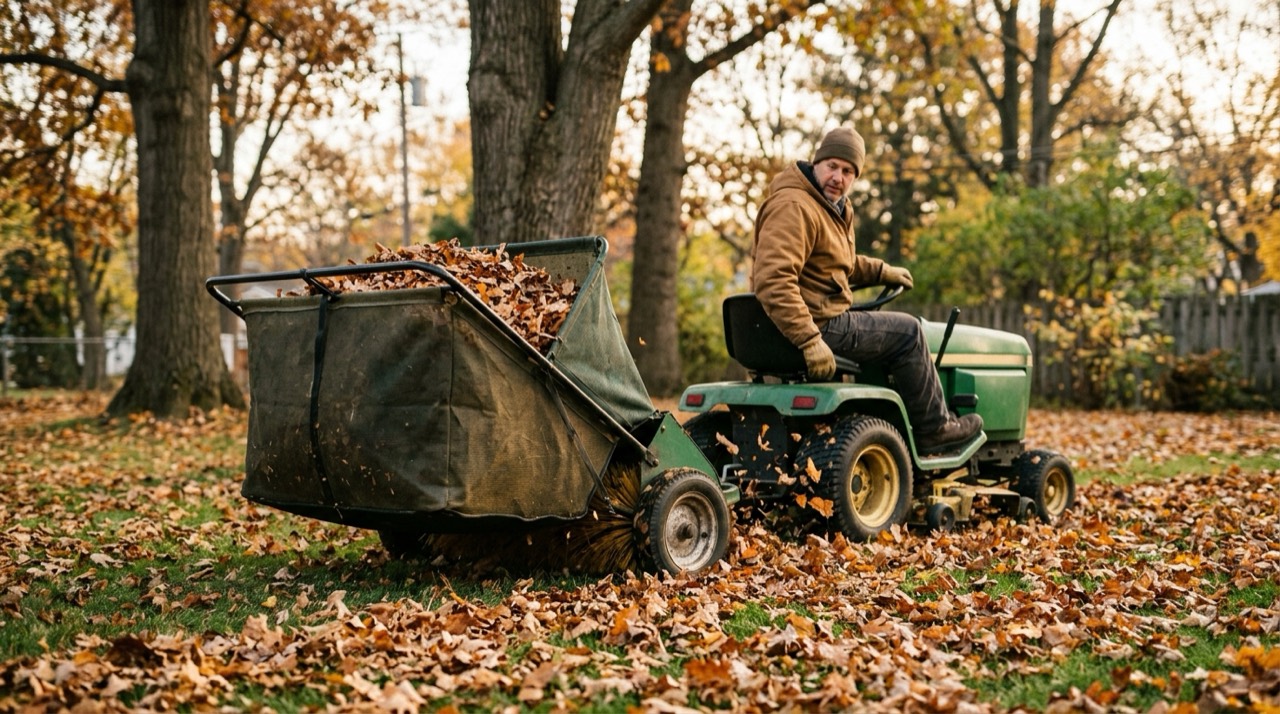
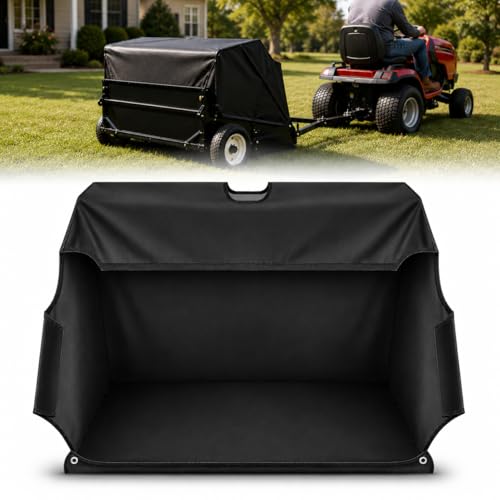
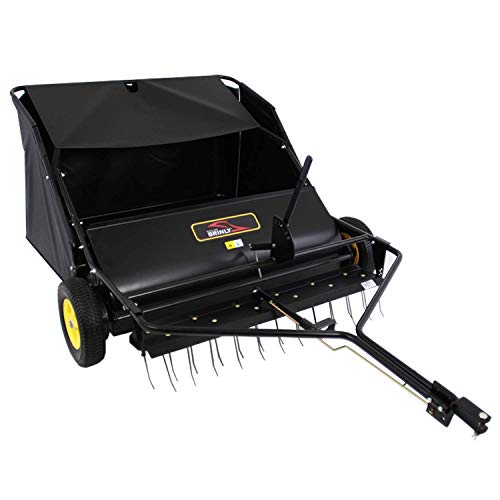
A lawn sweeper offers the lowest running cost of the three methods because it uses no fuel, battery, or electricity — your motion drives the brushes. The trade-off is physical effort on a push model, or the need for a riding mower to pull a tow model across a large property.Cost of ownership is where sweepers shine. There's no engine to service, no cord to manage, and nothing to charge, so upkeep is limited to keeping the brushes and hopper clean. A push sweeper does ask for legwork, which is why owners of larger lots favour a tow-behind sweeper hitched to a mower they already own. Against a powered vacuum, the sweeper wins on speed over open ground and on quiet, fuel-free operation; against a bagging mower, it wins when you want to collect leaves without cutting the grass at the same time. Over several seasons those savings add up, since the only real consumable is an eventual set of replacement brushes, and there is no petrol, oil, or filter to buy.
When is a leaf vacuum the better choice?
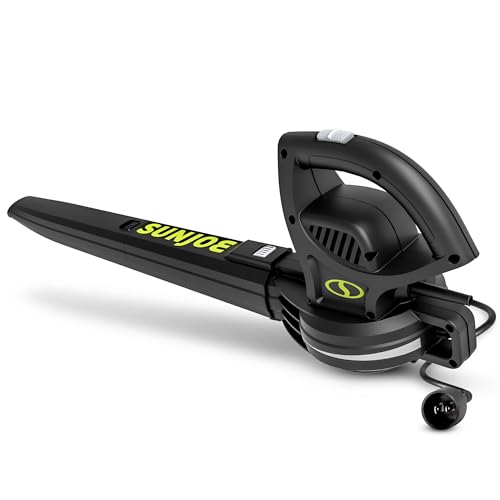
A leaf vacuum is the better choice for wet, matted leaves and for detail areas a wheeled tool can't reach — flower beds, corners, gravel edges, and under shrubs. Its powered fan sucks and shreds leaves, so a small bag holds a large pile thanks to the high mulch ratio.Suction is the vacuum's real advantage. Where a brush sweeper rides over soggy leaf mats, a vacuum lifts them, making it the tool of choice after rain. Handheld electric models such as the Sun Joe and Worx TRIVAC suit small yards and cleanup work, while walk-behind vacuums from brands like Billy Goat and Troy-Bilt handle bigger jobs with an engine. The shredding also matters if you compost or bag for collection, since mulched leaves take up far less space and break down faster in a compost pile. The limitation is throughput: a vacuum is thorough but slow across a wide lawn, and its bag fills quickly on heavy leaf days, so it complements a sweeper rather than replacing it.
Should you just use a bagging or mulching mower?
A bagging or mulching mower makes sense when leaf fall is light and you're mowing anyway, since it cuts grass and collects leaves in one pass. It falls behind when leaves pile deep, because thick cover clogs the deck and overflows the bag faster than you can empty it.The choice comes down to how the two jobs overlap, as the points below explain.
- Mulching mowers chop light leaf cover into the lawn as free fertiliser during regular mowing.
- Bagging mowers collect light-to-moderate leaves and clippings together in one operation.
- Deep leaf drifts overwhelm a mower deck, where a dedicated sweeper or vacuum keeps up.
- Battery mowers add quiet, low-maintenance collection — see our battery lawn mowers guide.
For many homeowners the best system layers these tools: mulch light leaves while mowing, sweep the heavier open-lawn fall, and vacuum the beds and damp corners. Buying one tool to do everything usually means doing at least one of those jobs badly.
How much noise and maintenance does each leaf-clearing method involve?
A brush sweeper is the quietest and lowest-maintenance option because it has no motor at all, a leaf vacuum sits in the middle, and a gas mower or gas walk-behind vacuum is the loudest and most demanding to service. Noise and upkeep track directly with how much engine each tool carries.The three methods line up like this on noise and maintenance.
| Method | Noise | Maintenance |
|---|---|---|
| Lawn sweeper | Near silent | Clean brushes, replace them rarely |
| Leaf vacuum (electric) | Moderate | Clear clogs, empty the bag |
| Bagging/mulching mower | Loud (gas) or moderate (battery) | Engine service or battery care |
For anyone sweeping early on a weekend, or in a neighbourhood where noise matters, the fuel-free quiet of a sweeper is a genuine advantage. Electric vacuums are far quieter than gas equivalents and, like the sweeper, skip the oil changes and spark plugs entirely. If you want the collecting done while you mow, a battery mower keeps both noise and maintenance low — our battery lawn mowers guide covers that route. Gas machines still win on raw throughput, but you pay for it in noise, fuel, and servicing.
Which leaf-clearing method is best for a small yard versus acreage?
For a small yard a handheld leaf vacuum or a push sweeper is usually enough, while acreage calls for a wide tow sweeper pulled behind a rider. The gap is huge: what takes minutes on a small lot can take a full afternoon across several acres, so throughput matters more as the property grows.On a compact suburban lot the deciding factor is often storage and convenience rather than speed — a folding push sweeper or a light electric vacuum tucks away easily and clears the job quickly. As the lawn grows past half an acre, physical effort becomes the limit, and a tow-behind sweeper hitched to a riding mower or lawn tractor turns raking marathons into a couple of steady loops. On true acreage, hopper size becomes the bottleneck: a 25-cubic-foot tow hopper means far fewer stops than a small vacuum bag that fills in minutes. Owners covering large, open ground can move faster still on a wider deck — see our zero-turn mowers guide — with a wide sweeper in tow behind them.
Which method is best for composting and leaf disposal?
For composting and disposal a leaf vacuum wins on volume, because its fan shreds leaves so they pack down and break down faster, while a sweeper collects whole leaves that take more room in the bag or pile. A mulching mower goes furthest by returning chopped leaves to the lawn as free fertiliser.How you plan to get rid of the leaves should steer the choice. If you compost, shredded leaves from a vacuum or mulching mower rot down far quicker than whole ones and take up a fraction of the space in a bin. If your council collects bagged leaves, the same shredding means fewer bags to fill and haul. A sweeper collects leaves intact, which is fine for a large open compost heap or for spreading as leaf mulch, but less efficient where space is tight. Many owners run a hybrid: sweep the bulk of the open lawn quickly, then shred the collected pile or the bed cleanups with a vacuum before composting.
Can you combine a sweeper, blower, and vacuum into one system?
Yes — the most effective leaf-clearing setups combine all three: a blower to herd leaves into rows, a sweeper to clear the open lawn fast, and a vacuum to lift wet piles and reach detail areas. Each tool covers the others' weak spots, which is why no single machine does every job well.A layered approach works because the tools have complementary strengths, as set out below.
- Blow first: gather scattered leaves off beds, paths, and corners into open rows.
- Sweep next: clear the bulk of the leaves and clippings from the open turf quickly.
- Vacuum last: lift the wet, matted remnants and finish the beds and gravel edges.
A backpack blower makes the first step far quicker on a large property, since it moves more air than a handheld unit for longer without arm fatigue. The sweeper then does the heavy lifting across the lawn at no running cost, and the vacuum handles the awkward remainder. Buying one tool to do all three usually means doing at least one job badly, whereas a modest sweeper plus an electric vacuum covers almost every situation a typical yard throws up. For sweeper models sized to your lawn, see our best lawn sweeper picks.