


Is a leaf blower faster than raking leaves?
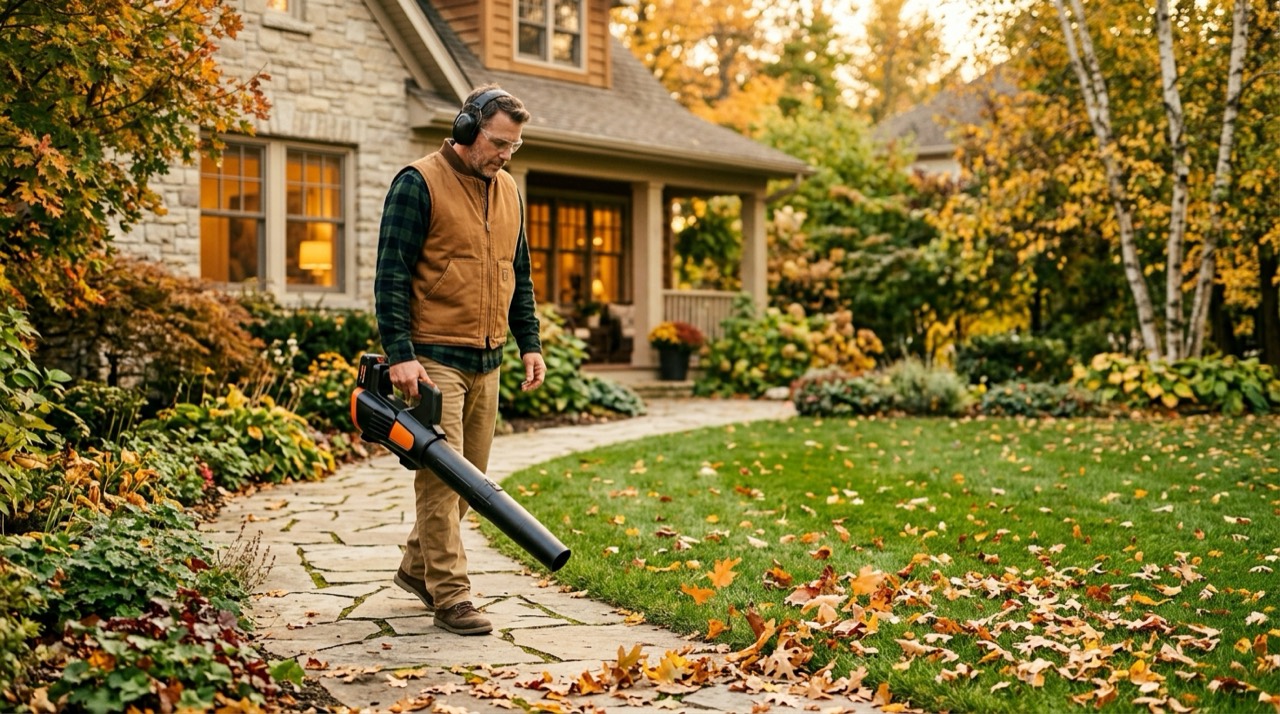
A leaf blower clears leaves several times faster than a rake on most yards, moving a wide band of leaves in seconds where a rake handles one narrow stroke. For anything larger than a small courtyard, a blower turns an afternoon of raking into a job of well under an hour.Speed comes from coverage. A rake pulls a stripe maybe two feet wide and stops at every obstacle, while a blower pushes a steady wall of air that herds leaves off grass, out of beds, and along fence lines without you bending once. That said, raking wins on precision in tight spots and costs nothing to run. The honest comparison is not blower-or-rake but blower-plus-rake: most people blow the bulk of the leaves into piles, then use a rake or a lawn sweeper to gather and lift them. Effort matters too — blowing keeps you upright and walking rather than hunched and pulling, which spares your back over a big cleanup. To choose a blower for the job, start with our leaf blowers guide.
How much time does a leaf blower actually save?
On a typical suburban yard a blower cuts a leaf cleanup from a multi-hour raking session to well under an hour, largely because it clears a wide band in one pass and keeps you walking rather than stooping. The saving grows with yard size and shrinks to almost nothing on a tiny courtyard.Picture a quarter-acre lot under mature trees. Raking it means dozens of narrow, repetitive strokes, frequent stops to reposition piles, and a sore back by the end — often two to three hours across a heavy fall. The same lot with a 550–650 CFM handheld comes down to perhaps thirty to forty-five minutes: you drive the leaves downwind into two or three windrows, then collect. The blower does not just move faster; it removes the bending and dragging that make raking tiring, so you finish with energy to spare. On a small townhouse courtyard the gap closes, because fetching and setting up the tool eats the time a blower would save, and a rake is out and working in seconds. Match the tool to the scale of the job and the time saving becomes obvious rather than marginal.
How do you clear leaves fastest with a blower?
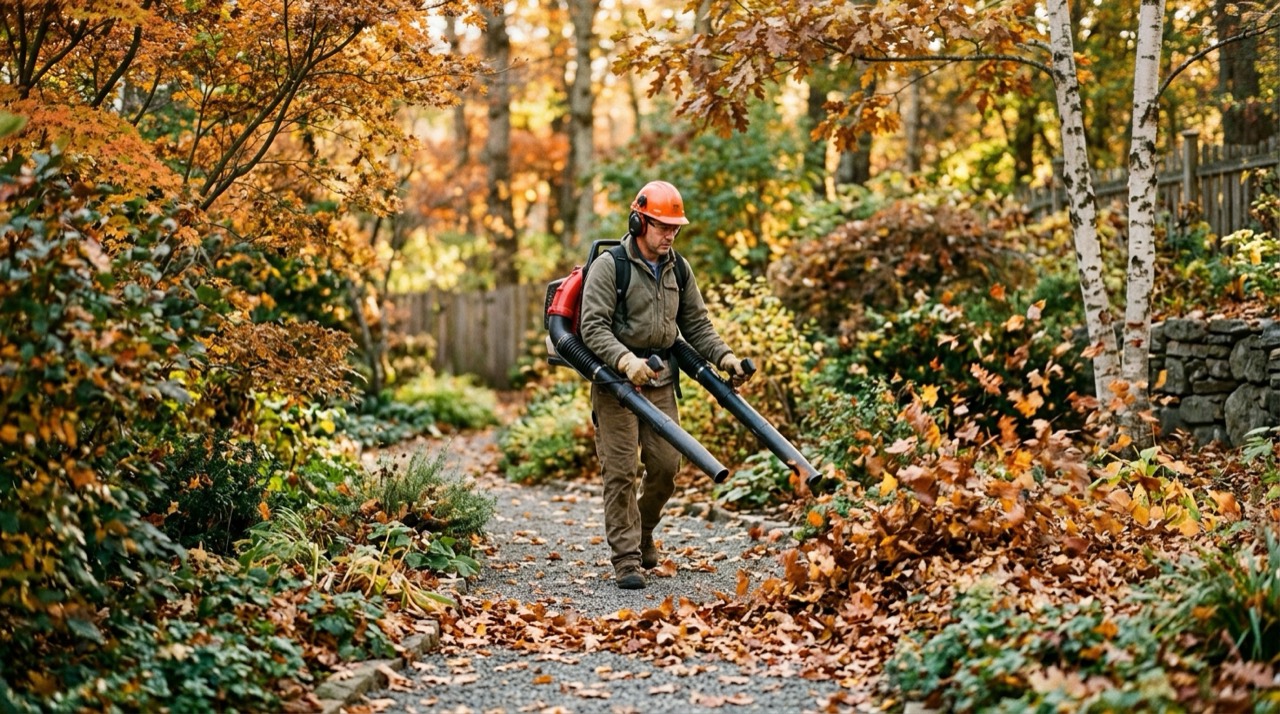
Clear leaves fastest by working with the wind, pushing everything toward one downwind collection point in long, overlapping sweeps rather than chasing scattered piles. Start at the far edge of the yard and drive the leaves ahead of you, keeping the nozzle low and angled slightly forward.The technique that saves the most time follows a simple sequence, listed below.
- Check the wind and plan a single collection spot downwind of it.
- Set your speed low near beds and gravel, high on open lawn and pavement.
- Sweep in overlapping passes, keeping the nozzle a few inches off the ground.
- Work the leaves into a windrow — a long, narrow line — rather than a loose scatter.
- Herd the windrow onto a tarp, into bags, or to a pile for collection.
A wide flat nozzle moves the most leaves on open ground, while a concentrator nozzle breaks loose the wet, stuck patches a flat tip skates over. Two-handed control and a steady walking pace beat frantic waving every time, and they keep the airflow doing the work instead of your shoulders. If your blower has a cruise-control lock, set it for the long passes so your trigger finger can rest. Clearing damp leaves is easier once the sun has dried them, so timing a cleanup for midday often saves more effort than any technique.
What blowing technique mistakes slow a cleanup down?
Most wasted time comes from blowing against the wind, chasing scattered leaves in every direction, and waving the tool instead of walking a steady line. Each of these forces you to move the same leaves twice and tires you out for no extra result.The habits that turn a quick job into a slow one are listed below.
- Blowing into the wind, so leaves drift back across ground you just cleared.
- Working without a plan, pushing leaves toward several piles instead of one downwind point.
- Holding the nozzle too high, which scatters leaves rather than herding them along the ground.
- Running full power near beds and gravel, blasting mulch and stones out of place.
- Swinging the blower in wide arcs, which wastes airflow and strains your shoulder.
Fixing these is mostly about discipline: pick one collection spot, start upwind, keep the nozzle low, and let overlapping passes do the work. A concentrator nozzle handles the stubborn wet patches a flat nozzle skates over, so switch tips rather than forcing a single setup to do everything. Steady and deliberate beats frantic every single time.
When is raking still the better choice?
Raking still wins in small, enclosed, or delicate spaces where a blower's force would scatter mulch, disturb gravel, or annoy close neighbours. For a tiny courtyard, a bed of loose bark, or an early-morning cleanup on a quiet street, a rake is quieter, cheaper, and more precise.Wet, heavy leaf mats also resist even a strong blower, and sometimes a rake or a lawn sweeper simply lifts them faster than air can move them. Raking doubles as light exercise and produces zero noise or emissions, which matters where gas blowers face local restrictions or where you would rather not wear hearing protection for a five-minute job. Many gardeners keep both tools and reach for the rake when the task is small enough that hauling out a blower is not worth it. The point is not that one tool is obsolete; it is matching the tool to the size and delicacy of the job in front of you.
Is it bad for your lawn to blow the leaves off it?
Clearing a thick leaf mat off a lawn is good for the grass, because a heavy layer blocks light, traps moisture, and invites disease and pests over winter. A thin scatter, though, is harmless and even useful, so you do not need to strip every last leaf from the turf.The healthiest approach is often to mulch rather than remove. Running a mower over a light covering of leaves shreds them into pieces small enough to settle between the grass blades, where they break down and feed the soil — free fertiliser that saves you bagging. Where leaves fall too thickly for that, blow the bulk off the lawn and onto beds as winter mulch or into the compost, then leave the remainder to mulch in. There is an ecological angle too: leaf litter shelters insects and other small wildlife, so many gardeners deliberately leave undisturbed leaves in quiet corners and beds while clearing only the lawn, paths, and drains. Blowing is a tool for tidying where tidiness matters, not a mandate to sterilise the whole yard. To gather the piles you do build, a lawn sweeper lifts them with less effort than raking.
Should you blow, mulch, or bag your leaves?
Deciding what to do with the leaves matters as much as moving them. Blowing them into a pile is only step one — from there you can bag them, mulch them with a mower or blower-vac, or rake them onto garden beds as free winter cover. Mulching returns nutrients to the lawn and shrinks the volume dramatically.Your three main options compare like this.
| Method | Best for | Effort |
|---|---|---|
| Bag and remove | Large volumes, a tidy finish | Highest |
| Mulch in place | Lawns, feeding the soil | Low with a mulching mower |
| Blow onto beds | Free winter mulch for borders | Lowest |
A blower-vac that shreds leaves into a collection bag bridges moving and mulching in one pass, which is ideal for a small yard. For bigger loads, blow the leaves into windrows and run a mulching mower over them, or collect them with a lawn sweeper and compost the result. Whatever you choose, shredded leaves break down far faster than whole ones and make excellent free mulch, so the "waste" from a cleanup often ends up feeding next year's garden.
What else do you need for a full leaf cleanup?
A blower moves leaves but does not collect them, so a complete kit pairs it with something to gather and something to haul: a rake or lawn sweeper for pickup, a tarp or bags for transport, and often a mulching mower to shrink the volume. Planning the whole chain saves doubling back.The supporting tools that finish the job are listed below.
- A tarp to herd windrows onto and drag to the kerb or compost in one trip.
- Leaf bags or a wheeled bin for removal where mulching in place is not an option.
- A lawn sweeper or blower-vac to lift piles faster than bending with a rake.
- A mulching mower to shred light layers back into the lawn as free feed.
- Hearing and eye protection on gas blowers, and gloves for handling wet, gritty leaves.
Thinking of the cleanup as move, gather, then haul rather than just blowing keeps you from building piles you then struggle to lift. The blower is the fast first stage; the collection tools decide how tidy — and how quick — the finish is.