


Are gas leaf blowers still worth buying?
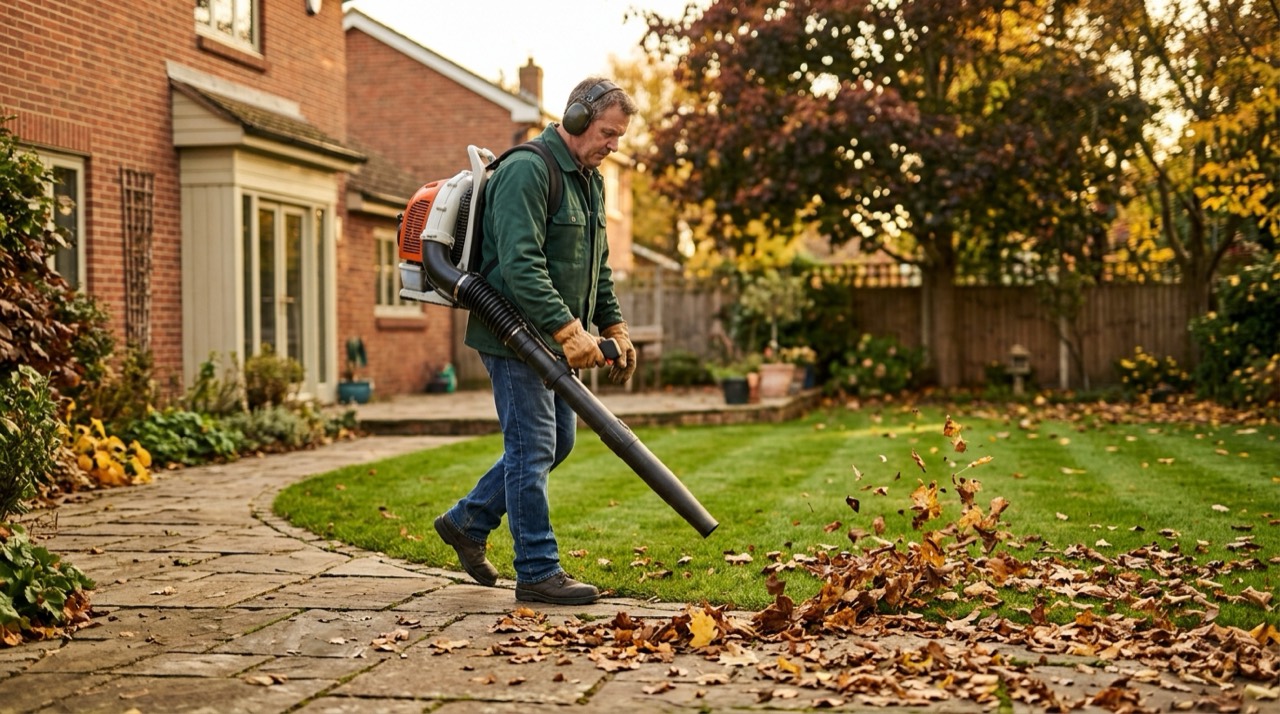
Gas leaf blowers remain worth buying for large properties, wet and heavy leaves, and long unbroken sessions where their non-stop runtime and raw airflow still beat most cordless models. For a typical suburban yard, though, a modern battery blower now does the same work with far less noise and maintenance.The case for gas rests on endurance and power density. You refuel in seconds instead of waiting on a charge, and top gas handhelds and backpack blowers still push more sustained air than all but the strongest batteries. The case against is growing just as fast: gas blowers are loud, need fuel mixing and regular upkeep, emit fumes, and face outright bans in a growing number of regions. If you clear acreage every autumn the trade is often worth it; if you tidy a small lawn a few times a year, a battery blower is the easier life. Be honest about how you will actually use the tool, because a gas engine only rewards owners who will maintain it.
How do gas and battery leaf blowers compare today?
Gas still leads on sustained airflow and unlimited runtime, while battery has closed most of the gap on power and pulled well ahead on noise, maintenance, and convenience. For a typical yard the two are now close enough that the decision turns on how long you run the tool and whether local rules allow gas at all.The honest trade-offs between the two power types are compared below.
| Factor | Gas | Battery |
|---|---|---|
| Peak airflow | Highest on handhelds and backpacks | Strong; top models rival mid-size gas |
| Runtime | Refuel in seconds, effectively endless | 15–45 min per charge, spare packs needed |
| Noise | 95–105 dB, often restricted | 60–75 dB, neighbour-friendly |
| Maintenance | Fuel mixing, plugs, filters | Charge and go |
| Upfront cost | Moderate tool, cheap fuel | Higher once packs and charger are counted |
The gap that remains favours gas only in the extremes — acreage, hours of continuous work, and wet, heavy leaves that demand maximum sustained force. Everywhere else, the quiet and near-zero maintenance of a modern battery blower outweighs the shrinking power advantage, which is why the brands are pouring their development money into cordless.
What do 2-stroke and 4-stroke gas blowers offer?
Most handheld gas blowers use a 2-stroke engine that burns a petrol-and-oil mix, while some larger blowers use a 4-stroke engine that runs on straight petrol. Two-stroke engines are lighter and simpler with more power for their weight, whereas four-stroke engines are quieter, smoother, and skip fuel mixing.The two engine types differ in ways that matter day to day, as compared below.
| Engine | Fuel | Traits |
|---|---|---|
| 2-stroke | Petrol + oil mix | Light, powerful for its size, needs mixing |
| 4-stroke | Straight petrol | Quieter, smoother, heavier, no mixing |
Two-stroke dominates handhelds because weight matters most in a tool you hold at arm's length, and the Stihl BG and Echo PB families are classic examples. Four-stroke engines appear more often on wheeled and backpack units where the extra weight is carried on the machine or your shoulders rather than your wrist. Whichever you choose, using the correct fuel is critical: running straight petrol in a 2-stroke, or mixing the wrong oil ratio, will destroy the engine quickly and is not covered by warranty. Always mix to the ratio printed in your manual, and only make what you will burn within a few weeks.
Where are gas leaf blowers being restricted?
Gas leaf blowers face the toughest restrictions of any yard tool, led by California's phase-out of new gas-powered blower sales and dozens of city ordinances that limit hours, ban gas models near homes and schools, or restrict them seasonally. Rules vary widely by state and by town.Noise and emissions drive the trend. A gas blower's two-stroke engine emits more than its small size suggests and runs loud enough to carry across a neighbourhood, which is why bans usually target gas specifically while leaving quieter battery models alone. Before buying a gas blower, it is worth checking your local ordinances, since some areas restrict when you can run one even where sales are still legal. This regulatory pressure — more than any single spec — is why manufacturers are pouring development into cordless, and why a battery blower is increasingly the future-proof choice for anyone near tightening rules.
How do you start a gas leaf blower, including a flooded one?
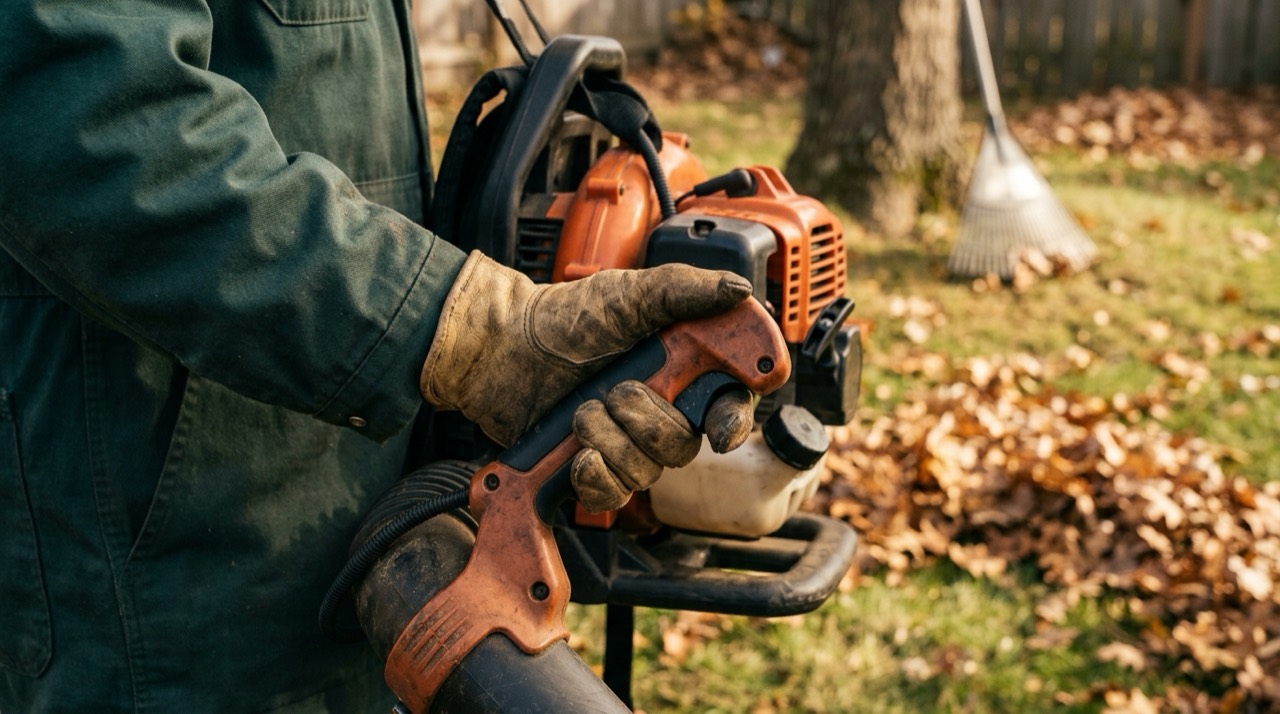
Start a cold gas blower by setting the choke, priming the carburettor, and pulling the starter with the throttle at the maker's setting, then moving the choke off once it fires. If you have flooded it, open the throttle wide, turn the choke off, and pull several times to clear the excess fuel.Follow this sequence for a reliable cold start.
- Set the blower on flat ground and engage the choke to the cold-start position.
- Press the primer bulb the number of times the manual specifies, until fuel is visible.
- Set the throttle or start control as directed, then pull the starter cord firmly.
- Once the engine fires or stumbles, move the choke to the run position.
- Pull again to start, then let the engine warm for a few seconds before revving.
A flooded engine — usually from over-priming or repeated failed pulls — needs the opposite of choke: throttle open, choke off, and several pulls to clear the raw fuel, or a short wait before trying again. Systems with an Easy2Start-style mechanism, like the Stihl BG 56 C-E, take much of the effort out of the pull. If it still will not fire after fresh fuel and a clean plug, the fault has moved to the fuel line or carburettor rather than your starting technique.
How do you maintain a gas leaf blower?
Maintain a gas leaf blower by running fresh, correctly mixed fuel, cleaning or replacing the air filter, changing the spark plug about once a year, and draining or stabilising the fuel before long storage. Stale fuel is the single biggest cause of a gas blower that will not start.Routine care keeps a two-stroke blower reliable for years, and the key tasks are listed below.
- Mix only the fuel you will use within a few weeks, at the exact ratio the manual specifies.
- Clean the foam or paper air filter regularly so the engine breathes freely.
- Replace the spark plug roughly once a season for easy starting.
- Empty the tank or add fuel stabiliser before storing the blower over winter.
- Clear leaves and dust off the intake screen so airflow stays strong.
Neglect shows up as hard starting, stalling, and lost power, and it is almost always traceable to old fuel or a clogged filter. Keep a spare plug and filter on the shelf, run the tank dry before long storage, and a gas blower will reward the small effort with seasons of dependable service. If a well-maintained blower still refuses to start, the fault usually sits with the fuel line, primer bulb, or carburettor rather than anything you did wrong on your last cleanup.
What does a gas leaf blower cost to run?
Beyond the purchase price, a gas blower costs you fuel, two-stroke oil, and a handful of service parts each season — spark plugs, air filters, and the occasional carburettor clean — plus the time to mix fuel and maintain the engine. None of it is expensive alone, but it recurs in a way battery and corded tools avoid.Budget for the running items a two-stroke engine needs, listed below.
- Fresh petrol and the correct two-stroke oil, mixed to the manual's ratio and used within weeks.
- A spark plug about once a season for reliable starting.
- Air filters cleaned regularly and replaced when they no longer come clean.
- Fuel stabiliser for winter storage, or the discipline to run the tank dry.
The hidden cost is stale fuel: mix left in the tank between seasons gums up the carburettor and causes most no-start faults, turning a cheap tool into a repair job. Weighed against a battery model — where the main cost is packs that also run your other tools — a gas blower is only cheaper to own if you keep up the maintenance it demands. For fuel and oil options, see the bar oil, chain oil and fuel guide.
Who should still choose a gas leaf blower?
Choose gas if you clear acreage, face wet and heavy leaf fall, or run the blower for hours at a stretch, and if local rules still allow gas models where you live. In those cases the endurance and raw airflow of a two-stroke engine genuinely outrun what most cordless tools sustain.The owner who benefits from gas is specific: a rural property, a large lot with mature deciduous trees, or anyone maintaining several yards who cannot stop to charge packs. For that user, refuelling in seconds and pushing maximum sustained air matters more than noise or upkeep. If your leaf load is heavy enough to justify gas, it is often heavy enough to justify carrying the motor on your shoulders instead — the backpack blowers guide covers the higher-airflow tools built for exactly this work. But if you tidy a suburban lawn a few times a year, be honest that a gas engine only rewards owners who will maintain it; the occasional user is almost always better served by a quiet, low-upkeep battery blower.