


What is a cordless pole saw, and who is it for?
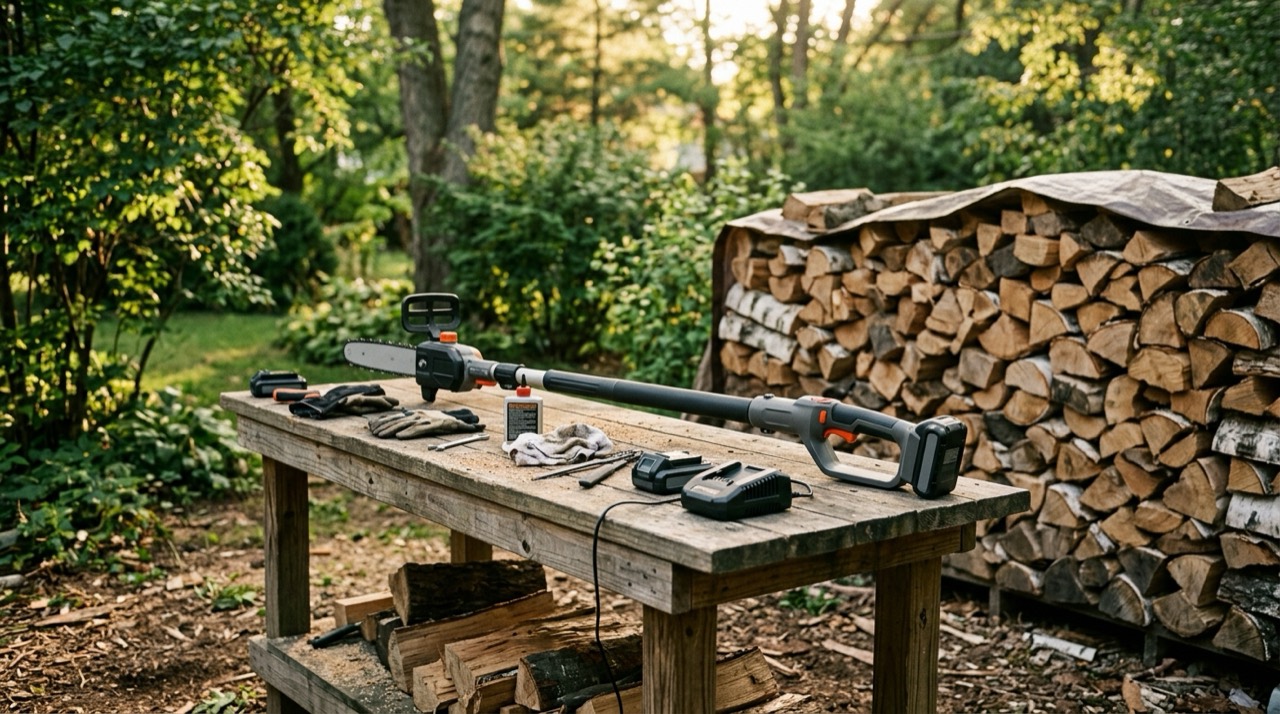
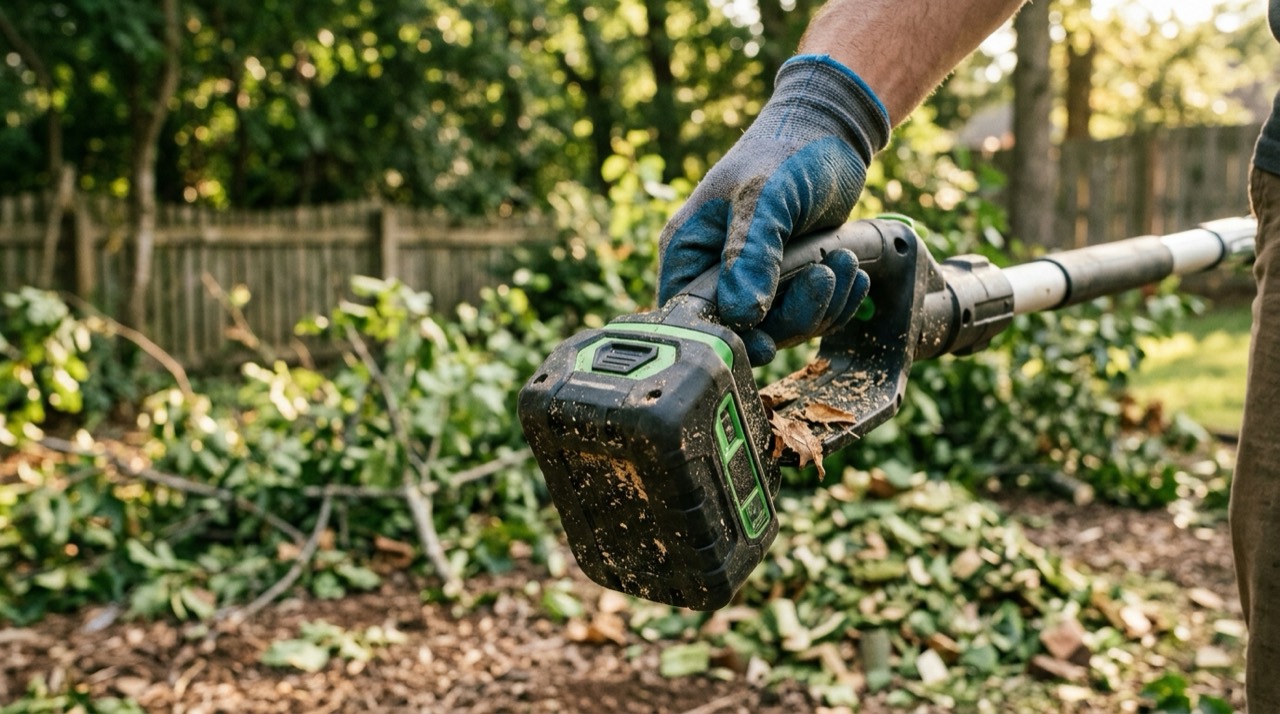
A cordless pole saw is a battery-powered chainsaw head on an extending shaft, built to prune branches up to roughly 15 feet overhead with no cord, no fuel, and very little noise. It suits suburban homeowners who keep a few trees tidy and want to start cutting at the push of a button.Battery pole saws have taken over the homeowner market for good reasons: they weigh less than most gas models, need almost no maintenance beyond the chain, and are quiet enough for early-morning work without upsetting neighbours. They run on the same battery platforms as other cordless yard tools, so if you already own a battery chainsaw or trimmer from a brand, its packs may fit. For a single small tree, weigh one against a manual pole pruner, which costs less and never runs flat.
How much runtime does a battery pole saw give?
A battery pole saw typically gives enough runtime to prune a tree or two on one charge, often tens of cuts, depending on branch size, chain sharpness, and battery capacity. Runtime is rated in amp-hours, and a larger pack cuts longer between charges.Runtime is the main limit compared with corded or gas tools, but overhead pruning is naturally stop-start work, since you cut, reposition, and rest your arms, so a battery often lasts longer in practice than the raw numbers suggest. A sharp chain draws less power and stretches every charge, which is why keeping the chain keen, covered in our chainsaw sharpening guide, matters as much as pack size. The things that decide how long a charge lasts are listed below.
- Battery capacity: higher amp-hour packs run longer but add weight to hold overhead.
- Branch thickness: thick, seasoned wood drains a pack far faster than green twigs.
- Chain sharpness: a dull chain forces the motor to work harder and empties the battery sooner.
- Cutting technique: letting the chain do the work, without forcing it, saves both charge and effort.
How many batteries should you buy for a pruning session?
Buy at least two batteries for anything beyond a quick tidy, so one is charging while the other is on the saw. A single pack limits you to whatever one charge covers, and standing around waiting for it to recharge turns a short job into an afternoon.Amp-hours tell you the trade-off. A small 2.0Ah pack keeps the tool light but empties quickly on thick wood; a 4.0 or 5.0Ah pack roughly doubles runtime at the cost of extra weight you feel at full extension. Many owners settle on one larger pack for stamina and one smaller pack for the last light branches when their arms are tiring. If you already run other tools on the same platform, those spare packs count, which is a large part of why staying within one battery family pays off.
How do you get the most cuts from one charge?
Get the most cuts from one charge by working with the tool rather than against it: keep the chain sharp, let it feed at its own pace, and choose your cuts to avoid the thickest, most draining wood when a pack is low. Small habits add up to noticeably more work between charges. The practices that stretch a battery furthest are listed below.- Sharpen or file the chain before it dulls, since a blunt chain is the single biggest drain on a pack.
- Let the chain pull itself through the wood; pushing bogs the motor and burns charge for no extra speed.
- Cut thinner limbs and reductions first, saving the heaviest wood for a fresh, fully charged pack.
- Keep the bar oiled, because a dry, overheating chain runs slower and forces the motor to work harder.
- Warm a cold battery to room temperature before a winter session, as cold packs deliver less of their rated runtime.
None of this is about babying the tool; it is simply that a sharp, well-oiled saw cutting at a sensible pace turns more wood per amp-hour than a neglected one being forced. Over an afternoon, that can be the difference between one pack and two.
Which cordless pole saws do owners rate?
Owners and reviewers repeatedly single out a handful of cordless pole saws across the main battery platforms. Based on manufacturer specs and aggregated owner feedback, rather than first-hand testing, the recognised names are listed below.| Model | Platform | Notes |
|---|---|---|
| EGO Power+ PSA1000 | 56V | Long reach and strong torque on EGO's high-voltage system |
| Milwaukee M18 FUEL 2825-21PS | 18V | Pro-grade cutting for owners already on M18 |
| DeWalt DCPS620 | 20V MAX | Balanced saw for the 20V and FLEXVOLT platform |
| Greenworks 40V 8-inch | 40V | Light, affordable homeowner pole saw |
| Ryobi ONE+ and Expand-It | 18V and 40V | Wide range plus the versatile Expand-It attachment |
Many of these share batteries with a brand's wider tool line, so the cheapest route to a cordless pole saw is often the platform you already own.
Does battery voltage tell you how powerful a pole saw is?
Battery voltage is a rough guide to power, not a precise one, because motor design and chain quality matter just as much. A 56V or 80V saw generally pulls through thicker limbs than an 18V or 20V model, but a well-made 40V saw with a sharp chain can out-cut a poorly built higher-voltage tool.Voltage sets the ceiling; the motor, gearing, and chain decide how close a saw gets to it. Higher-voltage platforms tend to carry longer bars and more torque, which shows on seasoned hardwood where a small saw bogs down. For the two-to-four-inch limbs most homeowners cut, though, any of the recognised platforms has enough power, and a keen chain does more for real-world speed than another handful of volts. Judge a saw by its bar length, balance, and reputation as much as by the number on the battery.
How do you keep a cordless pole saw cutting well?
Keeping a cordless pole saw cutting well comes down to a sharp chain, correct tension, and clean bar oil, the same basics any chainsaw needs. Check chain tension before each session, top up the bar oil reservoir, and touch up the chain with a file when it stops pulling itself into the wood.Batteries last longer if you store them part-charged in a cool, dry place rather than flat or in a hot shed, and you charge them before they sit for months. Our chainsaw maintenance guide covers the chain and bar routine that applies to pole saws too. Little of this is hard, which is much of the appeal of going cordless over a gas pole saw.
How should you store a cordless pole saw and its batteries over winter?
Store a cordless pole saw clean, lightly oiled, and with its batteries held at a partial charge in a cool, dry place, never flat or baking in a hot shed. Lithium packs age fastest when fully drained or fully charged in heat, so a mid-level charge protects their lifespan. The off-season routine is set out below.- Clean sawdust and sap from the bar, chain, and oiler, and wipe the shaft down.
- Run the chain through a file or note that it needs sharpening before next season.
- Empty or check the bar-oil reservoir so residue does not gum up over months idle.
- Charge each battery to roughly half, then remove it from the tool and store it indoors.
- Hang or lay the saw where the shaft cannot bend, ideally on a wall in your tool storage.
A pack left flat for a whole winter can drop below the voltage a charger will accept, effectively bricking it, so a mid-season top-up is cheap insurance. Come spring, a saw put away this way is ready after a quick chain check rather than a repair.
Cordless or gas pole saw for your yard?
Choose a cordless pole saw for a normal suburban yard with occasional pruning, and a gas pole saw for a large or rural property with heavy, frequent work. Weight held overhead and how much cutting you do in one go are the deciding factors.If your trees are few and your limbs are light, a battery model, or even a manual pole pruner, will serve with less fuss than an engine you have to fuel and service. For the full range of powered options and how they compare, see our pole saw buying guide and best pole saw picks. Whatever you choose, wear a helmet with face and ear protection and keep the shaft well clear of any power lines.