

What is a good CFM for a backpack leaf blower?
A good CFM for a backpack leaf blower depends on how much ground and how many leaves you clear, because CFM — cubic feet per minute — measures the volume of air the blower moves. More volume clears a wider, deeper row of leaves with each pass.Match the airflow to your property using the ranges below:
- 400 to 500 cfm: typical suburban yards and weekly grass clippings.
- 500 to 700 cfm: leaf-heavy half-acre lots and long driveways.
- 700 cfm and up: acreage, sports fields, and deep or wet leaves.
CFM matters more than MPH for most clearing work, since air speed alone just scatters leaves without moving the bulk. MPH still helps on wet, matted, or ground-in debris, so the best blowers pair a high CFM with enough MPH to dislodge stubborn material. When you compare models, read both figures together rather than trusting a single headline number.
How should you read a manufacturer's CFM figure?
Read a manufacturer's CFM figure as a rough band rather than a precise promise, because brands do not all measure it the same way. Some quote airflow at the housing before the tube narrows it, some at the nozzle, and the difference can make two blowers with matching printed numbers feel different in use.That is why owner feedback on real clearing often tells you more than a spec sheet split of a few CFM. Use the published numbers to place a machine in a broad category — homeowner, prosumer, or commercial — then weigh weight, comfort, and reliability within that band. A blower a little lower on paper but better fitted and more dependable frequently clears a yard faster in practice.
Does wet or heavy debris change the CFM you need?
Wet, matted, or ground-in debris raises both the CFM and the MPH you want, because water makes leaves heavy and sticky so they cling to the ground. For soaked fall leaves on a large lot, lean toward the 700-cfm-and-up machines and give air speed real weight in the choice.For context, homeowner backpack blowers often sit around 450 to 630 cfm, while pro machines like the Stihl BR 800 and Husqvarna 580BTS reach near 900 cfm for exactly these conditions. If your cleanups are mostly dry clippings and light leaves, though, paying for that top-end volume is wasted money and extra weight — size to your hardest routine job, not the rare worst case.
How do CFM and MPH work together?
CFM and MPH do different jobs, so the best blowers pair them rather than maximising one: CFM is the volume of air that moves a wide, deep row of leaves, while MPH is the speed that punches through wet or stuck debris. Read them as a team, not a single score.Picture CFM as the width and depth of the row you can push and MPH as the force behind it. A high-CFM, moderate-MPH machine clears great sweeps of dry leaves but works harder on soaked mats; a high-MPH, low-CFM tool bites into stuck debris but scatters loose leaves instead of moving them in bulk. That is why a blower with a huge headline speed and modest volume disappoints on a real leaf load, and why the picks worth buying carry strong figures in both columns.
What CFM do the popular backpack blowers offer?
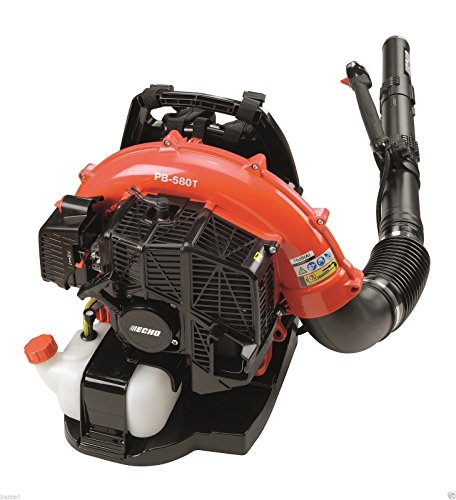
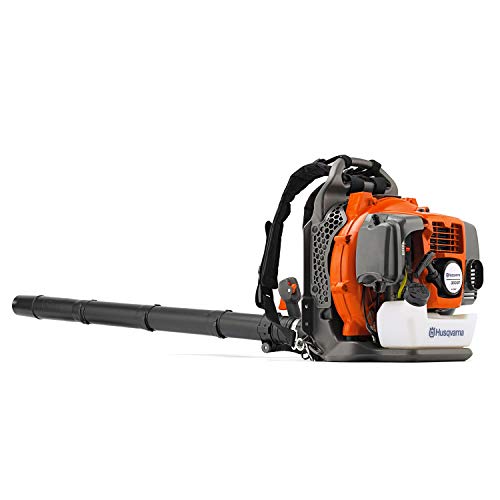
The popular backpack blowers span a wide CFM range, which is what lets you size one to your yard: entry and mid-size homeowner models sit lower, all-round machines in the middle, and pro units at the top. Knowing roughly where each lands makes the ranges above concrete.Lighter starters such as the Echo PB-2620 sit near 456 cfm, mid-size homeowner machines like the Husqvarna 350BT and Echo PB-580T fall around 494 to 510 cfm, and the battery EGO Power+ LB6003 reaches roughly 600 cfm. Step up to prosumer power with the Husqvarna 360BT near 631 cfm and the Echo PB-770T around 756 cfm, and the biggest pro units — the Stihl BR 800 C-E Magnum and Husqvarna 580BTS — approach 900 cfm and beyond. Match those figures to your property rather than reaching for the top, and see how the models compare in our best backpack blowers picks and how airflow works in the backpack blowers guide.


