


How do you maintain a corded electric lawn mower?
Maintain a corded electric mower by keeping the blade sharp, clearing clippings from under the deck after each cut, and storing it dry and unplugged. With no fuel, oil, or spark plugs to service, those few habits are almost the entire maintenance job.
Corded mowers are the lowest-upkeep power mowers there are, which is a big part of their appeal. The motor is sealed and effectively maintenance-free, so your attention goes to the blade, the deck, and safe storage. Skip fuel stabilizer, oil changes, and carburetor cleaning entirely.
How often should you sharpen and change the blade?
Sharpen the blade roughly once or twice a mowing season, and more often if you hit sticks or stony ground. A sharp blade slices grass cleanly, while a dull one tears it, leaving frayed brown tips and making the motor work harder.
A dull blade is the most common reason a healthy corded mower seems to lose power. The signs are easy to read and are listed below.
- Ragged, brown-tipped grass a day after mowing signals a torn, not cut, edge.
- The motor bogging in grass it used to clear points to a blunt blade or a clogged deck.
- Visible nicks or a rounded edge on the blade mean it is time to sharpen or replace.
Always unplug the mower before tipping it to reach the blade. File or grind the cutting edge to a butter-knife sharpness, keep it balanced so it does not vibrate, and replace the blade outright if it is cracked, badly nicked, or worn thin.
How do you sharpen the blade safely, step by step?
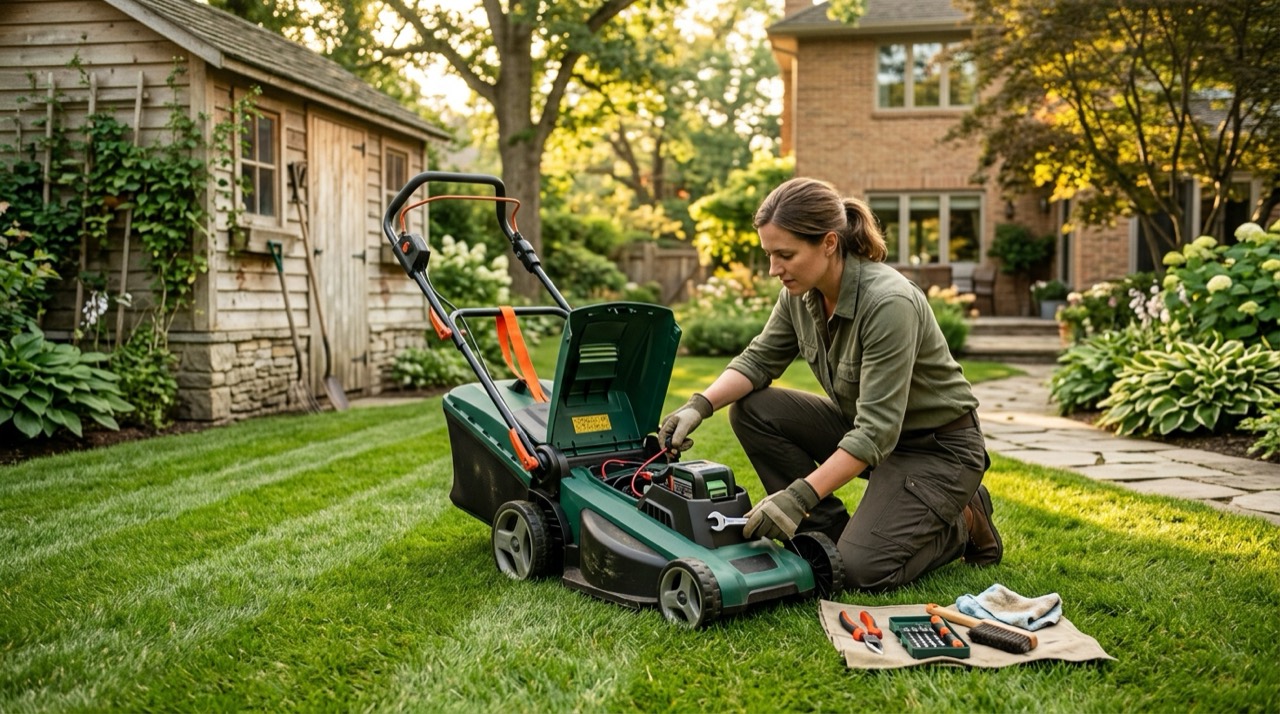
Sharpen a corded mower's blade with the mower unplugged, the blade removed or firmly held, and a file or bench grinder taken to the cutting edge at its original angle. Done carefully it takes about fifteen minutes and restores a clean cut, but the golden rule is that the mower must be disconnected from power before your hands go near the blade.
- Unplug the mower at the wall and confirm the cord is out before touching the deck.
- Tip the mower with the motor side up so nothing strains, and note which way the blade faces.
- Mark the blade with a dab of paint or a scratch so you refit it the same way round.
- Loosen the central bolt, holding the blade with a gloved hand or a block of wood, and lift the blade off.
- File the cutting edge along its existing bevel, giving each end the same number of strokes.
- Check the balance by resting the blade's center hole on a nail; if one end dips, file a little more off that end.
- Refit the blade the marked way round, tighten the bolt firmly, and only then reconnect the cord.
Replace the blade rather than sharpening if it is cracked, deeply nicked, bent, or worn thin, since a damaged blade can shatter or throw the deck out of balance. A butter-knife edge is sharp enough; a razor edge only chips faster on the first stone.
How do you clean and store a corded mower?
Clean the underside of the deck after each cut and store the mower dry, unplugged, and out of the weather. Wet clippings packed under the deck rob cutting power, hold moisture against steel, and breed rust and clog.
Deck care takes two minutes and pays back in performance. With the mower unplugged, scrape caked clippings from under the deck with a wooden or plastic scraper, then wipe it dry. Fold the handle and stand or hang the mower in a dry shed or garage. Coil the extension cord loosely to avoid kinks that damage the wire. Many corded models fold flat for storage, one of their advantages over bulky gas mowers, and the routine mirrors the wider advice in our lawn mower maintenance guide.
How should you store a corded mower over winter?
Store a corded mower for winter by cleaning the deck, wiping any steel dry, coiling the cord loosely, and standing the folded mower in a dry shed or garage. Unlike a gas mower there is no fuel to drain or stabilize and no oil to change, so winterizing is little more than a good clean and a dry spot.
The absence of a fuel system is a real advantage in the off-season. With a gas mower you must drain or stabilize the tank so it starts in spring; a corded mower simply waits. Give it an end-of-season clean under the deck, sharpen the blade or note it for spring, and keep it off a damp concrete floor where condensation can rust a steel deck. Hang the mower or stand it on a shelf if space is tight, since many corded models fold flat. Keep the extension cord indoors too, coiled without kinks, so cold and damp do not stiffen or crack the insulation. Come spring it starts on the first trigger pull with no coaxing.
Why won't a corded electric mower start or keep running?
A corded mower that will not start almost always has a power problem, not a motor fault: a tripped GFCI, an unplugged or damaged cord, or a safety handle not fully engaged. Work through the supply before you suspect the mower.
Because the motor is simple and sealed, troubleshooting is mostly about power and airflow. The checks below solve most no-start and cut-out complaints.
- Confirm power at the outlet and reset the GFCI or breaker if it has tripped.
- Check the cord end to end for cuts, and reseat both plugs firmly.
- Engage the safety bar fully against the handle before pressing start.
- Clear the deck of packed clippings that can jam the blade and stall the motor.
- Let it cool if it cut out under load; an overheated motor restarts once cool.
If the mower keeps tripping the breaker, the cord is likely too long or too thin, or the deck is clogged and overloading the motor. Shorten or upgrade the cord and clear the deck first. If a cordless setup starts to look simpler, compare against a battery lawn mower or weigh the full electric versus gasoline decision. This guidance is general; always follow your mower's manual and unplug before any inspection.
Why is the mower leaving a ragged or uneven cut?
A ragged, torn, or uneven cut almost always comes from a dull blade, a clogged deck, or mowing too fast or too low, not from a failing motor. Reading the finish tells you what to fix, and each cause has a simple remedy.
The usual causes of a poor finish, and how to correct each, are listed below.
- Frayed, brown-tipped grass means a dull blade tearing rather than slicing; sharpen or replace it.
- Streaks of uncut grass point to a clogged deck or a slipping bag; clear packed clippings from under the deck with the mower unplugged.
- A scalped, patchy lawn means the deck is set too low for uneven ground; raise the cutting height a notch or two.
- Grass laid flat and missed happens when you mow too fast or the grass is wet; slow down and wait for the lawn to dry.
- An uneven side-to-side cut can mean a bent blade or uneven wheel heights; check the blade is straight and all wheels sit at the same setting.
Because the sealed motor rarely fails, a mower that suddenly cuts poorly is almost always telling you the blade, the deck, or your technique needs attention. Fix those first before suspecting anything mechanical.
When is a corded mower worth repairing?
Repair a corded mower whenever the fault is the blade, the cord, or a clogged deck, since those are cheap, quick fixes that restore full performance. Consider replacing the mower only if the sealed motor has truly failed or the deck is cracked, which is uncommon on a well-kept machine.
Most corded-mower problems are wear items, not the end of the mower. The parts owners actually replace are listed below.
- The blade, sharpened each season and swapped when nicked, cracked, or worn thin.
- The extension cord, replaced outright if cut or with damaged insulation.
- The grass bag, if the fabric tears or the frame breaks.
Because there is no engine, carburetor, or fuel system to wear out, a corded mower that is stored dry and kept clean often outlasts a gas mower of the same age. Weigh a new deck or motor against a fresh mower, but expect blade and cord upkeep to be the whole story for years.