


What are the main riding mower body styles?
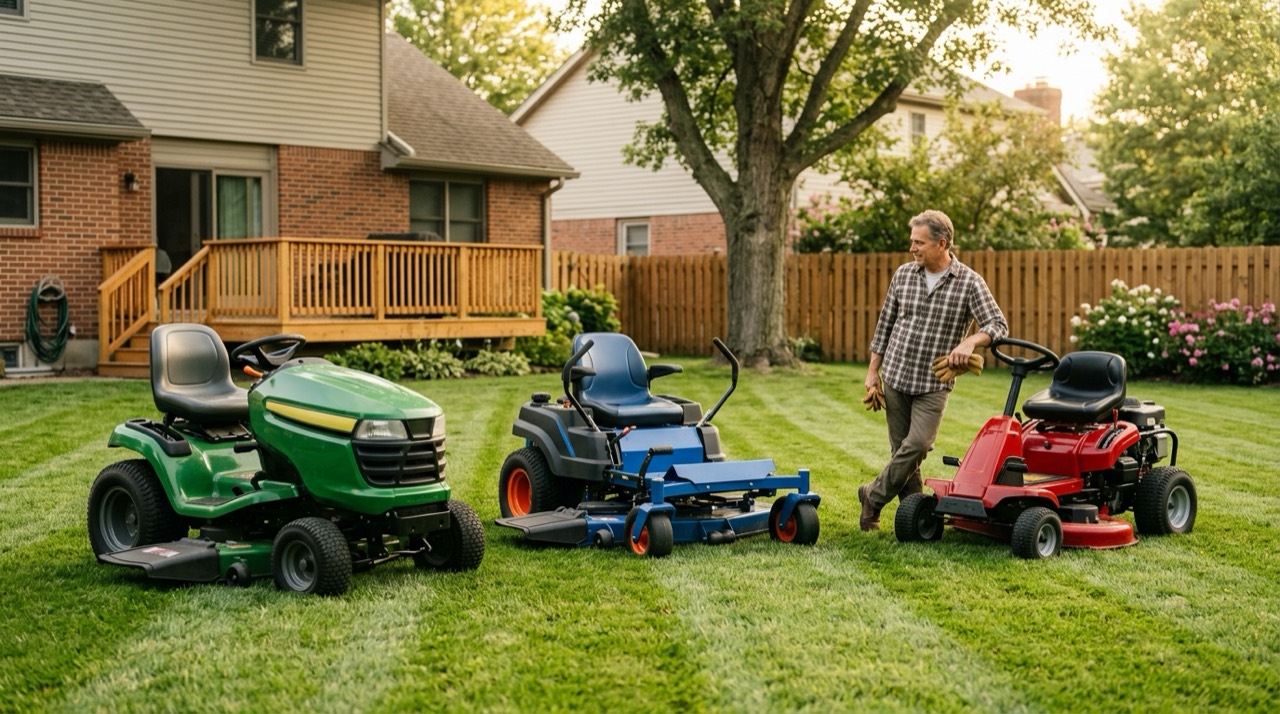
Riding mowers come in three steering-wheel body styles plus the lever-steered zero-turn: rear-engine riders, lawn tractors, garden tractors, and zero-turns. Each puts the engine, deck, and controls in a different place, which changes how the machine turns, how much it cuts, and what it costs.
The four styles below trade manoeuvrability, deck width, and durability against price.
| Body style | Engine position | Typical deck | Steering | Best for |
|---|---|---|---|---|
| Rear-engine rider | Behind the seat | 30 in | Wheel | Tight half-acre lots |
| Lawn tractor | Front, under a hood | 42-46 in | Wheel | Half to two-acre yards |
| Garden tractor | Front, heavier | 48-54 in | Wheel | Two-plus acres, attachments |
| Zero-turn | Rear | 42-60 in | Twin levers | Speed and tight trimming |
Picking a body style is the first real decision, because it fixes the deck range and the price bracket before you compare individual models.
What is a rear-engine rider best at?
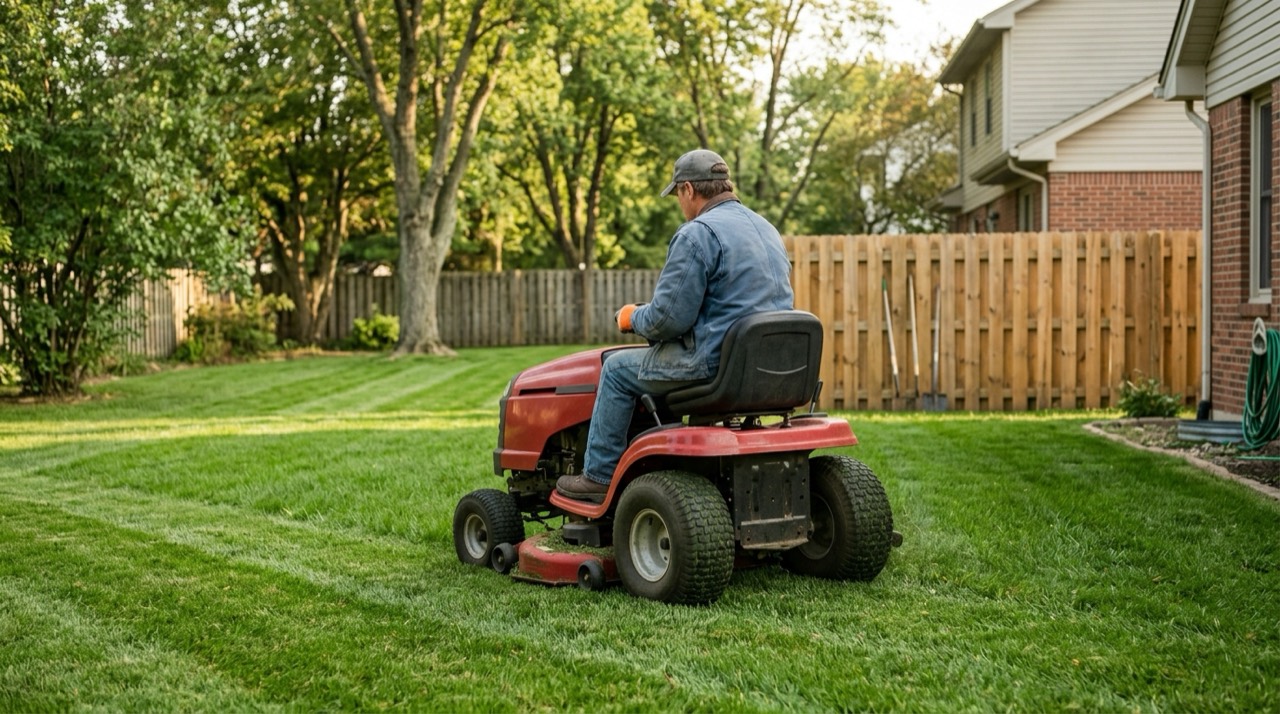
A rear-engine rider is best at squeezing a sit-on mow into a small, obstacle-filled yard. With the engine behind the seat and a narrow 30-inch deck, it fits through standard garden gates, stores in a garage corner, and turns tightly around beds and trees where a full tractor would struggle.
The trade-off is speed and capacity. A 30-inch deck makes slow work of anything over half an acre, and the short wheelbase feels less planted on slopes than a longer tractor. For a compact, broken-up lawn under half an acre, though, a rider like the Cub Cadet CC30 is often the most practical sit-on choice, and it costs less than a lawn tractor.
What is a lawn tractor best at?
A lawn tractor is best at mowing open half-acre to two-acre lawns comfortably and affordably. Its front-mounted engine, 42-to-46-inch deck, and steering wheel make it the mainstream all-rounder: quick enough to clear a decent yard, simple to drive, and available from every major brand across a wide range of prices.
Front-engine tractors also tow light attachments and carry a comfortable seat for longer sessions. What they are not is nimble; the turning radius leaves uncut strips around tight obstacles, which is where a zero-turn or a compact rider pulls ahead. For most suburban and semi-rural properties, a lawn tractor is the default recommendation, and our best riding mower picks are led by this class.
Where do garden tractors fit?
Garden tractors fit large, rough properties and owners who want to do more than mow. They look like lawn tractors but use a stronger frame, a fabricated deck, and often a bigger twin-cylinder engine, so they cut wide swaths on two to four acres and drive ground-engaging attachments like plows, tillers, and dethatchers.
That capability costs money and space. A garden tractor is overkill for a tidy suburban lawn and needs real storage room. But for a big block with slopes, rough grass, and year-round jobs, its durability and attachment range justify the premium over a standard tractor.
When does a zero-turn beat a tractor?
A zero-turn beats a tractor when speed and trimming around obstacles matter most. Its twin-lever steering spins the machine in its own length, so it wastes no time on three-point turns and leaves few uncut strips around trees and beds; wide decks also let it clear big open areas fast.
The catches are a steeper learning curve, weaker performance on slopes, and usually a higher price for a given deck width. Zero-turns are their own topic, covered in full on our zero-turn mower guide. If your property is large and open with many obstacles, weigh a zero-turn against a garden tractor before you buy.
How do the body styles compare on turning and manoeuvrability?
Manoeuvrability runs from the nimble zero-turn and compact rear-engine rider at one end to the wide garden tractor at the other, with the lawn tractor in the middle. Turning radius decides how many uncut strips you leave around trees, beds, and fences, so it matters most on cluttered lots.
A zero-turn spins within its own length on twin levers, leaving almost nothing uncut around obstacles, which is its headline advantage. A rear-engine rider is short and turns tightly for a steering-wheel machine, so it weaves between beds a full tractor would have to loop around. Lawn and garden tractors turn on a wider arc set by their wheelbase and front axle; the wider the deck and longer the frame, the bigger that arc, which is why a garden tractor needs open room to work efficiently. The practical rule is that the more obstacles fill your yard, the more you should weight turning radius against deck width, because a wide deck that cannot reach between the beds saves no time at all.
How do build quality and deck type differ across the styles?
Build quality rises from the light rear-engine rider through the mainstream lawn tractor to the heavy garden tractor, and the clearest marker is the deck. Rear-engine riders and most lawn tractors use a stamped-steel deck pressed from a single sheet; garden tractors use a thicker fabricated deck welded from heavier plate.
A stamped deck is perfectly good on smooth suburban grass and keeps the price down, but it flexes and dents on rough ground and rusts through sooner if clippings are left to sit. A fabricated deck resists both, which is why it appears on garden tractors and premium riders meant for acreage. Frames follow the same pattern: a garden tractor's heavier chassis, larger wheels, and stronger transmission are built for ground-engaging attachments and years of hard use, where a light rider is built for tidy weekly mowing. Match the build to the work — over-buying a garden tractor for a small lawn wastes money and storage, while under-buying a light rider for rough acreage wears it out fast.
How does price scale across riding mower body styles?
Price climbs with size and build: rear-engine riders are the cheapest sit-on option, lawn tractors occupy the broad middle, and garden tractors and wide zero-turns cost the most. Deck width, engine size, transmission type, and deck material are the four levers that move the price within each class.
A compact rear-engine rider undercuts a full lawn tractor because it uses less of everything. Lawn tractors span the widest price range of any style, from bare gear-drive entry models to well-equipped hydrostatic machines, which is why most buyers shop here. Garden tractors command a premium for their fabricated decks, bigger twins, and heavier frames, and a zero-turn usually costs more than a tractor of the same deck width for its speed and trimming ability. Because the ranges overlap, it often pays to decide the body style your yard needs first, then buy the best-equipped machine you can in that class rather than the cheapest of a bigger one.
Which riding mower body style is safest on slopes?
Longer, heavier machines with a low centre of gravity are the most stable on slopes, so a garden tractor generally feels more planted than a short rear-engine rider, and every steering-wheel style handles gentle grades better than a zero-turn. No riding style, though, is safe past the maker's slope limit of about 15 degrees.
A rear-engine rider's short wheelbase makes it feel tippier on a grade, while a longer tractor spreads its weight over more ground. Zero-turns are the weakest on slopes despite their speed elsewhere, because their rear-wheel drive and caster front wheels can lose steering grip pointing downhill. Whatever the body style, the rules are the same: mow up and down gentle slopes rather than across them, slow before turns, never mow wet grass on a grade, and leave any bank steeper than the limit to a walk-behind mower or a professional. The riding mower guide covers the full slope and PPE detail.
Which body style should you choose?
Choose by acreage, obstacles, and budget in that order. Under half an acre with tight gates, a rear-engine rider fits best; from half to two acres, a lawn tractor is the sensible all-rounder; past two acres or with heavy attachment use, a garden tractor earns its keep; and where speed around obstacles rules, a zero-turn is worth learning.
Whatever the body style, keep up with routine lawn mower maintenance and follow the slope and PPE rules in our riding mower guide, since every sit-on machine carries the same tip-over and blade risks.