


How do you cut down a small tree with a chainsaw?
You cut down a small tree by planning the fall first, then using a notch cut and a felling cut to control the direction, leaving a hinge of wood that steers the tree down safely. This applies only to small, straight, healthy trees on open ground; large, leaning, or hazardous trees belong to a trained professional.The basic sequence, for a small tree only, is set out below.
- Check the tree lean and clear a 45-degree escape path on each side away from the fall.
- Cut a notch about a third of the way into the trunk on the side you want the tree to fall.
- Make the felling cut on the opposite side, slightly above the notch, moving toward it.
- Stop before cutting through, leaving a hinge of wood, then step back along your escape path as it falls.
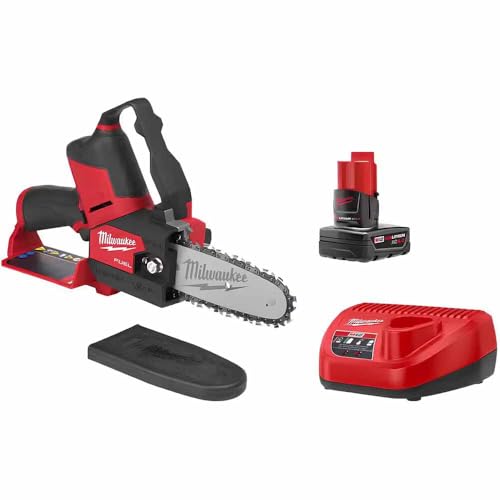
Keep bystanders well clear, never cut with the tip of the bar, and use both hands on the saw. A mini chainsaw suits only thin trunks; anything thicker than its bar needs a compact saw from our best small chainsaw for home use picks.
When is a tree too big or dangerous to cut yourself?
A tree is too dangerous to fell yourself when it is leaning heavily, dead or rotten, taller than open ground allows, thicker than your saw's bar, or anywhere near a building, fence, or power line. Any of these calls for a trained professional with the right gear.Reach and control are the real limits, not bravery. A small, straight, healthy tree on open ground gives you room to plan the fall and step clear, while a leaning or hazardous tree can twist, split, or drop a limb without warning. Trunks thicker than your bar force awkward multi-side cuts that are hard to control, and a mini chainsaw in particular suits only thin trunks. When in doubt, hire an arborist; the cost is far less than the damage a mis-felled tree can do to a roof, a car, or a person.
What is a notch cut, and why does it matter?
A notch cut is the wedge you remove from the side you want the tree to fall, and it matters because it sets the fall direction and gives the trunk room to tip. Without a proper notch, a tree can fall unpredictably or pinch the saw.The notch is cut about a third of the way into the trunk, forming a wedge that faces your intended landing spot. As the felling cut closes toward it from the opposite side, the band of wood left between them acts as a hinge that steers the tree down. A notch that is too shallow, uneven, or aimed wrong is a leading cause of a tree going the wrong way, so take the time to align it before you start the felling cut.
How do you plan the fall and clear an escape route?
You plan the fall by reading the tree's natural lean, choosing a landing zone that matches it, and clearing two escape paths at 45 degrees away from the fall before any cut. Never plan to force a tree against a strong lean.The planning steps are set out below.
- Judge the lean and the weight of the branches to predict where the tree wants to fall.
- Choose a landing zone that clears anything the tree could damage or bounce off.
- Cut back brush and trip hazards around the trunk so your footing is clear.
- Clear two escape paths at about 45 degrees back from each side of the fall line.
- Keep bystanders well outside the fall zone, at least two tree-lengths away.
With the fall planned and escape routes clear, you can cut with your attention on the saw, not your feet.
What safety gear do you need to fell a small tree?
You need eye protection, a helmet with a face shield, hearing protection, cut-resistant gloves, sturdy boots, and chainsaw chaps to fell even a small tree safely. Felling carries more risk than pruning, so the gear list is longer than for light cutting.The essential kit is listed below.
- A safety helmet with a face shield for head and face protection from falling limbs.
- Chainsaw chaps and PPE to protect your legs from the chain.
- Cut-resistant work gloves and sturdy, closed boots.
- Hearing protection for the noise of sustained cutting.
This is general guidance, not a substitute for hands-on training, and any tree near power lines or a building should be left to a professional.


