


What is a one-handed cordless mini chainsaw?
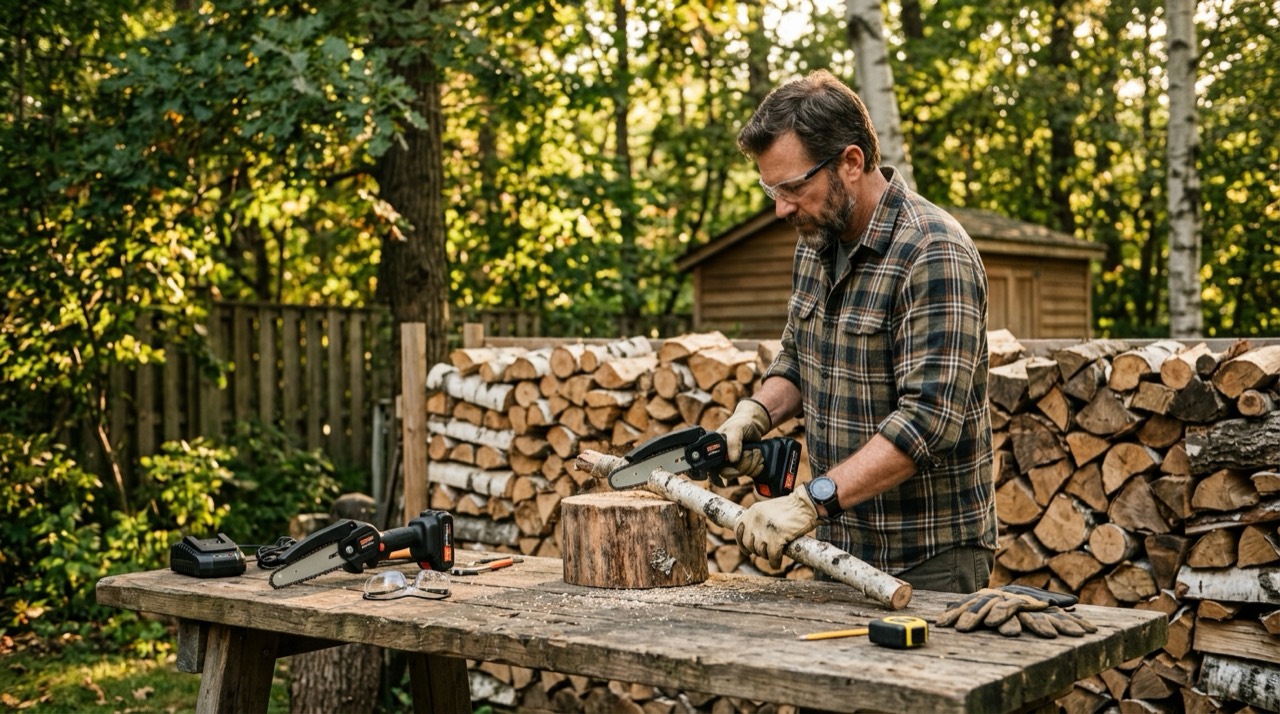
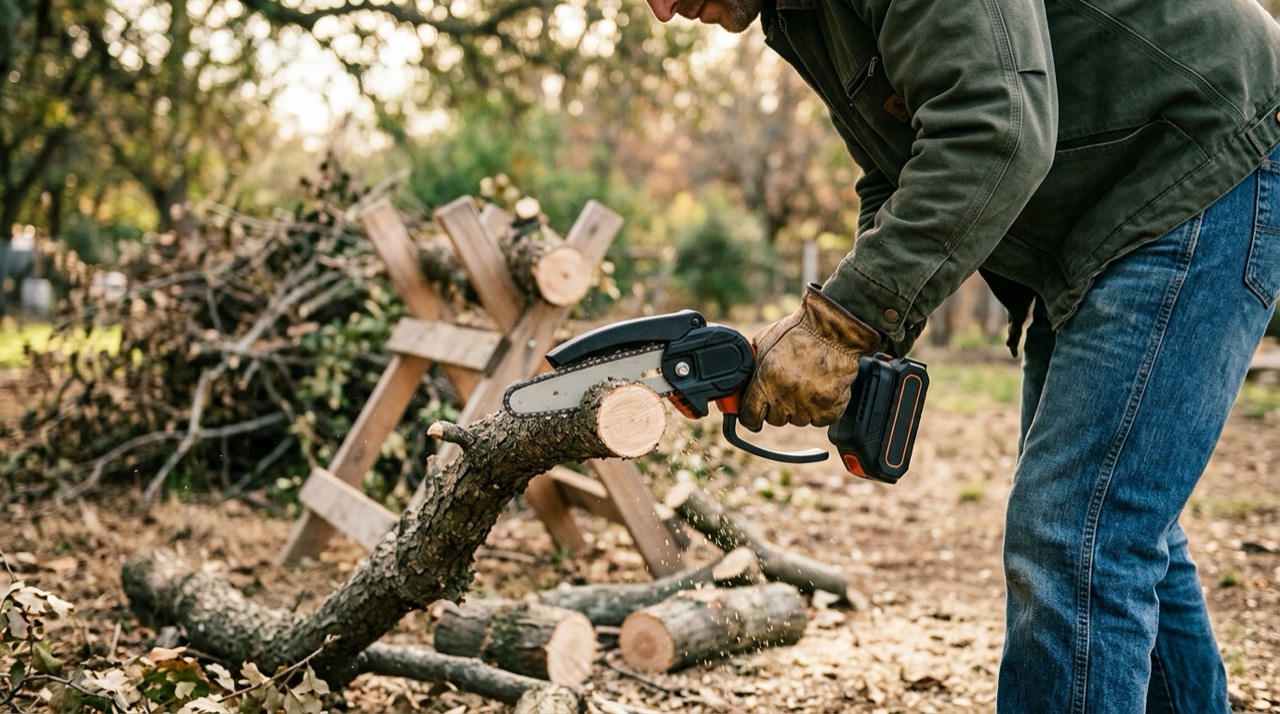
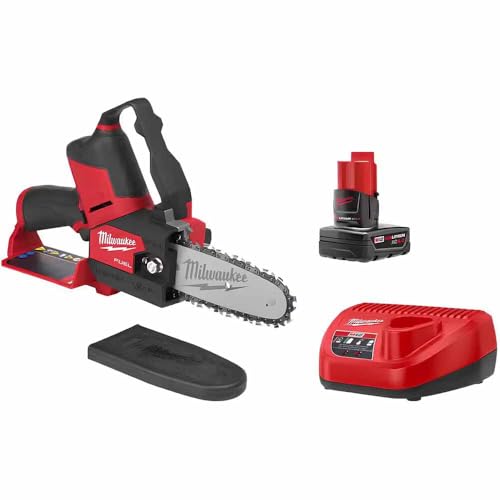
A one-handed cordless mini chainsaw is a compact battery saw, usually with a 4-to-6-inch bar, designed to be held and operated in a single hand for quick pruning and cleanup. It runs off a slide-on lithium battery and starts with a trigger, no cord or fuel involved.This class exists because most yard cutting is small: a few branches, some vines, a bit of deadwood. A one-handed mini does that work faster than hand tools and with a fraction of a full saw's weight, which is why brands from Milwaukee to Worx all offer one. The trade-off is limited cutting depth and run-time, and a real need to respect the saw despite its size.
Which battery platform should a cordless mini chainsaw use?
The battery platform decides the long-term cost of a cordless mini chainsaw, because a saw that shares packs with tools you already own saves you buying yet another battery and charger. Choose the platform first, then pick the best mini saw on it.The most common platforms for minis, and what each is known for, are listed below.
- Milwaukee M12 powers the pro-grade HATCHET pruning saw alongside a deep tool range.
- DeWalt 20V MAX and Ryobi ONE+ 18V both offer pruning-style minis within huge ecosystems.
- Worx 20V Power Share and Craftsman V20 focus on affordable homeowner minis.
- Greenworks 24V targets the lightest, most compact suburban pruning.
If you own none of these, weigh the whole tool range, not just the saw, since the platform will likely power your next blower, trimmer, or full-size battery chainsaw too. Owners who already hold one system almost always save money staying inside it.
How do the voltage and amp-hour ratings on a mini chainsaw battery differ?
Voltage roughly tracks how much cutting power a battery delivers, while amp-hours track how long it runs before recharging, so the two numbers answer different questions. A higher-voltage pack cuts a little harder, and a higher amp-hour pack of the same voltage simply lasts longer.On a mini chainsaw both numbers stay modest by design, because the class exists to be light. Most one-handed minis run on 12V to 24V packs, enough for pruning without the weight of a big battery. Chasing the highest voltage on a mini often backfires, adding weight and cost for cutting depth the short bar cannot use anyway. The table below shows how the two ratings change what you feel in use.
| Rating | What it controls | A higher number means |
|---|---|---|
| Voltage | Cutting power under load | A little more grunt, more weight |
| Amp-hours | Run-time per charge | More cuts, a heavier pack |
For a mini, a mid-size amp-hour pack usually beats a bigger voltage jump, because run-time is the limit you hit first.
Does a brushless motor change how a mini chainsaw performs?
A brushless motor meaningfully changes mini chainsaw performance, delivering more cuts per charge, steadier power under load, and less heat than an older brushed motor. On a saw with a small battery, that efficiency is the difference between finishing a pruning session and stopping to recharge.Brushless minis such as the Milwaukee HATCHET and current Greenworks models cost more, but the extra run-time and longer motor life suit anyone who prunes regularly. For a handful of cuts a month, a brushed budget saw still does the job, and the savings can go toward a spare battery, which often matters more than the motor type on light-duty work.
Should you buy a larger battery for a mini chainsaw?
A larger battery is worth buying for a mini chainsaw when you regularly run out of charge mid-job, but not when it makes a light saw clumsy for everyday pruning. The right pack is the smallest one that finishes your usual session, with a spare for the occasional big clean-up.Bigger packs add run-time and weight in equal measure, which changes how a one-handed saw balances. For a few branches at a time, a compact battery keeps the saw nimble; for clearing a fence line or a windfall, a second small pack often beats one heavy one, because you keep the light balance and simply swap when the first runs down. Match the battery to the job in front of you rather than the worst case you can imagine, and let a shared platform spread the cost of extra packs across every tool you own.
Can you use any battery brand in a mini chainsaw?
No, a mini chainsaw runs only on batteries from its own platform, so a Milwaukee M12 saw takes M12 packs and a Ryobi ONE+ saw takes ONE+ packs, with no cross-brand mixing. Third-party packs exist but can void warranties and vary in quality, so most owners stay with the maker's own.This is exactly why the platform choice matters so much: the battery you buy locks you into one family of tools and chargers. Staying inside a system you already own avoids paying for another charger and keeps one battery type serving the whole yard, from the mini saw to the full-size battery chainsaw you might add later.
How do the major mini chainsaw battery platforms compare?
The major mini chainsaw platforms each lean toward a different buyer, from pro-grade build to lowest cost, so the best one for you is usually the system your other tools already use. The table below sums up what each is known for in the mini class.| Platform | Known for | Typical buyer |
|---|---|---|
| Milwaukee M12 | Pro-grade HATCHET pruning saw | Tradespeople and keen homeowners |
| DeWalt 20V MAX | Rugged pruning minis | DeWalt tool owners |
| Ryobi ONE+ 18V | Huge, affordable ecosystem | First-time buyers |
| Worx 20V Power Share | Cheap, light homeowner saws | Budget grab-and-go pruning |
| Greenworks 24V | Lightest, most compact minis | Small suburban yards |
| Craftsman V20 | Widely stocked value saws | Craftsman owners |
Whichever you pick, the platform will likely power your next blower or trimmer too, so weigh the whole range, not just the saw.
How long does a cordless mini chainsaw run per charge?
A cordless mini chainsaw typically makes dozens of light pruning cuts per charge rather than running continuously for hours, with the exact number set by battery size and wood hardness. Small onboard packs favour short, frequent jobs over marathon sessions.Two habits stretch run-time: keep the chain sharp so the saw is not fighting the wood, and carry a spare battery for bigger clean-ups. A sharp chain draws less current and cuts faster, so chainsaw sharpening directly improves both run-time and safety. Plan around the battery rather than expecting a mini to behave like a corded or gas saw.
How do you get the most cuts from a single mini chainsaw charge?
You get the most cuts from one charge by keeping the chain sharp, feeding the saw steadily, and matching the tool to wood within its limits, so the motor never fights the cut. Small habits add up to noticeably more work per battery.The steps that stretch a single charge are set out below.
- Sharpen or touch up the chain before it starts making dust instead of chips.
- Check chain tension so the chain is not dragging tight against the bar.
- Let the saw's speed do the cutting, feeding it steadily rather than forcing it.
- Cut wood within the bar's limit, since forcing oversized logs wastes charge and overheats the motor.
- Store the pack at a partial charge between jobs so it holds capacity over time.
Keeping the chain sharp does the most, because a dull chain draws more current on every cut; our chainsaw sharpening guide covers the file routine.
Is a corded mini chainsaw ever the better choice?
A corded mini chainsaw is the better choice only when you cut in one fixed spot near an outlet and want to never think about charging. For a workbench, a firewood-processing station, or a garden bed beside the house, a cord trades mobility for unlimited run-time.Most buyers still prefer cordless, because the whole point of a mini is walking the yard and pruning as you go, which a cord fights at every step. If your cutting genuinely stays in one place, a corded model removes battery cost and downtime, but for everything else the freedom of a battery wins. Weigh where you actually cut before you trade the cord away.
Where do one-handed minis stop and bigger saws begin?
One-handed minis stop being the right tool once branches pass roughly 5 to 6 inches thick or the work moves overhead, where a two-handed saw or a pole saw is safer and faster. Pushing a small one-handed saw past its limits is how accidents and burnt-out motors happen.For thicker logs and storm cleanup, step up to a compact two-handed saw from our best small chainsaw for home use picks. For high branches, a pole saw keeps you grounded and both hands on a stable pole. Matching the saw to the job keeps a mini doing what it does best.