

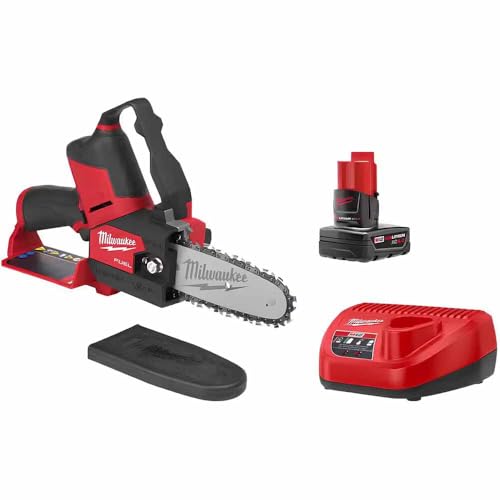


What can a 6-inch mini chainsaw cut?
A 6-inch mini chainsaw cuts branches, limbs, deadwood, and small logs up to about 5 inches thick in one pass, making it ideal for routine pruning and yard tidy-ups. The rule of thumb is simple: a mini cuts material a little under its bar length, so 6 inches of bar clears roughly 5 inches of wood.Typical jobs a 6-inch mini handles well, and those it does not, are listed below.
- Pruning tree and shrub branches, cutting back overgrowth, and removing vines.
- Bucking small logs and fallen limbs for cleanup after wind or storms.
- Trimming timber and light DIY cuts around the garden and yard.
- Not suited to felling standing trees, cutting firewood rounds, or any log thicker than the bar.
For branches a bit over 5 inches you can cut from both sides, meeting in the middle, but anything consistently thicker calls for a longer bar.
How thick a branch can a 6-inch mini chainsaw cut in one pass?
A 6-inch mini chainsaw cuts a branch up to about 5 inches thick in a single pass, since a saw clears a little under its bar length. For a branch slightly over that, you can cut from both sides and meet in the middle.The both-sides method works because it doubles your effective reach without a longer bar: cut halfway from one side, then line up a matching cut from the opposite side. Anything consistently thicker than about 5 to 6 inches, though, is a sign you have outgrown the 6-inch class and should reach for a longer bar rather than forcing repeated cuts, which wastes battery and strains the motor.
What types of wood can a 6-inch mini chainsaw handle?
A 6-inch mini chainsaw handles green branches, dry deadwood, softwood, and light hardwood within its 5-inch limit, though harder and drier wood cuts slower and drains the battery faster. Wood type changes the effort, not usually whether the saw can make the cut.Softwood and fresh green branches cut quickly and easily, while seasoned hardwood is denser and asks more of a small motor and battery. Dry, dead limbs cut fast but dull the chain quickly if they are dirty or gritty, and wood near the ground often hides soil that blunts a chain in minutes. Keeping the chain sharp matters most on the harder woods; a sharp chain pulls itself through, while a dull one forces the motor and empties the pack. Match your run-time expectations to the wood in front of you.
How does a 6-inch mini compare to 4-inch and 8-inch saws?
A 6-inch mini sits in the middle of the one-handed class, cutting more than a 4-inch twig saw but less than an 8-inch pruning saw. It is the best all-round balance of weight and capability for most suburban pruning.The table below maps the three common mini bar sizes to what each cuts and suits.
| Bar length | Cuts up to | Best for |
|---|---|---|
| 4 in | around 3-4 in | Twigs, vines, light pruning |
| 6 in | around 5 in | Suburban pruning, small deadwood |
| 8 in | around 7 in | Limbing, small logs, storm cleanup |
If most of your cutting is thin, a 4-inch saw is lighter; if you often meet limbs near 6 inches, an 8-inch bar saves the two-side cuts. For a full comparison of sizes and platforms, see our best mini chainsaw picks.
How do you cut a branch cleanly with a 6-inch mini chainsaw?
You cut a branch cleanly by supporting it, cutting with the lower edge of the bar, and letting the chain speed do the work rather than forcing the saw. A sharp, well-tensioned chain leaves a clean face and avoids tearing the bark.The steps for a clean cut are set out below.
- Steady the branch or clear the area so it cannot pinch the bar as it drops.
- Start the cut with the lower edge of the bar against the wood, never the nose.
- Let the chain reach full speed before it bites, then feed it in steadily.
- For a heavier limb, undercut slightly first so the bark does not tear as the branch falls.
- Ease off as you finish so the saw does not drop into the ground or your leg.
Keeping the chain sharp does most of the work here; a dull chain tears rather than slices and forces the motor to labour.
What should you not cut with a 6-inch mini chainsaw?
You should not cut standing trees, firewood rounds, logs thicker than about 5 inches, or anything overhead with a 6-inch mini chainsaw. It is also not for wood hiding nails, wire, or embedded soil, which quickly destroy a chain.The jobs to keep away from a 6-inch mini are listed below.
- Felling standing trees, which needs a longer bar and proper technique.
- Cutting firewood rounds or any log thicker than the bar.
- Overhead branches or ladder work, where a pole saw is far safer.
- Dirty ground-level wood, buried metal, or old fence timber with nails.
Sending these jobs to the right tool protects both you and the saw. When you regularly outgrow 5 inches, move up to a compact two-handed saw from our best small chainsaw for home use picks.


