Best Firewood Rack
Best Firewood Rack, ranked from aggregated owner ratings and reviews, not first-hand testing. Real pros, cons, and who each pick is best for.

Our Top 3 Picks
Quick Comparison
| Product | Best for | Buy | |
|---|---|---|---|
| Woodhaven 8 Foot Firewood Rack | Best Overall | See Amazon | View (paid link) |
| Amagabeli 8 ft Outdoor Firewood Rack | Best Value | See Amazon | View (paid link) |
| Landmann 82433 8-Foot Firewood Log Rack | Best Heavy-Duty | See Amazon | View (paid link) |
| Sunnydaze Firewood Log Rack | Best Compact | See Amazon | View (paid link) |
| Panacea Adjustable Firewood Rack Bracket Kit | Best for Beginners | See Amazon | View (paid link) |
| ShelterLogic Firewood Rack with Adjustable Cover | Editor's Pick | See Amazon | View (paid link) |
How do you choose the best firewood rack?
Choose a firewood rack by matching three things to your needs: length to your yearly burn, frame to your load, and cover to your climate. For most homes an 8-foot powder-coated steel rack is the sweet spot, holding roughly a half cord while resisting rust outdoors.Buying a rack is mostly about avoiding two mistakes: getting one too short for how much you burn, and getting one too flimsy for heavy hardwood. The picks below sort real racks by who they suit best. For how sizing, materials, and placement fit together, start with the firewood rack guide.
Which firewood rack is best for you?
The table below compares the racks in this guide by who they suit, frame type, typical length, and whether a cover is included.| Rack | Best for | Frame | Typical length | Cover |
|---|---|---|---|---|
| Woodhaven 8 Foot | Overall pick | Powder-coated tubular steel | ~8 ft | Optional |
| Amagabeli 8 ft | Value | Powder-coated steel | ~8 ft | No |
| Landmann 82433 | Heavy loads | Heavy tubular steel | ~8 ft | Optional |
| Sunnydaze | Small spaces | Powder-coated steel | Short | No |
| Panacea bracket kit | DIY / beginners | Steel brackets + your lumber | Any | No |
| ShelterLogic w/ cover | Wet climates | Steel + fitted cover | Varies | Included |
How much firewood should your rack hold?
Size the rack to a full season so you refill it rarely. As a rough guide, an 8-foot rack stacked 4 feet high holds about a half cord, a 12-foot rack closer to a full cord, and a 4-foot rack a week or two of fireplace wood.Capacity depends on more than length, and the main factors are listed below.
- Length sets most of the capacity and is the easiest spec to compare.
- Depth equals your split length, usually 16 inches, and rarely changes.
- Height is capped by stability — much over 4 feet and a freestanding stack gets tippy.
If in doubt, buy longer. An under-filled rack still works; an overfilled one bows and leans. A useful habit is to buy enough total rack length to run two stacks: burn from the older, seasoned rack while the newer delivery dries in the second. Two 8-foot racks are also easier to place, move, and cover than one very long run, and they let you split the load if one spot in the yard gets more sun than another.
What length firewood rack should you buy?
Pick length by your heating method, not by guess. A fireplace lit on winter weekends rarely burns more than a face cord a season, so a single 8-foot rack is ample; a wood stove run as primary heat can go through several cords, which means multiple 8- or 12-foot racks. The length rule is simple: buy for your heaviest month, then add a little.Length also interacts with where the rack sits. A 12-foot rack needs a long, level, sunny run of ground; if your best-drying spot is short or uneven, two shorter racks fit real yards better than one long one. And because length is the spec that most affects price and shipping weight, it is worth measuring the intended spot before ordering rather than returning an oversized frame.
Steel rack or a DIY bracket kit — which is better value?
A ready-made steel rack wins on convenience and a slim footprint; a bracket kit wins on price and custom length. A powder-coated steel rack such as the Woodhaven or Landmann arrives ready to bolt together and takes a matching cover, while a bracket kit like the Panacea pairs cheap steel ends with your own 2×4s so you set the length yourself.The right choice comes down to budget, tools, and how much wood you handle. The trade-offs are summarised below.
- Buy steel if you want the slimmest, most weatherproof rack with the least effort and a cover option.
- Buy a bracket kit if you want the lowest cost per foot, a length you choose, and don’t mind sourcing lumber.
- Build from scratch only if you already have pressure-treated stock and want a permanent, freestanding frame.
Whichever route you take, set the feet on pavers or gravel so they don’t sit in standing water, and if you are also cutting rounds to length, a stable sawhorse or log stand makes bucking safer.
What frame and finish last outdoors?
Powder-coated steel lasts longest outdoors, and heavier tube resists bowing under dense hardwood. Reviewers report budget racks with thin, painted steel rusting at the welds and sagging within a season or two, while thicker powder-coated frames from Woodhaven and Landmann hold up for years.Pressure-treated wood is the low-cost alternative. A bracket kit paired with 2×4s and 4×4 posts builds a sturdy rack at any length, though it takes more space than slim steel and needs the boards kept off the dirt. Either way, set the feet on pavers or gravel so they don’t sit in standing water. Pay attention to the gauge of the steel as well as the coating: two racks can both be described as powder-coated steel yet use very different wall thicknesses, and the heavier tube is what stops a fully loaded middle from sagging over a few winters.
Do you need a cover with your rack?
A top cover helps in wet or snowy climates, but only over the top. Racks such as the ShelterLogic bundle include a fitted cover, while Woodhaven and Landmann sell matching covers separately. Skip full wrap-around tarps, which trap moisture and stop wood from seasoning.In a dry climate or under an eave you may not need a cover at all. Where rain and snow are frequent, a sloped top cover keeps the top row dry without sealing off the airflow the rest of the stack depends on. Whatever you choose, keep the sides open to the wind and the rest of your wood-processing tools close by so the whole job stays in one spot.
How do you set up a new firewood rack?
Assemble the rack on level, draining ground and load it evenly, and it will stand safely for years. Most steel racks bolt together in minutes, but where and how you place them matters as much as the build.Work through it in order:
- Choose a sunny, breezy spot a short walk from the door and clear of the house wall.
- Level the ground and set pavers or a gravel bed under each foot so the legs drain and don’t sink.
- Bolt the frame together fully and check it sits square and doesn’t rock.
- Stack the ends in crisscrossed columns and keep the load within the feet, leaving finger gaps for airflow.
- Add a top-only cover if your climate is wet, sloping it to shed water off the back.
Don’t overload the centre of a long rack, and treat these steps as general guidance — adjust the base and cover to your own soil and weather.
What problems do cheap firewood racks have?
The usual complaints about budget racks are bowing in the middle, rust at the welds, and feet that sink or bend. Thin painted steel is the common thread: it flexes under a full load and the coating fails where water sits, so the rack sags and stains within a season or two.Most of these problems trace back to buying too light for the load. A rack described loosely as firewood-rated may be fine for a few armloads of softwood but bow under a full row of green oak. Heavier tube, welded rather than loosely bolted joints, and wide feet are what prevent it. You can also design around a lighter rack by not filling the middle to the top and by keeping the whole thing on a hard, level base. For serious volumes, a sturdier frame like the Landmann pick — or splitting less at a time with an electric or gas log splitter — beats fighting a rack that was never built for the weight.
Full Ranking, Reviewed
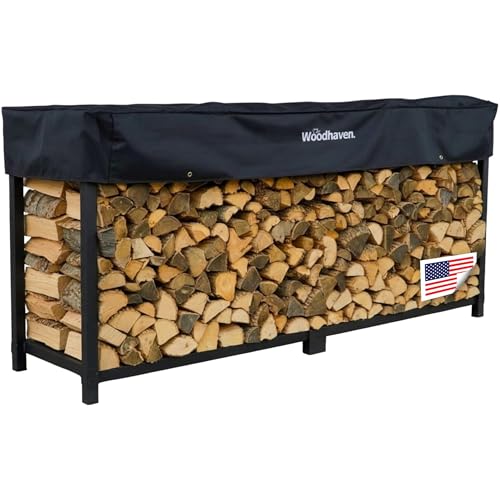
Best for Homeowners who burn a cord or two a year and want a rack that lasts.
- Powder-coated tubular steel frame that resists outdoor rust
- Roughly 8-foot length holds about a half cord of wood
- Wide-set feet keep the loaded rack stable on soil
- Optional top-only or full cover sold separately
- Made in the USA with a reputation for years of outdoor use
- Slim footprint holds a lot of wood for its length
- Top cover option keeps rain off without blocking airflow
- Costs more than budget import racks
- Cover is an extra purchase
Verdict: A well-built, rust-resistant rack that suits most households and takes a proper top cover — the safe default pick.

Best for Buyers who want a full-length outdoor rack without paying a premium.
- 8-foot powder-coated steel frame at a budget price
- Bolt-together assembly with basic hand tools
- Open sides that let wind season the stack
- Raised feet lift the wood off wet ground
- Low price for a full 8-foot rack
- Simple, quick assembly
- Enough capacity for a season of fireplace wood
- Thinner steel than premium racks and can flex when fully loaded
- No cover included
Verdict: A lot of length for the money; go easy on overloading the middle and it seasons wood well.
Best for Wood-stove users stacking heavier, denser hardwood loads.
- Heavy tubular steel construction built for large loads
- 8-foot length suited to a half cord or more
- Powder-coated finish for weather resistance
- Compatible with a Landmann add-on cover
- Sturdier frame that resists bowing under dense hardwood
- Long enough for serious burners
- Optional matching cover available
- Heavier and pricier than value racks
- Cover sold separately
Verdict: Built for people who burn a lot; the stiff frame handles heavy oak and hickory without sagging.
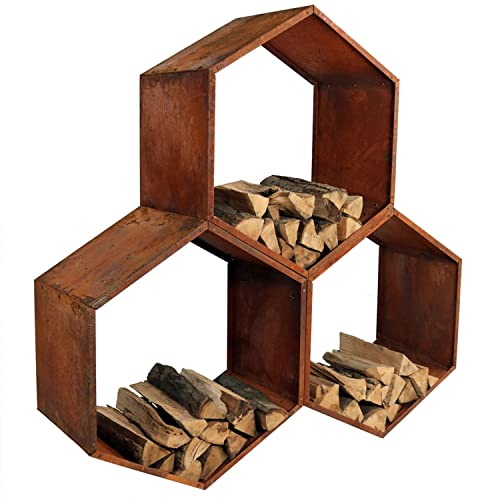
Best for Small patios, decks, or hearth-side storage where space is tight.
- Compact steel frame in shorter lengths for small spaces
- Powder-coated finish suited to covered patios and porches
- Light enough to reposition when empty
- Simple open design for airflow
- Fits decks, balconies, and hearths
- Easy to assemble and move
- Tidy finish for near-the-door use
- Holds far less than a full 8-foot rack
- Lighter steel better suited to sheltered spots
Verdict: A neat, good-looking rack for keeping a few days’ wood close to the fire without a bulky footprint.

Best for DIYers who want to set their own rack length cheaply.
- Steel end brackets you pair with your own 2×4 lumber
- Build any length by cutting the boards to size
- Lowest-cost route to a custom-length rack
- Powder-coated brackets for outdoor use
- Cheapest way to get a rack, especially a long one
- You choose the exact length
- Easy first project — no welding or complex tools
- You supply and cut the lumber yourself
- Only as sturdy as the boards you use
Verdict: The budget, build-it-yourself option: add two 2×4s per level and you set the length — a great first firewood project.

Best for Anyone who wants a rack and a weather cover in one purchase.
- Steel rack bundled with a fitted polyethylene cover
- Adjustable-length cover on some models
- Cover shields the top while the sides stay open
- Rust-resistant frame for open-yard use
- Rack and cover included together
- Cover keeps rain and snow off the top of the stack
- No need to source a separate cover
- Included covers wear faster than the steel frame
- Fit varies with how full the rack is
Verdict: The convenient all-in-one: you get a weather cover in the box, which is handy in wet or snowy climates.
Frequently Asked Questions
Are metal or wooden firewood racks better?
Powder-coated steel racks are generally more durable and rust-resistant than wood, and slimmer for the same capacity. Pressure-treated wood is cheap and sturdy but bulkier and can rot if it sits on wet ground. For most buyers, steel is the lower-maintenance choice.
How long does a firewood rack last outdoors?
A quality powder-coated steel rack commonly lasts many years outdoors, while thin painted racks can rust and sag within a season or two. Covering the top, keeping the feet out of standing water, and touching up any chips in the finish all extend a rack’s life.
What size firewood rack should I buy?
Match the rack to your burn: a 4-foot rack for occasional fireplace use, an 8-foot rack (about a half cord) for regular use, and two or more 8- to 12-foot racks for a wood stove. When unsure, size up — an under-filled rack still works, but a short one leaves you refilling all winter.
Do firewood racks come with covers?
Some do — the ShelterLogic bundle includes a fitted cover — but many racks, including Woodhaven and Landmann, sell a matching cover separately. Whatever you use, cover the top only and leave the sides open so the wood keeps seasoning.