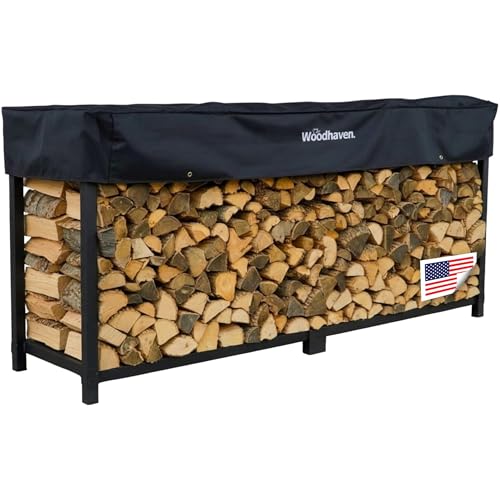

Should you cover firewood stored outside?
Cover only the top of outdoor firewood, never the whole stack. A top cover sheds rain and snow off the pile, while leaving the ends and sides open lets wind pull moisture out of the wood. A full tarp wrapped down to the ground traps humidity and can leave the wood damp and moldy.The difference comes down to airflow, summarized below.
- Top covered, sides open — rain runs off and wind still seasons the wood. Correct.
- Fully wrapped tarp — moisture is sealed in and the wood greys and molds. Avoid.
- Uncovered in constant rain — the top row stays wet and seasons slowly.
How should you cover a firewood rack?
Cover a rack with a sloped top that overhangs the back so water runs off. Use a fitted rack cover, a lid, or a tarp laid over the top row only, weighted or clipped so wind can’t lift it. Some racks, such as ShelterLogic bundles, include a matching cover; for others you add one.In a dry climate or under an eave, you may not need a cover at all. Where rain and snow are frequent, a top cover keeps the burnable top layer dry without sealing off the stack. To see which racks come with a cover, check the best firewood racks; for placement basics, see the firewood rack guide. Treat this as general guidance and adapt it to your local weather. Getting the overhang right matters — the cover should extend a little past the back and ends so runoff drips clear of the stack rather than onto it, and it should be secured against wind without being cinched down tight around the sides.
Does covering firewood cause mold?
Covering firewood the wrong way causes mold; covering only the top does not. Mold and grey rot appear when moisture is trapped against the wood with no airflow, which is exactly what a full, ground-length tarp does. A cover that sits over the top row while the sides breathe keeps rain off without sealing in damp, so the wood stays sound.If you find mold on stored wood, it usually means the pile was wrapped too tightly, stacked on wet ground, or never got enough sun and wind. The fix is to open it up: uncover the sides, lift the stack off the soil, and move it somewhere breezier. Surface mold on otherwise seasoned wood generally burns off fine once the piece is dry, but persistently damp, punky wood is better left out of the stove. Good airflow also discourages the insects and fungus that thrive in a sealed, humid pile, so the same top-only approach that seasons wood fastest also keeps it cleanest in storage. Treat this as general guidance and prioritise airflow whenever you add a cover.
What should you use to cover firewood?
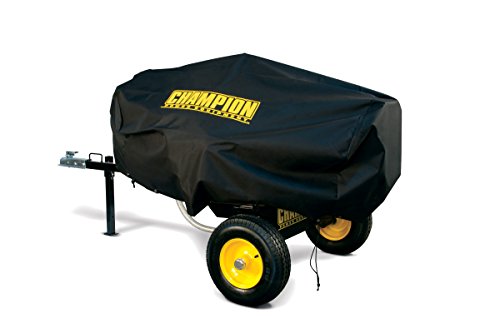
Use a cover sized to shield the top of the stack, not swallow it. The practical choices run from purpose-made rack covers to a plain tarp, each with trade-offs, listed below.- A fitted rack cover matches the rack, covers the top and a little of the sides, and stays put — the tidiest option.
- A tarp over the top row only, weighted with a spare split or clipped down, is cheap and works if you resist the urge to wrap it.
- A purpose-built lid or a lean-to roof sheds weather best and lasts longest, worth it for a permanent woodpile.
- A spot under a deep eave or open shed can replace a cover entirely, as long as air still moves through.
Whatever you use, slope it to the back so water runs off away from the stack, and never let it seal the sides.
When can you leave firewood uncovered?
Leave firewood uncovered while it is actively seasoning in a dry, breezy spot, and cover it as burning season nears. Through spring and summer, sun and wind on an open stack dry wood faster than any cover, and a little rain that runs off quickly does no harm to wood that has all day to dry again.The time to cover the top is when you want the wood ready to burn and the weather turns wet or snowy — a soaked top row is the part you reach for first. So a common approach is to season uncovered in the dry months, then add a top cover before autumn. One more option is a permanent roof — a small woodshed or lean-to with an open front gives you the best of both: the top is always protected and the sides always breathe, so you never have to move a tarp. Treat this as general guidance and adjust to your climate: persistently wet regions benefit from covering the top sooner.