

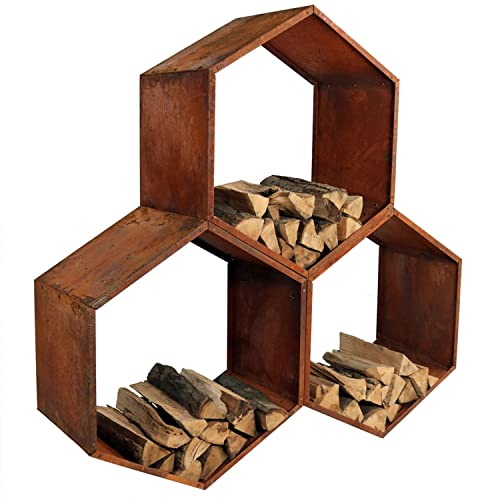


Where should an outdoor firewood rack go?
Place an outdoor firewood rack in a sunny, well-ventilated spot within easy reach of the door. Sun and moving air are what season and preserve wood, so an open, breezy location dries splits far faster than a shady corner against a fence.The best site balances drying power against the walk you’ll make in winter. South- or west-facing spots that catch afternoon sun and prevailing wind dry wood quickest. Avoid low ground where water pools and deep shade under dense trees, where damp lingers and wood can grey and mold. If you buy green wood to season, prioritize sun and wind; if you buy seasoned wood ready to burn, prioritize the shortest safe path from rack to hearth. Keeping the rack near the rest of your wood-processing tools also keeps splitting and stacking in one spot.
Orientation matters as much as the spot itself. Running the long face of the rack across the prevailing wind lets air move through the whole stack rather than just the ends, and turning the open face toward the afternoon sun adds drying hours through the shoulder seasons. If your only good site is partly shaded, favour the morning-to-midday sun side, since that dries dew off the pile early and gives the wood the longest dry spell each day.
How high off the ground should firewood sit?
Keep firewood at least a few inches off the ground — most racks lift it 4 to 6 inches, which is plenty. Ground contact wicks soil moisture straight back into wood you are trying to dry and invites insects and rot from below.Any air gap under the pile helps, and the common ways to create one are listed below.
- A steel rack with raised feet is the simplest and most stable option.
- Pressure-treated 4×4 rails laid under a stacked row work if you build your own.
- Pallets are a cheap stopgap, though they rot and sag within a few seasons.
Set the feet or rails on pavers, gravel, or compacted soil rather than grass, so the base drains and the legs don’t sink after rain. On a lawn, mowing around a ground-level pile is a chore and the grass beneath stays permanently damp; a gravel pad or a couple of pavers under each foot solves both problems and stops the legs from settling unevenly over a wet winter.
How much space should you leave around the stack?
Leave a few inches between rows and a gap behind the rack so air can move on every side. Airflow is what carries moisture out of the wood, so stacks crammed wall-to-wall or jammed tight against each other season slowly and unevenly, especially in the middle where damp lingers longest.A workable spacing routine looks like this:
- Keep the rack a few feet clear of walls and fences so wind can reach the back of the pile.
- If you run two rows or two racks, leave a hand’s-width channel between them for cross-flow.
- Stack the splits with small finger gaps rather than packing them solid.
- Keep grass and weeds cut back around the base so they don’t trap humidity against the wood.
These gaps cost a little space but pay off in faster, more even drying — and a stack that isn’t crammed is also less likely to bow a rack or lean as it settles.
How far from the house should you store firewood?
Keep the main firewood stack a few feet away from exterior walls, not stacked against them. A small gap lets air circulate behind the pile and, more importantly, keeps termites, carpenter ants, and rodents from using the woodpile as a bridge into the structure.Firewood is a known pest attractant, and storing large quantities against the house long-term is widely discouraged by pest and fire-safety guidance. A short walk from the door is fine — keep only a day or two of wood closer in a small carrier or hearth rack. In fire-prone areas, local guidance often recommends keeping woodpiles well clear of the home, so check your own municipality’s rules.
Does storing firewood outside attract pests?
Any woodpile attracts some insects and rodents, but good storage limits how many and keeps them out of the house. Beetles, ants, spiders, and the occasional mouse shelter in stacked wood; the aim is not to eliminate them but to avoid giving them a bridge indoors or a reason to nest.A few habits keep the pest load down, listed below.
- Burn oldest first — rotate stock so wood isn’t sitting for years becoming a nest.
- Keep it off the ground and away from the wall so pests can’t move straight from pile to structure.
- Bring in only what you’ll burn in a day or two rather than storing green wood indoors.
- Never spray firewood with insecticide — it can release fumes when burned; storage practices, not chemicals, are the fix.
If you see fresh sawdust, carpenter-ant activity, or termite mud around the base, move the pile and check the ground before pests reach the house.
Should you cover an outdoor firewood rack?
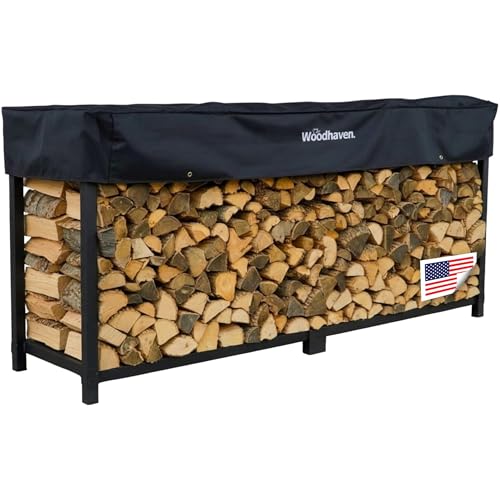
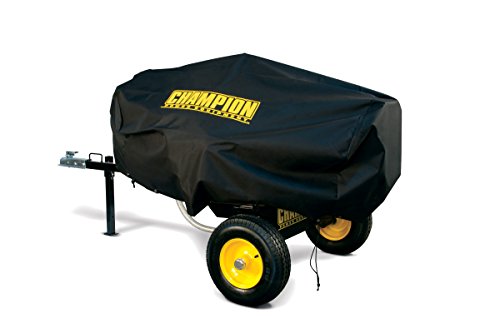
Cover the top of an outdoor rack, but leave the sides open. A top cover or lid sheds rain and snow off the pile, while open ends and sides let wind pull moisture out of the wood. Wrapping the whole stack in a tarp traps humidity and stops seasoning.Think of it as roofing the pile. A cover that reaches over the top row and part-way down the sides keeps the top dry without sealing in damp. Slope it so water runs off the back, and weight or clip it so wind doesn’t lift it. Some racks, such as ShelterLogic bundles, include a fitted top cover; for others you add a matching cover or a tarp over the top only. The best firewood racks note which models include a cover.
How long does firewood take to season outdoors?
Most firewood needs about 6 to 12 months on an airy outdoor rack to season, and dense hardwoods often need a year or more. Seasoning is really drying: freshly cut wood can be nearly half water by weight, and it only burns cleanly once that drops to roughly 20% moisture content.Times vary widely with species, climate, and split size, so treat any figure as general guidance. Splitting rounds smaller, stacking loosely for airflow, and a sunny, windy site all speed drying. A moisture meter is the reliable way to confirm wood is ready rather than guessing by the calendar. Wood cut and split in late winter or early spring gets a full warm season on the rack and is often ready by the next heating season; rounds left unsplit dry far more slowly, since the bark holds moisture in.
How do you set up firewood storage for easy winter access?
Set up winter storage so you can reach dry wood without wading through snow. That means a seasoning rack out in the sun and wind, plus a small, covered supply close to the door — because the best-seasoned wood in the yard is useless if the path to it is buried or iced over.Plan the winter route before the first snow:
- Keep a week’s worth of seasoned wood in a covered spot or small rack near the door.
- Clear and, if needed, grit the path from door to main rack so it stays usable when iced.
- Cover the top of the outdoor rack so the burnable top row doesn’t freeze under wet snow.
- Refill the door-side supply on milder days rather than making cold trips in a storm.
Treat these as general guidance and adapt to your winters — a mild climate needs little of this, while heavy-snow regions benefit from a covered lean-to or a spot under an eave.
How do you stop an outdoor rack from rusting and sinking?
Set the feet on a hard, draining base and choose a powder-coated frame. Steel feet left in wet grass or mud rust and sink, so pavers, gravel, or a concrete pad under the legs extend the rack’s life and keep it level under load.A level, well-drained base also matters for safety: a loaded rack that tilts as one foot sinks can lean and eventually spill. Check the rack after heavy rain, top up gravel if a foot settles, and touch up any chips in the finish before they rust. With a good base and a top cover, a quality steel rack lasts many years outdoors.