


Can you sharpen a pruning saw?
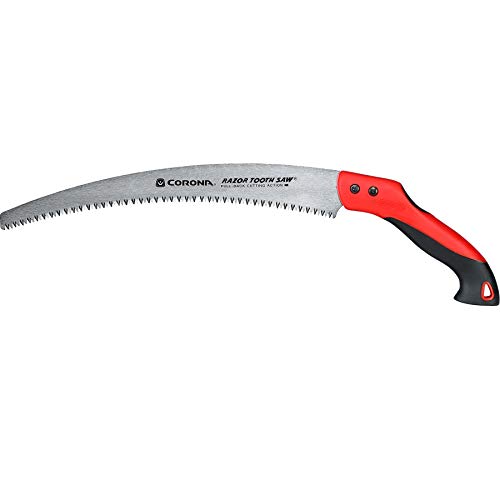
Most modern pruning saws cannot be resharpened at home, because the impulse-hardened teeth used by Silky, Corona RazorTOOTH, and similar makers are far too hard for an ordinary file to cut. When those teeth finally dull after years of use, the practical answer is to fit a genuine replacement blade, which restores full cutting speed for a fraction of a new saw’s price.
Impulse hardening is a deliberate trade-off: the teeth cannot be filed, but they hold their edge for a very long time, so most owners never need to sharpen at all.
Which pruning saws can be sharpened?
Traditional, non-hardened saw teeth can be sharpened, including some older pruning blades and many replaceable bow saw blades. Sharpening them means running a fine feather-edge or triangular file down each tooth face at the original angle, then re-setting the teeth with a saw set so they clear a wide enough kerf.
The work is slow and precise, and on an inexpensive blade it is usually cheaper and easier to replace the blade than to restore it. The sharpening files and tools guide covers the files involved.
How do you keep a pruning saw cutting well?
Keep a pruning saw cutting by cleaning sap off the blade, drying it, and storing it oiled in its sheath, which preserves the factory edge far longer than any sharpening. A clean, rust-free, impulse-hardened blade stays sharp for many seasons. When it does slow even on green wood, a fresh blade brings it back; the pruning saws guide explains matching a replacement to your saw.
How can you tell a pruning saw needs a new blade?
A pruning saw needs a new blade when it cuts slowly and needs real force even on fresh green wood, after you have ruled out sap build-up and a loose pivot. Clean, firm, sharp teeth cut on their own weight; when they no longer do, the impulse-hardened edge has finally worn out.
Before blaming the blade, clean off any sap and check the pivot, because a gummed or loose saw fakes the symptoms of a dull one. If a clean blade with a firm pivot still drags, look at the teeth: worn tips lose their crisp points and reflect light along the edge. At that stage no home sharpening will help an impulse-hardened blade, so a replacement is the answer. A blade that is bent or kinked, rather than dull, also cuts poorly and should be replaced.
How do you replace a pruning saw blade?
Replace a pruning saw blade by undoing the pivot fastener, lifting out the worn blade, and fitting the matching replacement in the same orientation. Most quality saws are built for this, so a fresh blade restores full speed for a fraction of a new saw's cost.
The general steps are set out below.
- Open the blade fully and note which way the teeth face before removing anything.
- Undo the pivot bolt, nut, or screw at the hinge.
- Lift out the old blade and slot in the correct replacement for your exact model.
- Re-fit and tighten the pivot so the blade locks firmly but still folds.
- Check for side-to-side play and test the lock on a scrap branch.
Buy the blade that matches your saw, since Silky, Corona, and Bahco blades are not interchangeable. The sharpening files and tools guide covers the few saws that can be filed instead of re-bladed.
A worked example: reviving a dull folding saw
A folding saw that has cut firewood and green limbs for several seasons and finally drags is the classic case for a new blade rather than a new saw. The revival is quick and cheap.
First the blade gets a clean with solvent to strip years of sap, then a check of the pivot, which is simply tightened until firm. If those two steps bring the cut back, the saw was never worn out, only gummed and loose. If it still drags on green wood, a genuine replacement blade for that model goes on in a couple of minutes, and the saw cuts like new again. The old handle, lock, and scabbard carry on for many more blades, which is exactly why a re-bladeable saw from the best pruning saws roundup is cheaper to own over time than a throwaway riveted saw.

