


Where should you make a pruning cut?
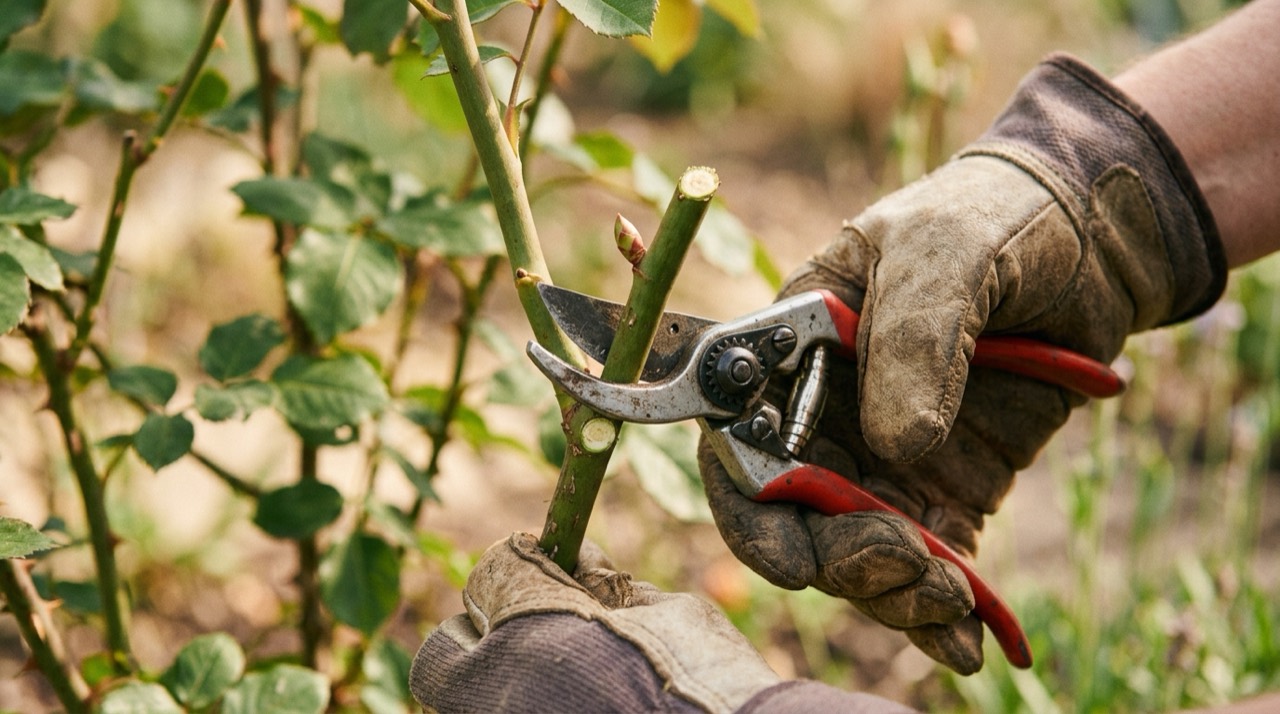
Make each pruning cut just above a healthy, outward-facing bud or a side branch, leaving a short stub of about a quarter inch so the bud is not damaged and the wound can seal. Cutting to an outward bud steers new growth away from the plant's centre, keeping it open, airy, and less prone to disease.
Position matters as much as sharpness. Cut too far above the bud and you leave a dead stub that dies back and invites rot; cut too close or into the bud and you kill the growth point you were trying to keep. Aim a hand's width of practice at getting the distance right, and use a sharp bypass secateur from our hand pruners and secateurs guide so the cut is clean rather than crushed.
What angle and blade position give the cleanest cut?
Angle the cut at roughly 45 degrees, sloping away from the bud, and set the blade of a bypass pruner nearest the part of the plant you are keeping. The slope sheds rainwater away from the bud, and putting the cutting blade against the retained stem leaves that side clean while any bruising falls on the piece you discard.
The steps for a clean cut are listed below.
- Choose a healthy outward-facing bud to cut above.
- Turn the pruner so the blade, not the anvil or hook, faces the stem you keep.
- Angle the cut about 45 degrees, sloping down and away from the bud.
- Close the pruner in one firm, smooth squeeze rather than sawing.
- Check the cut is clean; if it is ragged, sharpen the blade before the next cut.
A crushed or torn cut heals slowly and opens the plant to disease, which is why a keen bypass blade and the right angle matter more than raw effort. Keep the blade sharp with the right sharpening files and tools.
How do you prune roses, shrubs, and fruit trees with hand pruners?
Prune to the plant, cutting live stems within a hand pruner's ¾-inch capacity and handing thicker wood to loppers or a saw. The broad approach for common plants is set out below.
- Roses: cut to an outward-facing bud at a 45-degree angle with clean bypass secateurs, removing dead, damaged, and crossing stems first.
- Shrubs: thin out the oldest stems at the base and shorten wayward growth to a bud, keeping the centre open.
- Fruit trees: remove dead, diseased, and crossing branches, and shorten the previous season's growth to shape the tree; leave large limbs to a saw.
- Perennials: cut spent flower stems and dead foliage back to healthy growth or the crown.
Always start with the three Ds: remove dead, diseased, and damaged wood first, then stand back and decide what shaping the plant still needs. Working in that order clears the clutter so you can see the plant's structure before you make cosmetic cuts, and it prevents you removing healthy growth you later wish you had kept.
Match each cut to the stem. When a branch is thicker than about ¾ inch, move up to loppers or a pruning saw; for a formal hedge face, garden and hedge shears do the shaping. Overhead limbs, large or leaning branches, and any work near power lines are jobs for a trained professional, not a one-handed pruner on a ladder.
When is the best time to prune with hand pruners?
The best time to prune depends on the plant, but the safe general rule is to cut in the dormant season for most deciduous shrubs and trees, and just after flowering for spring bloomers. Pruning at the wrong moment can cost a season's flowers or push tender new growth into frost.
The broad timing guidance for common plants is set out below.
- Dormant-season pruning in late winter: most deciduous shrubs and fruit trees, cut while leafless so the structure is clear.
- After-flowering pruning: spring-flowering shrubs such as forsythia and many spireas, which bloom on last year's wood.
- Late winter or early spring: roses, cut back as the buds begin to swell.
- Any time of year: the three Ds — dead, diseased, and damaged wood — can be removed whenever you spot them.
Avoid heavy pruning in late summer and autumn on most woody plants, since the soft new growth it triggers may not harden before frost. When in doubt, removing dead and damaged wood is always safe; save hard shaping cuts for the plant's correct window. For thicker branches the same timing applies, but the tool changes to loppers or a pruning saw.
How much of a plant can you safely prune at once?
Remove no more than about a third of a plant's growth in a single session, because cutting harder stresses the plant, can trigger weak, excessive regrowth, and strips away more of the leaves it needs to feed itself. Light, regular pruning beats occasional drastic cutting.
The one-third guideline keeps the plant balanced: enough foliage remains to power recovery, and the plant is not shocked into throwing out a mass of soft water shoots. On an overgrown shrub that genuinely needs hard renovation, spread the work over two or three seasons rather than taking it all at once — remove a third of the oldest stems this year and repeat. Always begin by clearing dead, diseased, and damaged wood, which does not count against the one-third of living growth, then step back and judge how much shaping the plant still needs before you keep cutting. Pausing to assess after the three Ds prevents the common mistake of removing healthy growth you later wish you had left.
How do you fix a ragged cut or a stem that will not sever?
Fix a ragged cut by trimming it back cleanly to just above a bud with a sharpened blade, and deal with a stem that will not sever by moving it deeper into the jaws or stepping up to a bigger tool rather than forcing the pruner. A torn wound and an overloaded pruner are the two things that most often go wrong mid-session.
If a cut comes out crushed or stringy, the blade is either blunt or the stem was too thick: hone the edge and re-cut just above the next healthy bud so the plant seals a clean wound. If the pruner stalls halfway through a stem, do not twist it to finish — that bends the blade. Instead open the tool, seat the stem nearer the pivot where leverage is greatest, and try again; if it still will not part in one squeeze, the stem is beyond the pruner's capacity and belongs to loppers or a pruning saw. A blade that has sprung out of alignment from earlier forcing will not cut cleanly at all and needs adjusting or replacing before you continue.
What tools should you have ready for a pruning session?
Have a sharp bypass pruner, a means of sharpening, gloves, and something to collect prunings ready before you start, so a dull blade or a missing bin does not interrupt the work. A short, well-prepared kit keeps cuts clean and the session efficient.
The kit that covers most hand-pruning sessions is listed below.
- A sharp bypass secateur for live stems up to about ¾ inch, chosen from our best hand pruners roundup.
- Loppers and a pruning saw for anything thicker.
- A sharpening file to touch up the edge the moment cuts turn ragged.
- A pair of work gloves against thorns, sap, and the blade.
- A little alcohol or garden disinfectant for wiping blades between diseased and healthy plants.
- A trug or bag for prunings, keeping infected material separate from the compost.
Keeping sharpening and cleaning to hand means you fix a dull or sappy blade as soon as it slows you down, rather than fighting a poor cut for the rest of the session.
How do you avoid crushing stems and spreading disease?
Avoid crushing by keeping a sharp bypass blade and cutting in one clean squeeze, and avoid spreading disease by wiping the blades between plants when you see signs of infection. A dull or dirty pruner tears the wound and can carry fungus or bacteria from a sick plant to a healthy one.
Clean the blades with a rag and a little disinfectant or alcohol when moving between diseased and healthy plants, and re-sharpen whenever cuts turn ragged. Prune in dry weather where you can, since wet foliage spreads many fungal diseases more readily, and drop any clearly infected prunings straight into the bin rather than the compost. A pair of work gloves protects your hands from thorns and sap, and a clean, sharp tool leaves a wound the plant can seal quickly. For which pruner to use in the first place, compare current models in our best hand pruners roundup.