



Can a bump cap replace a chainsaw helmet?
No — a bump cap cannot replace a chainsaw helmet. Bump caps are designed only to cushion your head against low, fixed obstacles such as pipes and racking; they carry no rating for falling or thrown objects and include neither hearing nor face protection.What a bump cap is for
A bump cap is a lightweight shell, often built into a baseball-style cap, meant for stationary hazards where you might stand up into a shelf. It is not tested to ANSI Z89.1 or EN 397 and offers no meaningful defence against a dropping limb or chainsaw kickback.What chainsaw work actually needs
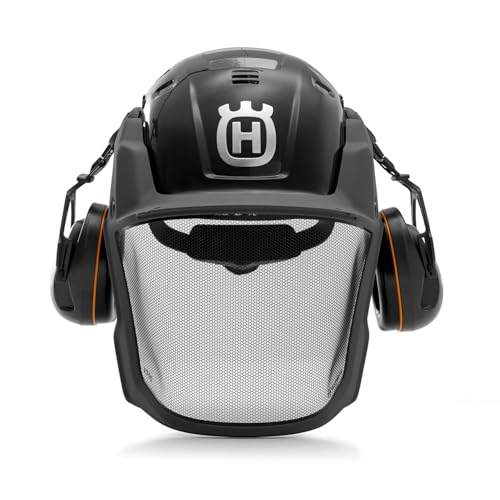
Chainsaw work needs a rated hard hat shell, earmuffs to tame roughly 100–115 dB of saw noise, and a mesh visor against chips and springback — the three parts of a forestry helmet system. None of those live in a bump cap, and skipping them leaves the exact injuries the helmet exists to prevent.The standards gap: EN 812 versus EN 397
A bump cap is certified to EN 812, a standard that only covers bumps and scrapes against fixed objects — it explicitly does not test for falling or thrown objects. A chainsaw helmet shell meets EN 397 or ANSI Z89.1, which do test impact from above. The two standards protect against different hazards, and the one a bump cap carries is the wrong one for cutting work.What a bump cap is actually good for
Bump caps have a genuine place — just not in chainsaw work. They suit low-clearance environments where the risk is standing up into a fixed obstacle: warehouse racking, plant maintenance, crawl spaces, and vehicle pits. In those settings their light weight and cap-like comfort are an advantage and there is no falling-object hazard to rate for. Using one there is sensible; using one under a tree is not.Why weight isn't a good reason to downgrade
Reaching for a bump cap because a hard hat feels hot and heavy solves the wrong problem. A modern vented forestry helmet with a wheel-ratchet suspension is far lighter and cooler than the bulky hard hats that gave the category its reputation, typically 700–950 g including the muffs and visor. The comfort gap that once tempted people toward a bump cap has largely closed, so there is little to trade away by wearing the right helmet.A worked example: a "quick" firewood cut
Say you plan to nip through a couple of fallen branches and grab a bump cap to save fuss. Those branches can still be under spring tension, the saw can still kick back toward your face, and an overhead limb can still drop — the exact hazards the bump cap can't rate for. The few minutes saved isn't worth the protection given up; the forestry helmet is the tool even for the quick job.Do battery and electric saws change the answer?
No — a lighter, quieter saw doesn't lower the head hazard, so a bump cap is still the wrong choice for a battery chainsaw or electric chainsaw. The branch being cut can still fall, the bar can still kick back, and the chips still fly. The struck-by risk comes from the wood and gravity, which are identical whatever powers the saw.The three-part requirement a bump cap can't meet
Chainsaw work needs three things on your head at once: an impact-rated shell, earmuffs for roughly 100–115 dB of noise, and a mesh visor against chips and springback. A bump cap offers none of them, and even fitted with add-ons it lacks the rated shell — so the only sound answer is a forestry system. Compare complete kits in the best chainsaw helmets roundup.What to wear instead for a comfortable fit
If comfort is the goal, choose a vented forestry helmet, set the ratchet suspension firm but not pinching, and open the vents in warm weather. That gives you the rated shell, sealed earmuffs, and mesh visor a bump cap lacks, at a weight most people find easy to wear all day — far more protection for little real comfort penalty.If weight and comfort are your reason for reaching for a bump cap, a modern vented forestry helmet is lighter and cooler than most people expect. Compare complete systems in our best chainsaw helmets roundup, and read the helmets and face shields guide for fitting advice.

