
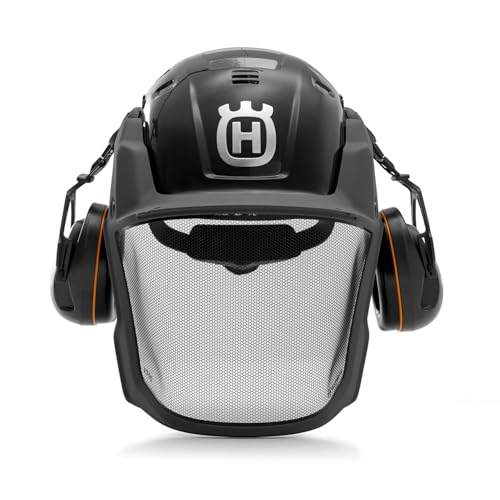


When should you replace a chainsaw safety helmet?
Replace the shell around five years from its moulding date, the suspension every twelve months, and any helmet the moment it takes a genuine impact. A helmet does its job by absorbing one hard knock, so a shell that has taken a real hit is spent even if it looks intact.Reading the date
Look inside the shell for a stamped moulding date, usually a clock or wheel symbol with an arrow pointing to the year and inner marks for the month. Count roughly five years from that date for the shell, and swap the suspension harness yearly — sooner under heavy professional use.Signs to retire it early
Retire a helmet early if the plastic looks chalky or faded, flexes or creaks, shows any crack, or if the muff cushions have hardened and stopped sealing. UV exposure is the main enemy: a helmet left on a sunny dashboard ages far faster than one kept in a shed.Why five years, and why UV is the enemy
The five-year guide isn't arbitrary: the thermoplastic shell slowly loses impact strength as ultraviolet light and heat break down the polymer, long before any crack shows. A shell stored in a hot cab or on a dashboard can reach the end of its useful strength well before five years, while one kept cool and dark lasts closer to the full span. The date sets the outer limit; storage decides whether you reach it.Why the suspension is replaced before the shell
The suspension harness — the webbing cradle that holds the shell off your head — is what actually absorbs and spreads an impact, and its straps stretch, fray, and stiffen with sweat and sun faster than the shell does. Replacing it roughly yearly, or sooner under heavy professional use, renews the working part of the helmet cheaply. A sound shell on a tired suspension is a helmet that looks fine and protects poorly.The after-impact rule, with an example
A helmet is designed to absorb one serious impact and then be retired, because the energy of the hit is spent deforming the shell and crushing the suspension even when nothing visibly cracks. If a heavy limb drops onto your helmet while limbing, that shell has done its job and comes out of service that day — not at the next inspection. Reusing an impacted helmet gambles on protection that has already been used up.What the visor and cushions need in between
The shell's five-year clock runs alongside shorter cycles for the wear parts: swap the earmuff cushions when the foam hardens and stops sealing, and replace the visor mesh when it is bent, sap-caked, or scratched. These parts fail on use, not age, so a heavily used helmet may need fresh cushions and a new visor more than once within one shell's life.Signs it's time even before the date
Retire a helmet ahead of its five-year mark if the plastic looks chalky or faded, flexes or creaks under light pressure, shows any crack however fine, or has taken a real knock. Faded, brittle plastic is the clearest UV warning. When appearance and date disagree, trust whichever says retire — the cost of a new shell is trivial next to the injury it prevents.Keeping a simple in-service record
Mark the date you first wear a new helmet, either on an approved label or in a maintenance log, so you are counting from a known start rather than guessing. Note the moulding date too, since a helmet bought as old stock is already partway through its life. A one-line record turns the five-year rule from a vague memory into a firm replacement date you can act on.Where to source spares and full replacements
Wide-network brands such as Husqvarna, 3M, and Stihl make cushions, visors, and suspension harnesses easy to source, so a good shell stays serviceable for its whole life. When the shell itself times out, compare current complete systems in the best chainsaw helmets roundup rather than nursing an out-of-date helmet along.Clean only with mild soap and water, never solvents, and store it out of direct sun to reach full service life. For fit, standards, and full-kit advice, see the helmets and face shields guide and the wider Safety Gear & Accessories hub.

