



What certification marks should a forestry helmet carry?
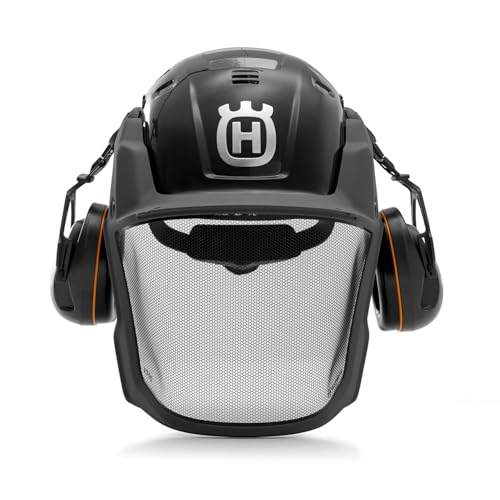
A forestry helmet should carry three marks: a shell rating (ANSI Z89.1 or EN 397), an ear-defender rating (EN 352 with an NRR or SNR figure), and a visor rating (EN 1731 for mesh). Those three stamps confirm each part passed independent impact, noise, and face-protection tests.Reading the marks before you buy protects you from unrated look-alikes that mimic a forestry helmet without the testing behind them. The stamps are usually moulded inside the shell, printed on the muff cups, and etched on the visor frame. A genuine forestry system will also name the specific standard number rather than vague phrases like "meets safety requirements," so treat missing or generic wording as a reason to keep looking.
What do the ANSI Type and Class ratings mean?
ANSI Z89.1 grades a hard hat by Type — I for top impact only, II for top and side impact — and by electrical Class: G for general, E for electrical, and C for conductive or vented with no electrical rating. Match the combination to your surroundings.The table below lines up each rating with when to choose it.
| Rating | What it means | Choose it when |
|---|---|---|
| Type I | Top-impact protection | Most ground-based cutting |
| Type II | Top and side impact | Slopes and rolling-log risk |
| Class G | General electrical protection | Standard outdoor work |
| Class E | Highest electrical protection | Possible contact with live lines |
| Class C | Vented, no electrical rating | Hot work with no electrical risk |
How do EN 397 and EN 12492 helmets differ?
EN 397 industrial helmets are built to pop off if snagged, protecting a ground worker whose helmet catches on a branch; EN 12492 climbing helmets keep a retention chin strap so they stay on during a fall from height. Ground cutters want the former, climbers the latter.Arborists working on rope or spikes, alongside top-handle arborist saws, should choose a retained EN 12492 helmet. A felling crew on the ground is better served by a vented EN 397 forestry system that releases rather than choking them if it catches.
Why isn't a mesh visor enough eye protection?
A mesh visor stops branches, wood chips, and springback but leaves gaps that fine sawdust, grit, and sap mist pass straight through. Wear sealed safety glasses or goggles under the visor for full eye protection.Mesh is chosen for forestry because it never fogs, mists, or scratches into uselessness the way a clear polycarbonate screen can, and it keeps air moving across a sweaty face while you read a felling cut. It is a coarse filter, not a seal — pair it as covered in our hearing and eye protection guide.
How long does a forestry helmet last?
A forestry helmet shell lasts about five years from its moulding date, the suspension around twelve months, and any helmet is finished the moment it takes a genuine impact. UV exposure and heat age the plastic invisibly, so the date matters far more than the appearance.The service-life checks that matter are listed below.
- Find the moulding date stamped inside the shell — usually a clock symbol pointing to the year and month.
- Replace the suspension harness roughly yearly, sooner under heavy professional use.
- Retire any shell after a real impact, even with no visible crack.
- Watch for chalky, faded, or brittle plastic as a fade warning.
How do EN 352 earmuff ratings and NRR/SNR numbers work?
EN 352 is the European standard the ear defenders on a forestry helmet must meet, and it is reported as an SNR (Single Number Rating) in decibels; the US equivalent figure is the NRR (Noise Reduction Rating). A higher number means more attenuation, and for chainsaw noise of around 100–115 dB a rating in the mid-20s dB is a sensible floor.The two systems measure slightly differently, so an SNR and an NRR for the same muff won't read identically — compare like with like. Real-world reduction is also always less than the label, because no cushion seals perfectly against every head, jaw movement, and glasses arm. Two practical rules follow: don't chase the highest possible number at the cost of hearing shouted warnings and machinery, and check the seal every time, since a small gap undoes more protection than a few decibels of rated difference. Matching a rating to your specific saw is covered in the hearing and eye protection guide.
How do you read the moulding-date clock symbol?
The moulding date is stamped inside the shell as a small clock or wheel symbol: the arrow points to the two-digit year, and the numbers inside the circle mark the month of manufacture. That date, not the purchase date, starts the roughly five-year clock on the shell's safe life.Read and record it in a few steps:
- Turn the shell over and look on the underside of the peak or crown for the moulded clock symbol.
- Read the year the central arrow points to, printed around or beside the wheel.
- Read the month from the inner ring of numbers the arrow sits against.
- Mark the date you put the helmet into service, then plan to retire the shell about five years from the moulding date.
A helmet that sat in a warehouse for two years before you bought it has already used part of its life, which is why old stock at a bargain price can be a poor deal.
What should you check on a helmet before each use?
Run a quick pre-use inspection every time: look over the shell, suspension, muffs, and visor for damage before you start the saw. The check takes under a minute and catches the faults that quietly reduce protection between annual services.The before-use checks that matter are listed below.
- Shell: no cracks, deep scratches, chalky fade, or signs of a past impact.
- Suspension: webbing intact, ratchet holding, no frayed or brittle straps.
- Earmuffs: cushions soft and sealing, arms firm, cups undamaged.
- Visor: mesh unbent and clear of caked sap, detents holding up and down.
- Date: shell still within its roughly five-year moulding-date life.
Anything that fails the check comes out of service until the part is replaced or the helmet retired. Spares such as cushions, a fresh visor, and a suspension harness are cheap next to the protection they restore.
Do EN 397 and ANSI Z89.1 protect the same way?
EN 397 and ANSI Z89.1 both certify an industrial hard hat shell for impact, but they test to different regional protocols and label differently, so a helmet may carry one, the other, or both. For chainsaw work either is acceptable as the shell rating, provided the muffs and visor are separately rated too.The practical differences are in the detail rather than the core protection. EN 397 emphasises that the helmet should release if it snags — protecting a ground worker whose shell catches on a branch — and carries optional marks for very low temperatures, molten metal, and lateral deformation. ANSI Z89.1 grades by Type (top versus top-and-side impact) and electrical Class. When you buy across regions, don't expect the marks to match exactly; confirm the shell meets one recognised standard, then check that the EN 352 earmuffs and EN 1731 visor carry their own ratings, as set out in the hearing and eye protection guide.
How should you clean and store a chainsaw helmet?
Clean a chainsaw helmet with mild soap and warm water only, never solvents or fuel, and store it out of direct sunlight. Harsh chemicals and UV both weaken the shell and shorten its safe life.Wipe the visor mesh clear of sap and chips after each session, swap the ear cushions when they harden or stop sealing, and keep the helmet in a cab or shed rather than on a sunny dashboard. A hygiene kit of fresh cushions and a spare visor is cheap insurance that keeps a good shell in service for its full life. Round out your kit from the Safety Gear & Accessories hub, or compare complete systems in our best chainsaw helmets roundup.