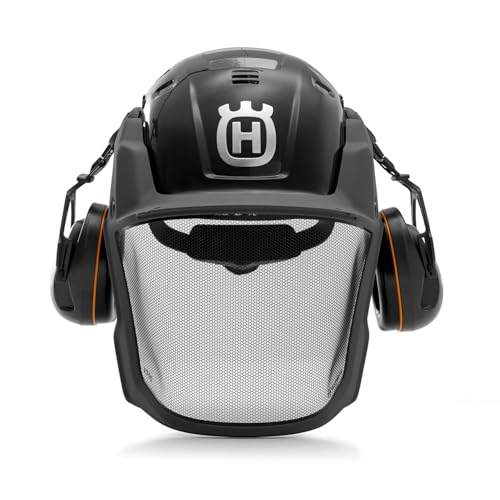


Do you always need a helmet to use a chainsaw?
You need a helmet whenever your head could be struck by a falling limb, a springing branch, or the saw itself — which covers almost all chainsaw work except low, stable, waist-height cutting. Treat "helmet on" as the default and justify the exceptions, not the other way around.Head injuries from chainsaw work are rarely caused by the chain; they come from struck-by hazards — dropping limbs, split trunks, and kickback driving the bar upward toward the face. A rated shell and visor turn many of those events into a scare instead of a hospital trip. The safest operators build the habit so deep that reaching for the helmet happens before they even reach for the saw, which removes the temptation to skip it on a quick job. The rest of your body is protected separately, by chainsaw chaps and PPE.
Which chainsaw jobs make a helmet non-negotiable?
Felling, overhead limbing, storm cleanup, and any work under standing timber make a helmet non-negotiable, because gravity puts wood above your head. The taller the material and the more lean or tension it carries, the higher the risk.The jobs that most demand full head protection are listed below.
- Felling any tree taller than you can safely control.
- Limbing or topping where cut wood falls from above.
- Clearing storm-damaged or wind-thrown trees under spring tension.
- Cutting on slopes, where rolling logs and poor footing add risk.
- Aerial pruning and reach work in pole saw territory.
Leaning, tangled, or storm-loaded trees can move unpredictably and are often a job for a trained professional — know when to step back and call one in.
Which hazards is a chainsaw helmet actually stopping?
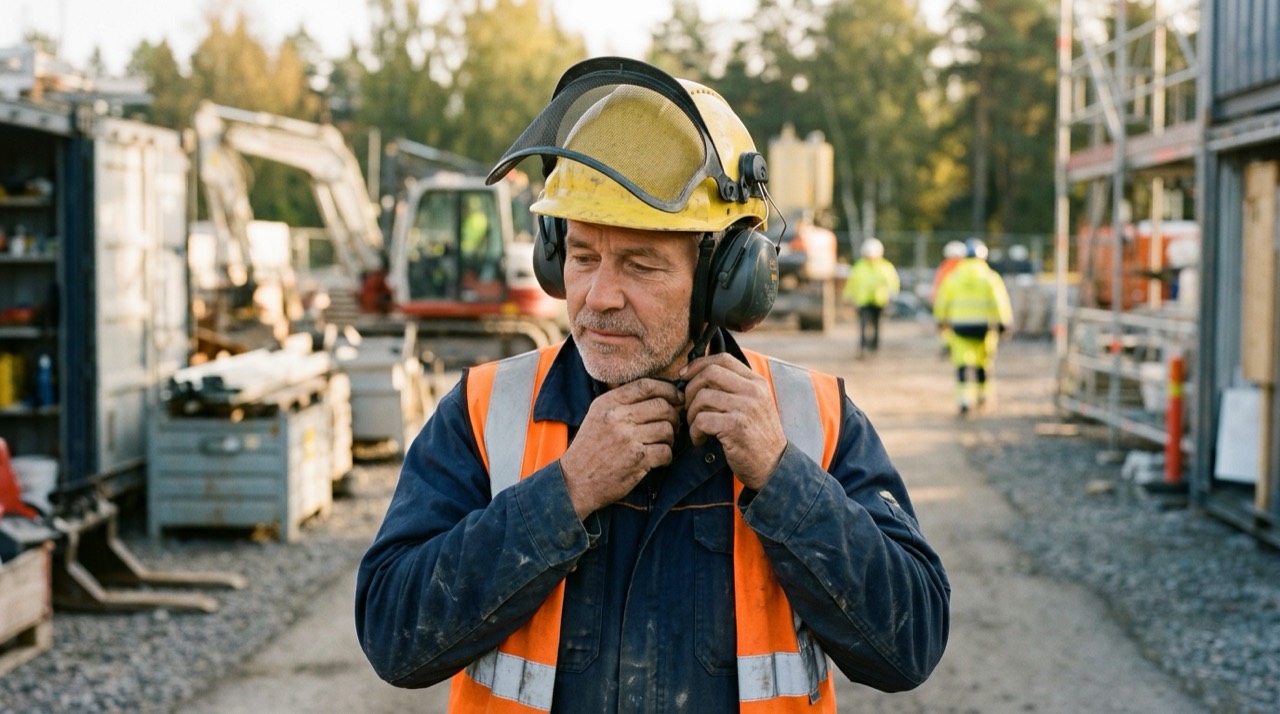
A chainsaw helmet stops four everyday hazards: falling or thrown objects, kickback toward the face, flying wood chips, and damaging noise. Each part of the system is aimed at one of them.- The shell absorbs impact from dropped limbs and knocks.
- The mesh visor deflects chips, twigs, and a kicked-up bar.
- The earmuffs cut saw noise from around 100–115 dB to a safer level.
- The brim and shell shed rain, sap, and sawdust off your face.
Because the mesh visor won't stop fine dust or sap mist, add sealed glasses from our hearing and eye protection guide for the particles the mesh misses.
When can a homeowner reasonably skip the helmet?
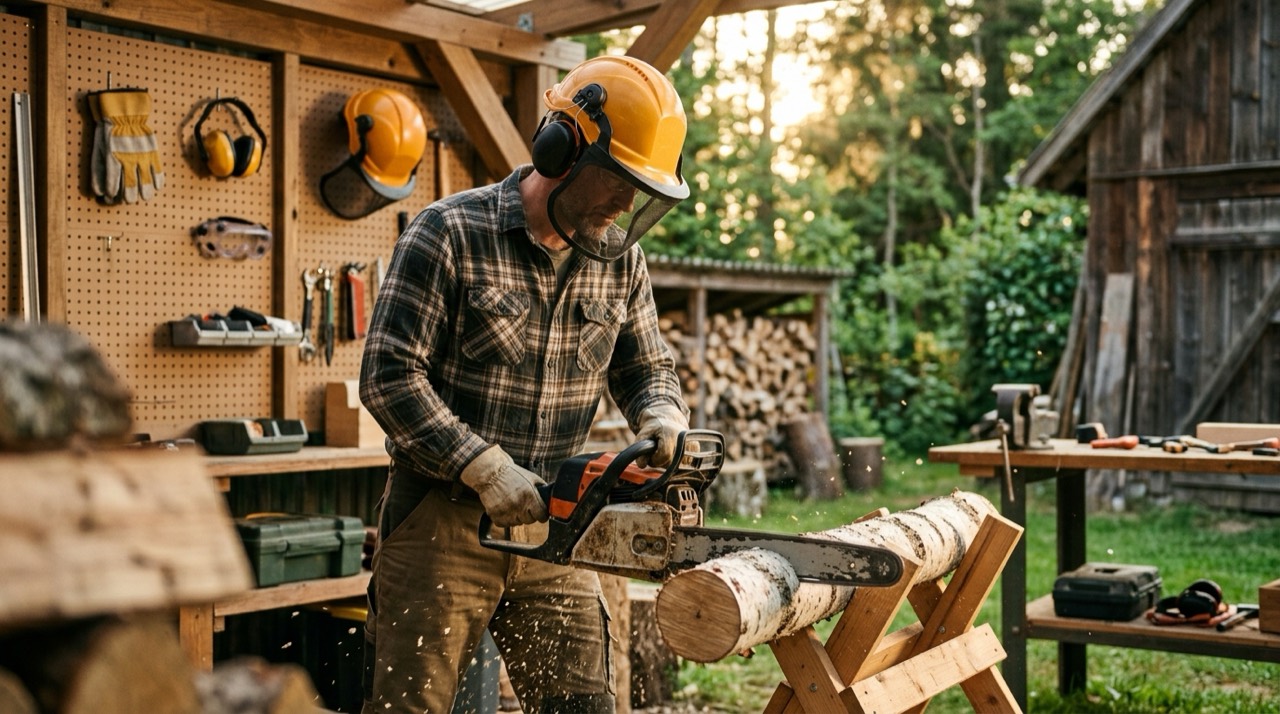
A homeowner can reasonably skip the shell only for low, controlled cutting — bucking short logs on a sawhorse or the ground at waist height with nothing overhead — and even then eye and ear protection stay on. The shell goes back on the instant anything rises above shoulder height.If you are unsure, wear it. Helmets are inexpensive next to an emergency-room visit, and the habit of putting one on every time removes the judgement call when you are tired or rushing. Buyers weighing options can compare our best chainsaw helmets roundup.
What do the rules and your employer require?
Anyone cutting as part of their job is generally required by workplace-safety rules to wear head, hearing, and eye protection, and many crews mandate a full forestry helmet. Requirements vary by country and employer, so check your local occupational-safety guidance.Employed and contract cutters should treat the helmet as mandatory site kit. For hobby cutters there is no inspector at the woodpile, which is exactly why a personal "always on" rule matters. Read the full helmets and face shields guide for fit and standards detail.
What actually causes chainsaw head injuries?
Most chainsaw head injuries come from being struck by wood, not by the chain: dropping limbs, split or barber-chairing trunks, springing saplings, and a kicked-up bar are the usual culprits. The helmet exists for these struck-by events, which is why it pairs an impact shell with a face screen.Understanding the mechanism explains the kit. A limb you cut overhead falls under gravity; a trunk under tension can split and swing back; a small bent-over sapling released by the saw whips upward with real force. None of these involve the chain touching your head, yet each can cause a serious injury a rated shell and visor turn into a near miss. The leg-and-hand side of the chain hazard is handled separately by chainsaw chaps and PPE.
How does kickback threaten your head and face?
Kickback happens when the upper tip of the bar contacts wood and the saw pivots up and back toward the operator in a fraction of a second — often straight at the face. A mesh visor and shell are the last line of defence if a kickback gets past your grip and the chain brake.Kickback is the fastest hazard in cutting: by the time you register it, the bar is already moving. A modern saw's inertia chain brake and a low-kickback chain reduce the risk, and correct technique — keeping the tip out of the cut and both hands firm — prevents most events. But when one does slip through, the visor deflecting the bar and chain away from your eyes is exactly the protection you cannot add after the fact. Running a low-kickback gas chainsaw or battery chainsaw setup and keeping the chain sharp both cut the odds of it happening.
Does tree size, species, or lean change the risk?
Yes — bigger trees, dense hardwoods, and any lean or storm-loading raise the risk sharply, because they store more energy and behave less predictably when cut. A small softwood on level ground is low risk; a leaning hardwood or a wind-thrown trunk under tension is a different job entirely.The factors that push a job from routine to hazardous are listed below.
- Height and diameter: taller, thicker trunks drop more weight from higher up.
- Species and density: dense hardwoods hold tension and split more violently than softwoods.
- Lean and load: a leaning or wind-bent tree can barber-chair or swing off the stump.
- Dead or storm-damaged wood: hidden rot and hung-up limbs fall without warning.
When the size, lean, or damage is beyond your training, the safest tool is a phone: a leaning, tangled, or storm-loaded tree is often a job for a qualified arborist rather than a homeowner saw.
What ground and weather conditions add risk?
Slopes, wet or icy footing, wind, and low light all raise the odds of a struck-by injury by making the saw, the wood, and your own balance harder to control. Stable footing and clear sight lines are as much a part of head safety as the helmet itself.On a slope, a bucked log can roll and a slip puts the running saw near your body, so plan an escape route and cut from the uphill side where practical. Wind can drop dead limbs and change where a tree falls, and it is a reason to stop felling entirely above a certain strength. Fading light hides the overhead hazards a visor can't help with. A Type II shell that adds side-impact protection earns its place on sloping, rolling-log ground, as covered in the helmets and face shields guide.
What is a quick helmet decision checklist?
Ask three questions before you start the saw: is anything above shoulder height, is the wood under tension or lean, and are you being paid to cut? A yes to any one of them means the helmet goes on.- Anything overhead or able to fall? Helmet on.
- Wood under tension, lean, or on a slope? Helmet on.
- Cutting for work or on someone else's property? Helmet on.
- Low, stable, waist-height bucking only? Glasses and muffs minimum, helmet strongly advised.
If you find yourself talking your way out of the helmet, that hesitation is itself a signal that the job carries enough risk to warrant it. These guides are general information, not a substitute for hands-on training. Anyone new to felling should get supervised instruction before taking on standing timber, and larger, leaning, or storm-damaged trees are safest left to a qualified arborist.