


Does a mesh chainsaw visor protect your eyes?
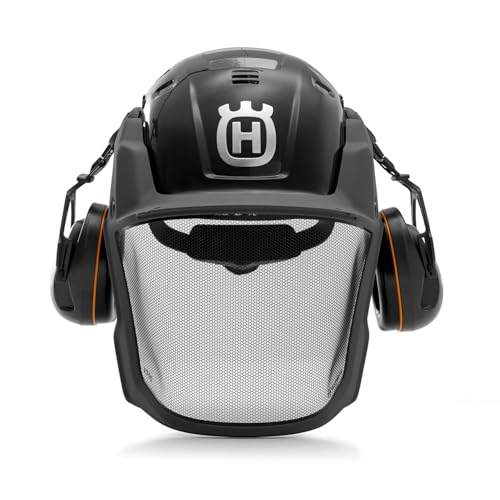
A mesh visor protects your eyes from the big hazards — flying branches, wood chips, and a kicked-up bar — but its open weave lets fine sawdust, grit, and sap mist pass straight through. Treat it as impact protection, not a dust seal, and wear glasses under it.Why forestry helmets use mesh
Mesh is chosen for forestry because it never fogs, mists, or scratches into uselessness the way a clear polycarbonate screen can, and it keeps air moving across a sweaty face. That airflow and clear vision matter when you are reading a hinge on a felling cut, so the trade-off is deliberate rather than a cost-saving.What to add underneath
Add sealed safety glasses to ANSI Z87.1 (or EN 166 in Europe) under the visor for the fine particles the mesh misses. In very dusty milling or cleanup work, wrap-around goggles seal even better. The mesh visor then takes the heavy hits while the glasses stop the dust.Mesh versus clear polycarbonate — the trade-off
A mesh screen and a clear polycarbonate screen protect against different things, and forestry work generally favours mesh. Mesh never fogs, never mists with sweat, and won't scratch into a blur after a season of chips, but its open weave lets fine dust and sap mist through. Clear polycarbonate seals out those fine particles and stops liquid splash, yet it fogs in the cold, smears with sweat, and scratches with handling. For felling and bucking, mesh plus glasses beats a fogged clear screen you can't see through.When to add goggles instead of glasses
Sealed safety glasses to ANSI Z87.1 or EN 166 handle most of the fine dust a mesh visor misses, but very dusty work calls for wrap-around goggles that seal against the face. Chainsaw milling, cutting dry or rotten wood, and long cleanup sessions throw enough fine particles that goggles are worth the slight fog risk. The rule of thumb: glasses for general cutting, goggles when the air is visibly full of dust.How the layers work together
Think of the mesh visor and the glasses as a two-stage filter, each doing what the other can't. The mesh takes the heavy hits — branches, chips, and a kicked-up bar — that would shatter or overwhelm thin glasses. The glasses catch the fine sawdust and grit that pass through the mesh. Worn together they cover both the impact and the dust threat; worn alone, each leaves a gap the other would have closed.A worked example: milling dry hardwood
Consider slabbing a dry hardwood log with a chainsaw mill: the long, slow cuts throw a continuous cloud of fine, choking dust the mesh visor barely slows. Here the mesh still stops the occasional flung chip, but sealed goggles — and often a dust mask — do the real work of protecting your eyes and lungs. It is the clearest case where the mesh visor alone is plainly not enough eye protection.Why not just wear glasses without the visor?
Glasses alone leave your lower face and the sides of your eyes exposed to branches, chips, and a kicked-up bar that the full-face mesh visor covers. The visor guards a much larger area against impact than any glasses can, while the glasses seal the fine gaps. Dropping the visor to wear only glasses trades away the impact protection that is the whole point of a forestry face screen.Keeping a mesh visor working
A mesh visor only protects if you can see through it and it sits where it should. Wipe caked sap and packed sawdust off the mesh after each session, since a clogged screen both blocks your view and adds weight. Check the detents still hold the visor down while cutting and up while parked, and replace the mesh once it is bent or the weave is damaged, as a distorted screen deflects debris unpredictably.Matching eye protection to the job, not the saw
The right eye protection scales with the dust and debris the work produces, not the size of the saw. Light limbing with a battery chainsaw may need only the mesh visor and glasses, while dusty milling or storm cleanup justifies goggles as well. Read the visor by what the wood throws at it, then layer accordingly.For a full look at layering eye and ear protection, see our hearing and eye protection guide, and the helmets and face shields guide for choosing a complete system.

